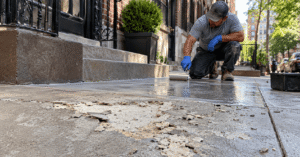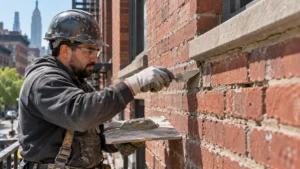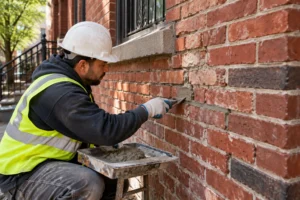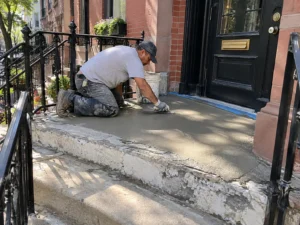
Driveway repair in NYC often becomes necessary long before a driveway looks severely damaged. Small cracks, low spots, crumbling edges, and early water pooling usually signal that something underneath the surface is already starting to fail. Understanding driveway repair in NYC early helps homeowners catch the real cause, compare the right fix, and avoid larger repair costs later.
Because these issues develop gradually, many homeowners assume they can wait. The problem is that driveway damage rarely stays in one place. What starts as a minor surface defect often points to movement underneath the concrete, drainage problems, or years of wear that continue to worsen over time.
Quick Answer
The cost of driveway repair in NYC depends on the extent of the damage, the condition of the base underneath, and whether repair or replacement is needed. Common causes include settlement, poor drainage, freeze-thaw cycles, heavy vehicle traffic, and aging concrete. The best fix is the one that addresses the underlying cause, not just the visible crack or damaged area.
What Causes Driveways to Fail in NYC?
Most driveway damage can be traced back to one of a few common issues.
Water is often the biggest culprit. When drainage is poor, rainwater begins collecting on or beneath the concrete. Over time, that moisture weakens the base supporting the driveway. Once the support underneath starts shifting, the concrete above it follows.
Freeze-thaw cycles make the situation even worse. Water enters small cracks, freezes during winter, expands, and gradually forces the concrete apart. What began as a narrow crack one season can become a much larger problem after another New York winter.
Vehicle weight also plays a role. Areas that experience repeated pressure, especially near garage entrances or curb aprons, tend to deteriorate faster. The constant loading and unloading of weight can expose weaknesses in the concrete and the base beneath it.
In older NYC properties, age alone is sometimes a factor. Concrete does not last forever, and driveways that have been exposed to decades of weather and traffic often begin showing signs of wear even if they were installed correctly.
What Driveway Damage Usually Looks Like
Not all driveway problems look the same, and the pattern of damage often provides clues about what is happening underneath.
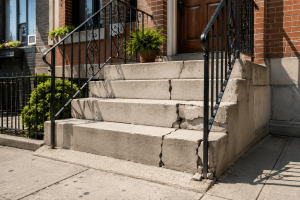
A long crack running across the slab may indicate settlement or movement below the surface. Cracks near the garage entrance often point to repeated vehicle stress combined with water intrusion. If the edges are breaking apart, the support along the sides may be weakening.
Water pooling in certain areas is another warning sign. A driveway should move water away efficiently. When low spots begin holding water, it usually means the surface has settled or the original drainage pitch is no longer working properly.
Sometimes the concrete begins scaling, where the top surface flakes away and exposes rough material underneath. While this may look cosmetic at first, it often signals ongoing moisture damage.
What the Crack Pattern Can Tell You
One of the biggest mistakes homeowners make is assuming all cracks mean the same thing.
A small, stable crack that has not changed in years is very different from a crack that continues widening or spreading. Multiple cracks in the same area often suggest movement underneath the slab. If one side of a crack sits higher than the other, settlement is usually involved.
When damage appears around the curb apron or garage entrance, the problem is often related to repeated stress combined with water infiltration. Understanding the pattern helps determine whether the driveway can be repaired or whether a larger correction is needed.
Looking at the crack alone rarely tells the full story. The surrounding conditions matter just as much.
How Much Does Driveway Repair Cost in NYC?
This is usually the first question homeowners ask, but there is no single answer.
The cost depends on what is causing the damage and how extensive the repair needs to be. A localized repair where only a small section requires attention will naturally cost less than rebuilding a large area affected by settlement or drainage issues.
The condition of the base underneath also plays a major role. A driveway with a stable foundation is typically less expensive to repair than one where the supporting material has shifted or washed away.
In some cases, homeowners spend more money by choosing the cheapest short-term fix first. Surface repairs that do not address the root cause often fail prematurely, leading to additional repairs later.
The better question is not simply “How much will it cost?” but rather “What needs to be fixed to prevent the problem from returning?”
When Repair Is Enough
Many driveway problems can be repaired successfully if they are caught early.
A limited area of cracking, isolated settlement, or minor surface deterioration may only require targeted repair work. If the surrounding concrete remains stable and the base underneath is still sound, repairing the affected section often makes sense.
The goal is to restore the damaged area before the issue spreads across a larger portion of the driveway.
When Replacement Makes More Sense
There comes a point when repairing individual problems becomes less practical.
If large sections of the driveway are cracking, multiple areas are sinking, or drainage problems affect the entire surface, replacement often provides a better long-term solution.
This does not mean every crack requires a new driveway. It simply means there are situations where continually repairing isolated spots becomes more expensive than addressing the overall condition properly.
A professional assessment should focus on the driveway as a whole rather than just the most damaged section.
Common Mistakes That Make Driveway Problems Worse
One of the most common mistakes is repairing visible cracks without addressing drainage issues. If water continues collecting beneath the surface, the same problem usually returns.
Another mistake is waiting too long. Small cracks and minor settlements are often easier and less expensive to correct than widespread deterioration.
Some homeowners also assume that a driveway only needs attention when it becomes difficult to drive on. In reality, many serious driveway failures begin with subtle warning signs that appear months or years earlier.
Ignoring those early signs often leads to larger repairs later.
Why NYC Driveways Face Unique Challenges
Driveways in New York deal with conditions that many other areas simply do not.
Winter freeze-thaw cycles, limited drainage space, narrow residential lots, heavy vehicle use, and aging infrastructure all put extra stress on concrete surfaces. In neighborhoods throughout Queens, Brooklyn, and other parts of the city, driveways are constantly exposed to conditions that accelerate wear and movement.
Because of this, repairs need to focus on long-term performance rather than temporary cosmetic improvements. Early driveway repair in NYC usually gives homeowners more affordable options before the damage spreads further.
When to Take Action
If your driveway has started cracking, sinking, collecting water, or breaking down around the edges, it is usually worth having it evaluated before the damage spreads further.
The earlier the underlying cause is identified, the easier it is to develop a repair plan that lasts.
CTA
If your driveway is showing signs of cracking, settlement, drainage problems, or surface deterioration, NY Concrete can inspect the area and determine what is causing the damage. Whether the solution involves a targeted repair or a more comprehensive replacement, the goal is to address the problem properly so your driveway remains safe, functional, and durable under real NYC conditions.