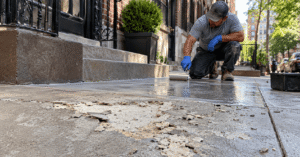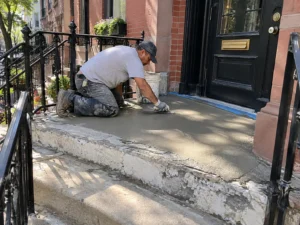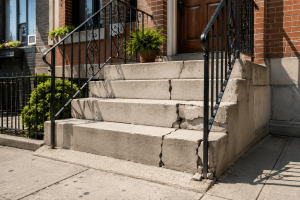
Small sidewalk damage often starts with changes that are easy to dismiss. A corner chip appears on one sidewalk flag. A narrow crack develops near the edge. One section settles slightly lower than the surrounding concrete. These issues may look minor at first, but they can become bigger repair problems if the cause continues.
Because these issues often seem minor, many property owners put them on the list of things to deal with later. The trouble is that sidewalk damage rarely stays the same. What looks like a cosmetic issue today can gradually turn into a safety hazard, a larger repair project, or even a sidewalk violation if the underlying problem continues to develop.
Quick Answer
Small sidewalk damage can become a bigger problem when cracks allow water to enter, slabs begin shifting, or minor surface deterioration develops into a trip hazard. Addressing sidewalk issues early is often simpler and less expensive than waiting until the damage spreads or affects multiple sections.
Why Small Sidewalk Problems Should Not Be Ignored
A lot of sidewalk damage looks harmless at first.
You may notice a hairline crack crossing part of a sidewalk flag or a small section where the surface has started to crumble slightly. The sidewalk is still usable, nobody has complained, and the damage does not seem urgent.
But sidewalks are constantly exposed to weather, foot traffic, and movement underneath the concrete. Once a weak point develops, those everyday conditions continue putting pressure on it.
What starts as a small defect often becomes the place where larger damage begins.
When a Small Crack Starts Becoming a Bigger Issue
Not every crack is a major concern. Concrete naturally develops minor surface cracks over time.
The problem is that cracks create an opening for water.
Once moisture enters, it can reach the material beneath the sidewalk. During colder months, that water freezes and expands. As it repeatedly freezes and thaws, the crack gradually widens and places more stress on the surrounding concrete.
Many property owners are surprised by how much a crack can change after just one winter season.
A crack that seemed purely cosmetic can eventually contribute to lifting, settlement, or deterioration around the affected area.
The Danger of Slightly Uneven Sidewalk Flags
One of the most overlooked sidewalk issues is a small height difference between concrete sections.
At first, the change may be so subtle that only the property owner notices it. One sidewalk flag sits slightly higher than the next, but it does not seem serious.
The issue is that movement rarely stops once it begins.
If tree roots continue growing underneath or the soil beneath the sidewalk keeps settling, the difference often becomes more pronounced over time. What started as a minor uneven spot can eventually become a trip hazard for pedestrians.
In NYC, even relatively small changes in sidewalk elevation can become safety concerns.
What Property Owners Often Miss
Many people focus on the visible damage while overlooking the reason it appeared.
For example, a chipped corner might not seem important on its own. But if that corner broke because the slab underneath is moving, simply patching the damaged area will not stop future problems.
The same is true for small sections of crumbling concrete. Surface deterioration often signals that moisture has already begun affecting the material.
The visible damage is sometimes just the first sign of a larger issue developing underneath.
How Water Turns Minor Damage Into Major Repairs
Water is one of the biggest reasons small sidewalk issues become expensive ones.
Once water begins entering cracks, joints, or weakened areas, it can slowly undermine the support beneath the concrete. Over time, this leads to settlement, shifting, and larger structural problems.
You may first notice water pooling in a low spot after rain. Months later, that same area starts sinking. Eventually, nearby sections become affected as well.
This gradual progression is why early repairs are often much less costly than waiting until the damage becomes widespread.
Why NYC Sidewalks Are Especially Vulnerable
Sidewalks in New York face challenges that accelerate wear and movement.
Freeze-thaw cycles, heavy pedestrian traffic, tree roots, aging infrastructure, and limited drainage space all contribute to sidewalk deterioration. Even a well-built sidewalk experiences significant stress year after year.
Because of these conditions, damage that seems minor can develop much faster than property owners expect.
What looks stable today may look very different after another winter.
Can Small Sidewalk Damage Be Repaired?
In many cases, yes.
When damage is identified early, repairs are often more straightforward. Small cracks, isolated deterioration, or limited movement can sometimes be addressed before they spread into larger sections of the sidewalk.
The key is determining whether the damage is truly superficial or whether it points to movement underneath the concrete.
That is why a professional evaluation can be valuable, especially when the condition appears to be changing over time.
Common Mistakes to Avoid
One of the biggest mistakes is assuming that small damage will remain small.
Another is focusing only on appearance. A crack may seem minor, but if the sidewalk is shifting underneath, the visible crack is not the real problem.
Many property owners also postpone repairs because the sidewalk is still functional. Unfortunately, concrete damage tends to become more expensive once it spreads beyond the original area.
Addressing issues early often provides more repair options and helps prevent larger disruptions later.
When to Take Action
If you notice cracks widening, sidewalk flags becoming uneven, corners breaking away, or water collecting in areas where it never used to, it is worth investigating the cause before the condition worsens.
Small sidewalk problems are often easiest to fix when they are still small.
Waiting until the damage becomes obvious usually means the repair will be more involved.
If you have noticed cracks, uneven sidewalk flags, surface deterioration, or other signs of sidewalk damage around your property, NY Concrete can inspect the area and determine whether the issue is likely to spread. Addressing small problems early can help prevent larger repairs, safety concerns, and potential violation issues down the road.