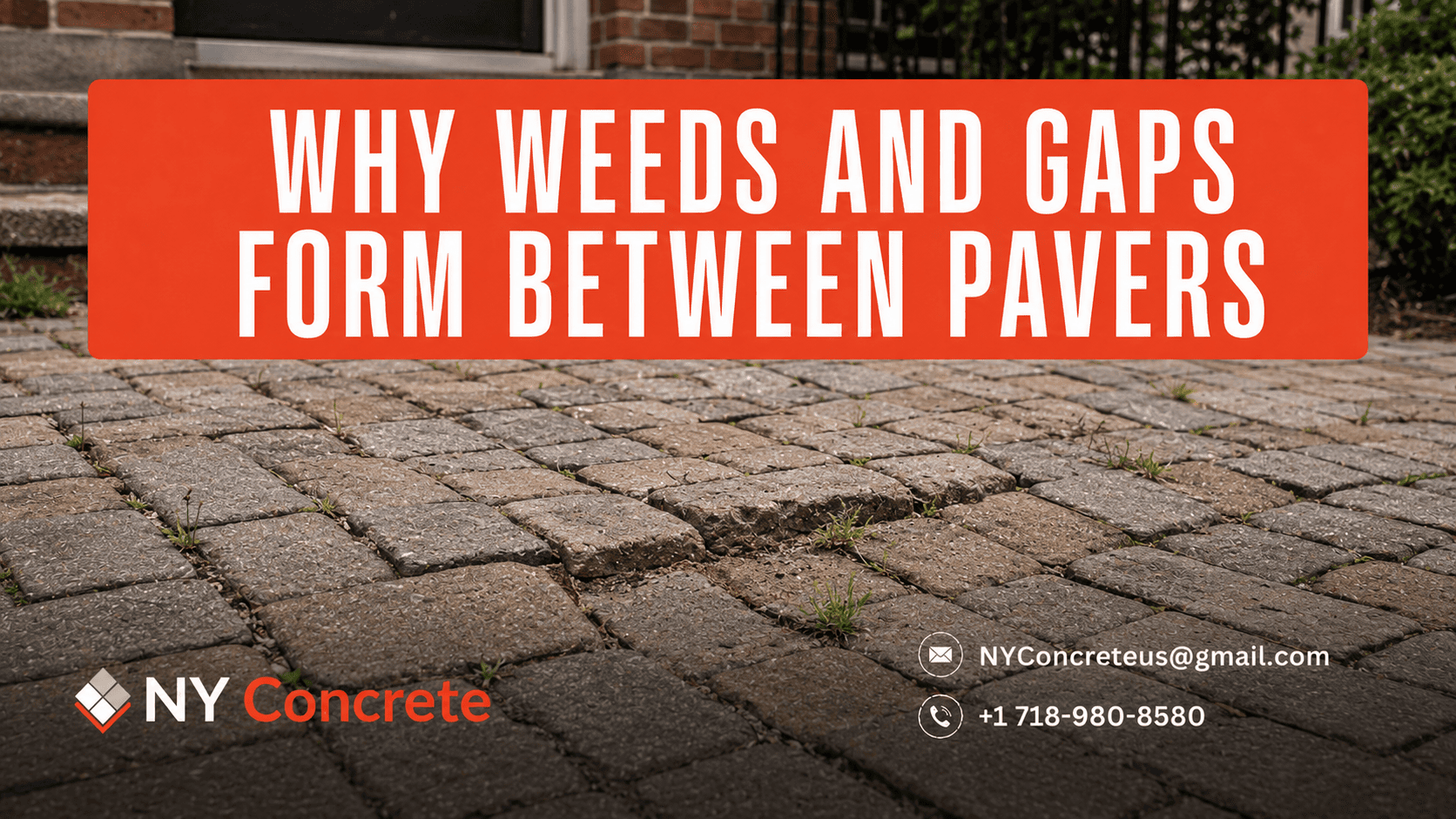
Weeds and gaps between pavers can make a patio, walkway, or driveway look neglected even when the surface was once clean and stable. A paver surface may look great for years, then small weeds begin pushing through the joints, gaps appear where the pavers used to fit tightly, and sand starts disappearing from between the blocks. A paver patio, walkway, or driveway can look great for years without much trouble. Then one day, you start noticing small weeds pushing through the joints. A few gaps appear where the pavers used to fit tightly together. Sand seems to be disappearing, and certain sections no longer look as clean or stable as they once did.
Many property owners assume weeds are the actual problem. In most cases, they are not.
The weeds are usually a symptom of something else happening beneath or between the pavers. If the underlying issue is ignored, simply pulling the weeds often leads to the same problem returning again and again.
Quick Answer
Weeds and gaps between pavers usually form because joint sand has been lost over time due to weather, drainage issues, foot traffic, or surface movement. Once those joints open up, dirt, moisture, and organic debris collect inside them, creating the perfect environment for weeds to grow. Proper repair involves cleaning the joints, addressing any underlying movement, and refilling them with the appropriate joint material.
How Paver Joints Are Supposed to Work
Many people think the sand between pavers is only there for appearance. In reality, it plays an important role in keeping the entire surface stable.
The joints help lock individual pavers together and reduce movement across the installation. When those joints remain full, the pavers support each other and distribute weight more effectively.
Over time, however, joint material naturally wears away. Rain, wind, pressure washing, foot traffic, and seasonal weather all contribute to gradual sand loss.
Once enough sand disappears, small gaps begin to develop, creating space for other problems to follow.
Why Weeds Start Growing Between Pavers
One of the biggest misconceptions is that weeds grow up from deep underneath the paver system.
Most of the time, that is not what happens.
Weed seeds are usually carried by wind, rain, birds, or normal outdoor activity. Once they land in open joints containing moisture and organic debris, they begin to grow.
In other words, the weed is often growing in material that has collected inside the gap, not necessarily through the entire paver base from below.
This is why pulling weeds without addressing the open joints rarely provides a lasting solution.
The space remains, new debris accumulates, and eventually another weed takes its place.
What Causes Gaps to Form Between Pavers?
Gaps rarely appear for a single reason.
In some cases, normal weather gradually removes joint sand over the years. In others, water becomes the bigger issue. Poor drainage can wash sand out of the joints, especially during heavy rain.
Movement underneath the pavers can also contribute. If the base begins settling or shifting, the pavers may move slightly apart, creating larger openings between them.
Freeze-thaw cycles are another common factor in NYC. Water enters small spaces between pavers, freezes during winter, expands, and gradually increases the separation between units.
Even routine maintenance can sometimes play a role. Aggressive pressure washing may remove significant amounts of joint sand if the surface is not properly re-sanded afterward.
What Property Owners Often Miss
Many people focus entirely on the weeds because they are the most visible problem.
What they often overlook is the condition of the joints themselves.
If weeds are appearing repeatedly in the same areas, it usually means the joints have already lost enough material to allow moisture, debris, and seeds to collect. Removing the weed addresses the symptom but not the reason it appeared.
Similarly, some property owners notice small gaps but assume they are purely cosmetic. In reality, open joints can allow more movement throughout the paver system, increasing the likelihood of shifting, settling, and additional weed growth later.
Why the Problem Usually Gets Worse Over Time
Once joint material begins disappearing, the process often accelerates.
Open joints allow more water to enter. More water means greater potential for erosion, movement, and freeze-thaw damage. As the gaps grow larger, they collect even more dirt and organic matter.
That creates an increasingly favorable environment for weeds while making the pavers less stable at the same time.
What starts as a few isolated weeds can eventually become widespread joint deterioration if ignored long enough.
How to Fix Weeds and Gaps Properly
A lasting repair focuses on the joints, not just the vegetation.
The first step is removing weeds, debris, and loose material from the affected areas. Once the joints are cleaned, the condition of the surrounding pavers can be evaluated to determine whether any movement or settling has occurred.
If the pavers remain level and stable, the joints can often be refilled with fresh joint sand to restore proper spacing and support.
If movement has already occurred, the affected section may need to be lifted and adjusted before new joint material is installed. Otherwise, the same gaps are likely to return.
The goal is not simply making the surface look cleaner. It is restoring the stability of the paver system as a whole.
Can This Be Repaired, or Does It Need Replacement?
In most cases, weeds and gaps between pavers do not mean the entire installation needs replacement.
If the pavers themselves remain in good condition and the base is stable, cleaning and restoring the joints is often enough.
However, if widespread settling, drainage issues, or significant movement are affecting large portions of the surface, more extensive repairs may be necessary.
The key is determining whether the problem is limited to the joints or whether it reflects deeper issues underneath the pavers.
Common Mistakes to Avoid
One of the most common mistakes is repeatedly pulling weeds without restoring the joints afterward. While this improves appearance temporarily, it does not prevent new growth.
Another mistake is ignoring drainage issues. If water continues washing sand out of the joints, the problem will likely return regardless of how often weeds are removed.
Some property owners also wait until large gaps develop before taking action. By then, the surrounding pavers may already be starting to shift.
Addressing the issue early is usually simpler and more cost-effective.
Why This Happens So Often in NYC
Paver installations in NYC deal with a challenging combination of weather, foot traffic, and limited drainage space.
Heavy rain, freeze-thaw cycles, aging hardscapes, and constant use all contribute to gradual joint deterioration. In many neighborhoods, older paver installations have been exposed to years of seasonal expansion and contraction, making joint maintenance especially important.
Because of these conditions, even well-installed pavers benefit from periodic inspection and maintenance.
When to Take Action
If weeds are appearing more frequently, gaps are becoming noticeable, or sections of your paver surface feel loose or unstable, it is usually a sign that the joints need attention.
Addressing the issue early can help prevent larger repairs and keep the surface looking and performing the way it should.
If weeds keep returning between your pavers or you have noticed widening gaps and shifting joints, NY Concrete can inspect the area and determine what is causing the problem. Whether the solution involves restoring the joints, correcting drainage issues, or repairing sections that have shifted, the goal is to keep your paver surface stable, attractive, and built to last under real NYC conditions.