Trying to clear a sidewalk violation in NYC can feel stressful, especially if this is your first time dealing with one. Many property owners do not know there is a problem until the notice arrives. Suddenly, there are questions about deadlines, repairs, permits, inspections, and what happens if nothing is done.
The good news is that most sidewalk violations follow a clear process. You need to understand what caused the violation, fix the problem correctly, and make sure the repair meets NYC requirements.
Quick Answer
To clear a sidewalk violation in NYC, you need to repair or replace the damaged sidewalk according to DOT requirements, obtain any required permits, and make sure the finished work meets city standards. A simple surface patch often does not solve the problem if the sidewalk still creates a safety hazard.
What a Sidewalk Violation Actually Means
A lot of property owners assume a sidewalk violation means the city has already fined them. In most cases, the violation serves as a notice that the sidewalk in front of the property has an unsafe condition.
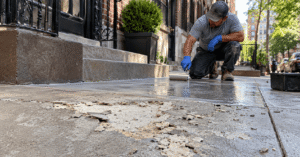
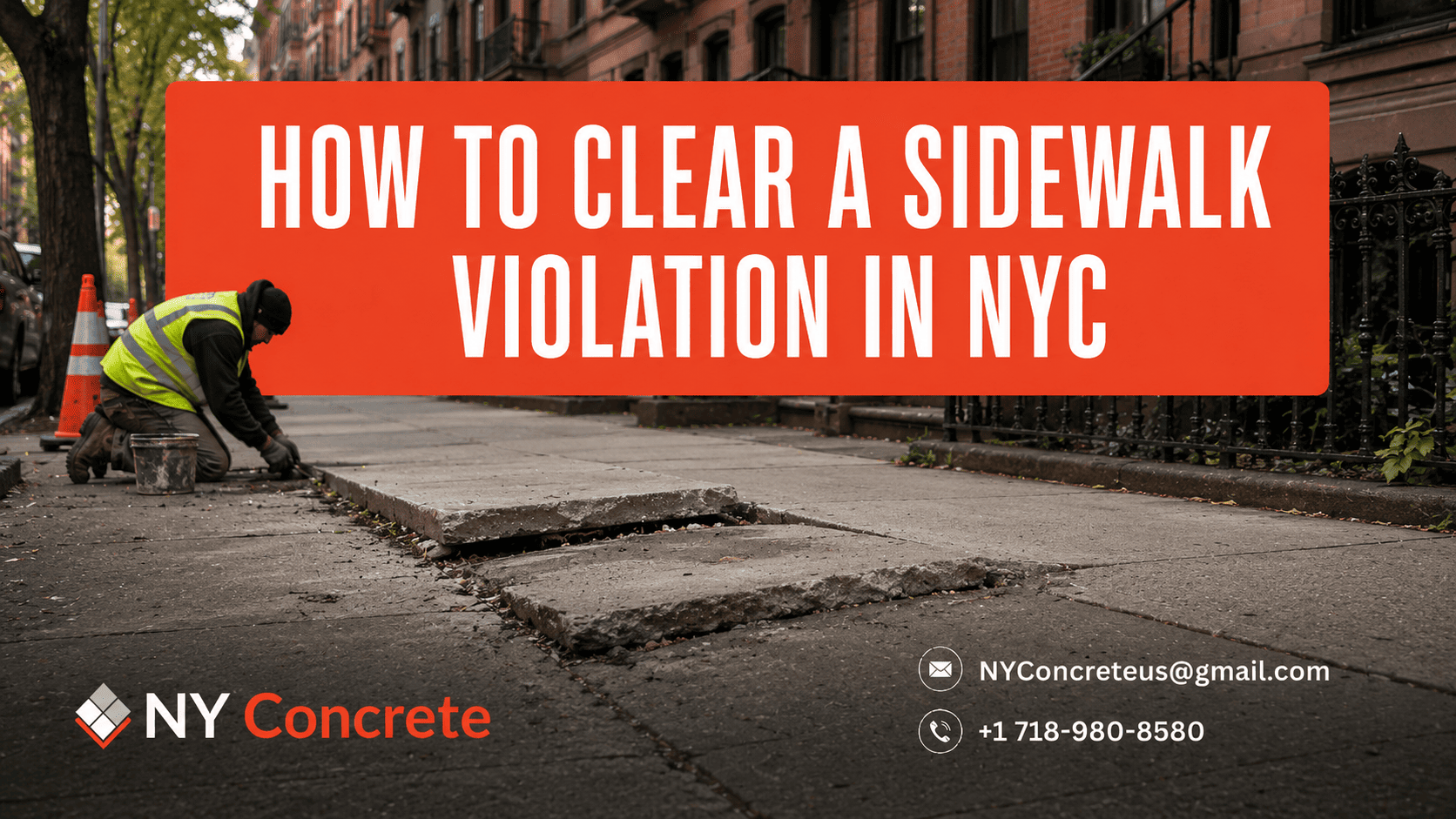
The city looks for sidewalk problems that create risks for pedestrians. These problems may include uneven sidewalk flags, large cracks, tree-root lifting, sinking sections, broken concrete, or deteriorated surfaces that can cause someone to trip.
The violation tells the property owner that the sidewalk needs attention before the condition becomes a bigger safety concern.
Why Sidewalk Violations Happen
Most violations do not happen from one sudden event. They usually develop over time.
Tree roots cause many uneven sidewalks in NYC. As roots grow beneath the concrete, they push sidewalk sections upward. In other cases, soil settles under the sidewalk and causes the concrete flags to sink.
Water also plays a major role. When moisture gets beneath the concrete, it weakens the base that supports the sidewalk. Over time, the slabs begin to shift, crack, or become uneven.
Winter weather often makes the damage worse. Water enters small cracks, freezes, expands, and slowly turns minor damage into a larger problem.
The First Step: Understand What Needs to Be Fixed
One common mistake property owners make is focusing only on the most visible crack or damaged area.
A violation usually points to a specific unsafe condition. Before repair work begins, you need to identify what caused the violation and check whether nearby sidewalk sections also have problems. To clear a sidewalk violation in NYC, the repair needs to address the actual unsafe condition, not just the most visible crack or broken section.
For example, a raised sidewalk flag may come from a growing tree root. If you replace only the concrete without dealing with the cause, the new section may shift again.
A cracked slab may also point to settlement underneath. If the base remains unstable, new concrete can eventually crack or sink in the same area.
What Property Owners Often Miss
Many people assume the violation disappears as soon as they repair the damaged concrete.
In reality, clearing the violation involves more than fixing the sidewalk’s appearance. The repair needs to meet DOT requirements, and the city must see that the hazardous condition has been properly corrected.
That is why proper documentation, required permits, and quality workmanship matter. A repair that ignores the original cause can lead to delays, extra costs, or future sidewalk problems.
How the Repair Process Usually Works
Every property is different, but most sidewalk violation projects follow a similar process.
The work usually begins with an inspection of the damaged area. This helps determine whether the issue involves cracked concrete, uneven sidewalk flags, settlement, tree roots, drainage problems, or several issues at once.
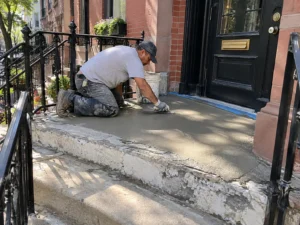
After identifying the cause, the contractor can create a repair plan. In some cases, one sidewalk flag may need replacement. In other cases, multiple sections need attention to restore a safe walking surface.
The goal is not just to make the sidewalk look better. The goal is to create a safe, stable, and compliant sidewalk that fixes the condition that caused the violation.
Repair or Replacement: How the Decision Is Made
Many property owners hope a simple repair will solve the problem. Sometimes it can.
If the damage is limited and the surrounding sidewalk remains stable, a targeted repair may be enough. However, when concrete sections have shifted, deteriorated, or lost support underneath, replacement often provides the better long-term solution.
The decision usually comes down to stability. A sidewalk with a strong base and isolated damage may only need repair. A sidewalk with ongoing movement underneath usually needs a more complete solution.
Common Mistakes That Delay Violation Removal
One of the biggest mistakes is waiting too long to start the process. Sidewalk damage tends to get worse over time, which can increase repair costs and make the project more complicated.
Another common mistake is choosing a temporary fix that improves appearance but does not remove the hazard. Surface patches often fail when movement continues underneath the concrete.
Property owners also overlook nearby problem areas. If adjacent sidewalk flags have already started shifting, repairing only the most obvious section may not provide a lasting result.
Why NYC Sidewalk Violations Require Local Experience
Sidewalk repairs in NYC involve more than pouring new concrete.
Contractors need to understand city requirements, sidewalk construction standards, permit procedures, tree-root issues, and the conditions that commonly lead to violations.
NYC sidewalks deal with constant pedestrian traffic, weather exposure, aging infrastructure, limited drainage space, and root growth. These local conditions affect both the cause of the damage and the best way to repair it.
When to Take Action
If you received a sidewalk violation notice, start addressing the issue as soon as possible.
The longer the sidewalk remains unsafe, the more likely the damage will spread to nearby sections. Early action usually gives you more repair options and helps the process move more smoothly.
If you received a sidewalk violation notice or noticed uneven, cracked, or unsafe concrete in front of your property, NY Concrete can inspect the sidewalk and explain the best path forward. From identifying the cause of the violation to completing the necessary repairs, the goal is to help restore a safe, compliant sidewalk that meets the demands of real NYC conditions. NY Concrete helps property owners clear a sidewalk violation in NYC by inspecting the damage, explaining the repair options, and completing work that supports a safe, compliant sidewalk.