If water keeps collecting on your driveway after rain, there’s usually more happening than a simple puddle on the surface. In many NYC properties, especially in Brooklyn and Queens where space is tight and drainage is limited, standing water is often the first sign that the concrete is slowly starting to fail underneath.
At first, the problem can seem harmless. Maybe one area stays wet longer than the rest, or you notice a shallow dip forming near the garage or curb. But over time, that constant moisture begins to weaken the driveway from below. Cracks spread, edges start breaking apart, and sections of the slab can eventually sink or shift out of place.
Quick Answer
Poor drainage damages concrete driveways by allowing water to collect under or around the slab. Over time, that moisture weakens the base material, causes settlement, increases cracking, and makes freeze-thaw damage worse during winter. Repairing the concrete without fixing the drainage usually leads to the same problem coming back.
The First Signs Are Usually Easy to Miss
Most driveway drainage problems don’t start with major cracks. They start subtly.
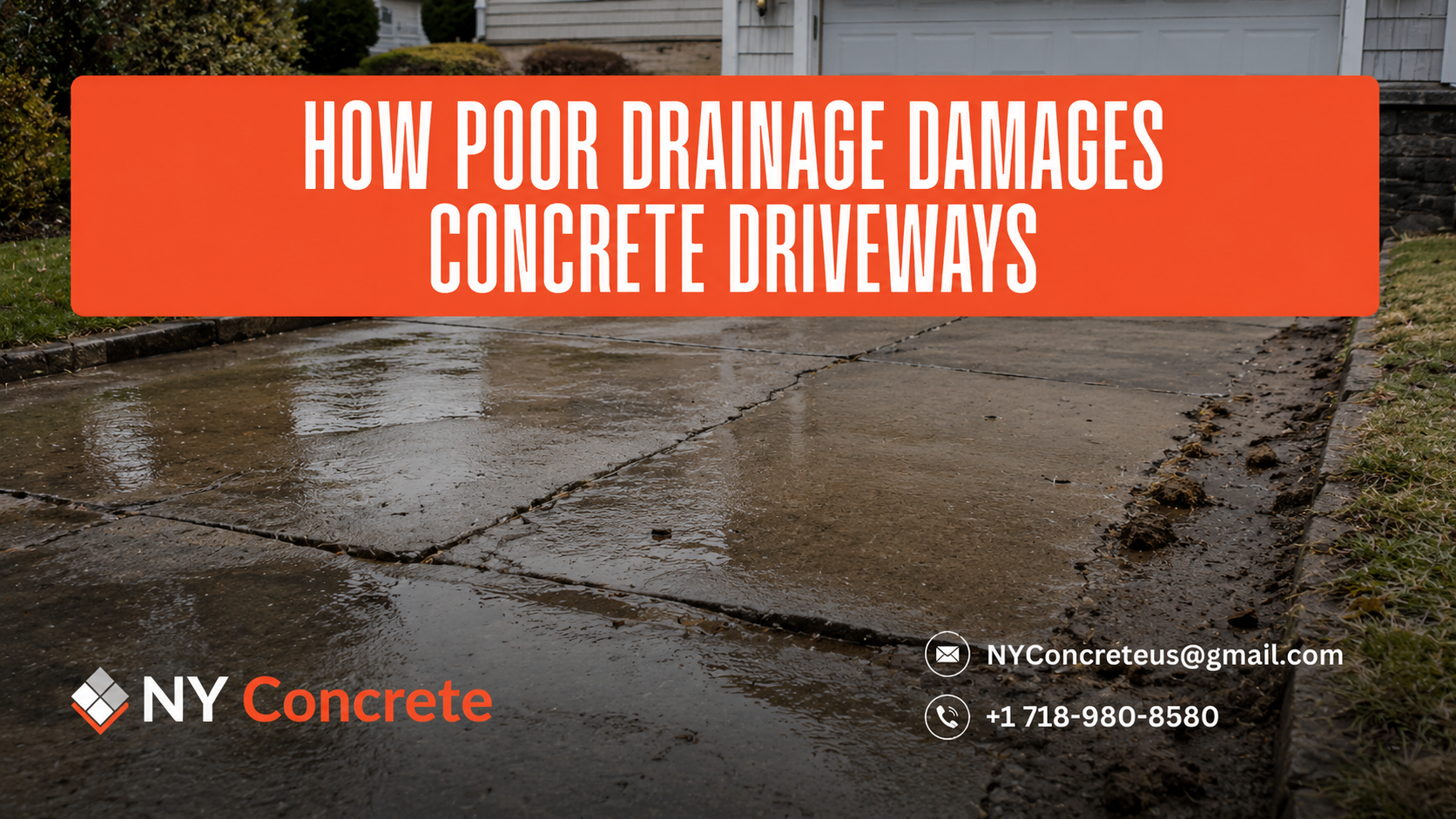
You might notice water sitting in the same spot every time it rains, even when the rest of the driveway dries quickly. In some cases, the concrete near the garage darkens from constant moisture, or the edges along the sides begin to crumble slightly. Small cracks may appear where water repeatedly collects, especially in low areas.
Over time, those low spots usually become more noticeable. The surface may begin to feel uneven underfoot, and during winter, icy patches tend to form exactly where the drainage problem already exists.
A lot of homeowners focus on the visible crack or surface damage, but the real issue is often happening underneath the slab long before the concrete breaks apart.
How Water Slowly Weakens the Driveway
Concrete itself is strong, but the driveway depends heavily on what’s underneath it. If water keeps reaching the base below the slab, that support system starts to weaken.
Sometimes the moisture slowly washes away parts of the compacted base. Other times it softens the soil beneath the driveway, especially around the edges or near the curb apron. As the support underneath becomes less stable, the concrete starts shifting under its own weight and from regular vehicle pressure.
That’s when cracks begin to widen or sections start settling unevenly.
In NYC conditions, this gets worse during winter. Water enters small cracks, freezes overnight, expands, and puts pressure on the concrete from inside. Even a minor drainage problem can turn into significant surface damage after repeated freeze-thaw cycles.
Why Certain Areas Crack First
Drainage-related damage usually follows patterns.
Driveways often crack near the garage because water collects where the slab meets the structure. If the pitch is slightly off, rainwater keeps flowing back toward the house instead of away from it. Over time, the repeated moisture weakens that section.
Curb edges also tend to deteriorate faster because they deal with runoff from both the driveway and the street. In some cases, the concrete along the sides starts crumbling because water keeps entering from the edges and eroding the support underneath.
These patterns matter because they help reveal whether the issue is just surface wear or something deeper affecting the slab.
Why Surface Repairs Often Fail
This is one of the biggest mistakes property owners make.
A crack gets filled, or a damaged section gets patched, but the drainage problem underneath never gets corrected. At first, the repair looks fine. Then after another season or two, the crack reappears in the exact same place.
That happens because water is still moving under the slab. If the slope, drainage path, or pooling issue stays the same, the concrete keeps experiencing the same stress.
A proper repair has to address both the visible damage and the reason the water is collecting there in the first place.
What Proper Drainage Correction Usually Involves
The right solution depends on what’s causing the water buildup.
In some cases, the driveway pitch needs adjustment so water moves away from the slab properly. In others, nearby drainage systems may need improvement, especially if runoff is constantly flowing toward the driveway from another area.
Sometimes the issue comes from sections that have already settled, creating low spots where water naturally collects. Those areas may need to be lifted, reset, or replaced so the surface drains correctly again.
The important part is figuring out why the water is staying there, not just repairing the damage it left behind.
Can the Driveway Be Repaired, or Does It Need Replacement?
If the drainage problem is caught early and the damage is limited to small cracks or isolated settlement, repair may still be enough. Sections of the driveway can often be corrected without replacing the entire slab.
But when large areas have shifted, multiple cracks continue returning, or the base underneath has significantly weakened, replacement sometimes becomes the more reliable long-term option.
The condition of the support underneath matters just as much as the concrete surface itself.
Common Mistakes That Make Drainage Damage Worse
One common mistake is assuming standing water is only a cosmetic issue. A puddle that keeps returning usually means water is not draining properly somewhere.
Another mistake is sealing cracks without checking whether water is entering underneath the slab. That may improve appearance temporarily, but it rarely stops ongoing movement.
Ignoring small edge deterioration is another big one. Crumbling edges often indicate that water has already started weakening the sides of the driveway below the surface.
Why Drainage Problems Are So Common in NYC
Driveways in NYC deal with conditions that put extra stress on concrete. Properties often have limited space for runoff, older drainage layouts, heavy vehicle use, and repeated winter freeze-thaw exposure.
In neighborhoods with narrow lots and older construction, even slight drainage issues can create long-term problems because water has very few places to go once it starts collecting.
That’s why driveway repairs here need to focus on water movement just as much as the concrete itself.
When to Take Action
If your driveway stays wet in certain spots, has recurring cracks, or feels uneven in areas where water collects, it’s usually better to address the drainage issue before the concrete deteriorates further.
Once the base underneath begins failing, the repair becomes much more extensive.
If your driveway has pooling water, recurring cracks, or sections that are starting to sink or break apart, NY Concrete can inspect the surface and determine whether poor drainage is causing the damage. The goal is not just to repair the visible concrete, but to correct the underlying issue so the problem does not keep returning.