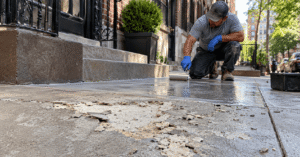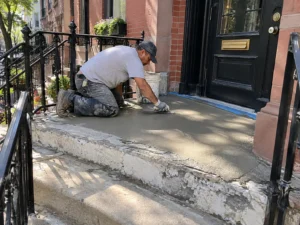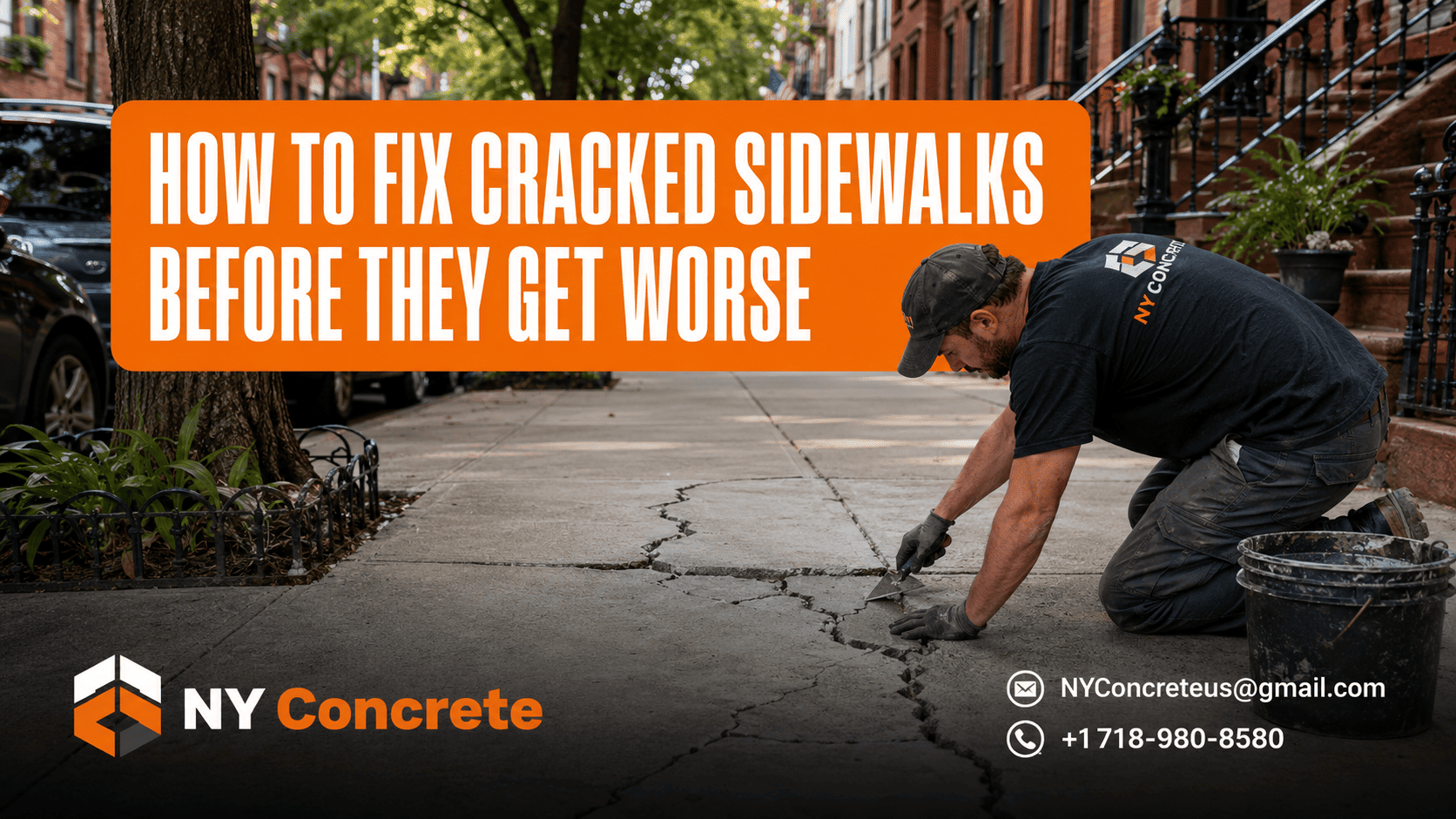
Fix cracked sidewalks early when small surface lines, narrow gaps, or chipped sections first appear. Sidewalk cracks rarely appear overnight. Because the sidewalk is still usable and the damage looks minor, many property owners delay repairs and assume it can wait.
The problem is that cracked sidewalks usually do not stay the same. Once concrete develops a weak point, water can enter. The surrounding material can break down, and movement under the slab can make the crack spread. What starts as a small flaw can turn into a larger repair, a trip hazard, or even a sidewalk violation.
The key is fixing cracked sidewalks early, before the damage has time to worsen.
Quick Answer
To fix cracked sidewalks before they get worse, start by identifying whether the crack is surface-level or a sign of deeper movement under the concrete. You may repair small cracks if you catch them early. But widening cracks, uneven slabs, or recurring damage often need a more complete repair to stop the problem from spreading.
Why Sidewalk Cracks Should Not Be Ignored
A crack in a sidewalk may seem like a small cosmetic issue at first.
The concrete is still in place. People can still walk on it. There may be no obvious safety problem yet. But a crack creates an opening in the sidewalk surface. That opening allows water to enter, weakens the concrete over time, and can affect the material under the slab.
Sidewalks face rain, temperature changes, foot traffic, and movement in the ground below. Once a crack forms, those everyday conditions put more stress on the damaged area.
That is why a small crack often becomes the starting point for a much larger sidewalk problem.
The First Step Is Understanding the Type of Crack
Not every sidewalk crack means the same thing.
Some cracks are minor surface-level defects caused by normal aging or shrinkage in the concrete. Others show that the sidewalk slab is moving, settling, or losing support underneath.
A crack deserves closer attention if it is:
Getting wider over time
Running across most of a sidewalk flag
Accompanied by a height difference between slabs
Surrounded by crumbling concrete or surface deterioration
Located in an area where water tends to collect
Reappearing after a previous repair
The goal is not just to see the crack. You need to understand whether the crack is cosmetic or structural.
Why Surface Patching Is Not Always Enough
One of the most common mistakes with cracked sidewalks is treating every crack as a simple surface repair.
If the slab underneath remains stable and the crack is minor, a repair may help block moisture and slow further deterioration. But if the sidewalk is shifting, settling, or lifting, patching the visible crack will not stop the movement behind it.
This is why some cracks keep coming back after repair. The surface may look better for a while, but the underlying problem remains active.
Fixing the crack properly means addressing the condition that caused it in the first place.
When a Cracked Sidewalk May Need More Than a Small Repair
Some cracked sidewalks can be repaired early before the damage spreads. Others already show signs that the problem is larger than it appears.
You may need more extensive sidewalk repair if you notice:
Multiple cracks spreading across the same section
A sidewalk flag sitting higher or lower than the next one
Water pooling near the cracked area after rain
Corners breaking away from the slab
Repeated cracking in the same location
Concrete crumbling around the crack
These signs often mean the issue is no longer just a narrow crack in the surface. It may involve base movement, drainage problems, or a sidewalk section that has started to fail.
Why NYC Sidewalks Need Extra Attention
In New York City, sidewalk cracks often worsen faster than property owners expect.
NYC sidewalks deal with freeze-thaw cycles, heavy pedestrian traffic, tree roots, aging concrete, and limited drainage space. Even a sidewalk that looks mostly fine can decline quickly after a crack opens and water enters.
A crack that seems minor in warm weather may look very different after another winter season.
Common Mistakes Property Owners Make
One common mistake is assuming that a small crack is harmless because the sidewalk still looks functional.
Another mistake is focusing only on the visible crack instead of asking why it appeared. If the sidewalk is shifting underneath, a simple patch will not stop the same damage from returning.
Property owners also delay repairs because the problem has not become a violation or an obvious hazard yet. Unfortunately, waiting gives the crack more time to spread and makes the repair more involved.
When to Take Action
If you notice a crack widening, new cracks nearby, water collecting around a damaged section, or an uneven sidewalk flag, have the area evaluated before it gets worse. The sooner you fix cracked sidewalks, the easier it is to prevent larger repairs, trip hazards, and possible sidewalk violations.
Cracked sidewalks are often easiest to fix when the damage is still limited.
Waiting until the crack becomes a broken slab, trip hazard, or violation issue usually means more work and more expense.
If you have noticed cracks, uneven sidewalk flags, surface deterioration, or other signs of sidewalk damage around your property, NY Concrete can inspect the area and determine the best way to fix the problem before it spreads. Addressing cracked sidewalks early can help prevent larger repairs, safety hazards, and potential sidewalk violations down the road.