Masonry repair costs in NYC can vary more than most property owners expect, even when two buildings appear to have similar damage. In New York City, the final price depends on more than what the surface looks like. The size of the damaged area, the type of material, the accessibility of the repair, and the cause of the problem all affect the estimate. Understanding masonry repair costs in NYC early can help you avoid bigger surprises later.
In many cases, the appearance of the damage is not the only thing that affects repair cost. The extent of the damage, the accessibility of the area, and the type of repair needed all play a role.
Quick Answer
In New York City, the cost of masonry repairs depends on the size of the damaged area, the type of material, accessibility, the amount of labor needed, and whether underlying problems such as moisture or movement also need attention. A repair that looks small can become more complicated if the damage is extensive or if the problem has gone untreated for too long.
The Extent of the Damage
The extent of the damage is a major consideration. You can often repair isolated mortar damage or small wall cracks fairly easily. However, once cracks move deeper into the wall or multiple areas start breaking down, the scope changes.
In older New York City properties, problems often spread farther than they first appear. Visible damage may point to larger worn areas or moisture intrusion behind the surface.
The larger the problem, the more time and material the repair will require.
Material: Brick, Stone or Brownstone
Not all masonry is the same, and repair costs vary by material.
Workers can usually repair regular brickwork more easily, especially when repointing joints or replacing individual bricks. Stone and brownstone, however, create more challenges. Brownstone in particular is more delicate, so repairs may require multiple restoration layers.
Stone facade restoration also takes more effort because the contractor must recreate the original appearance. The goal is not only to repair the damage but also to make the repair blend in.
What’s Causing the Damage
Another factor people sometimes overlook is the source of the damage.
For example, if the issue is purely cosmetic, such as old mortar or surface wear, the repair can be fairly straightforward. But if moisture is entering the wall or the building is shifting, the contractor needs to address that first.
Otherwise, the problem will come back.
In New York, water is a common cause. Rain, snow, and freeze-thaw cycles let water work its way in and widen cracks. If you repair only the surface without stopping the moisture source, the damage will likely return.
Building Layout
The location of the damage also affects cost.
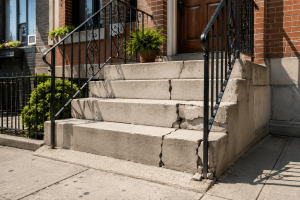
When damage appears on the ground floor and workers can reach it easily, the repair is simpler. However, many NYC buildings need scaffolding, especially when the damage is on upper stories, facades, or above stoops and doors.
Tight spaces between buildings, narrow streets, and city rules about sidewalk access can also affect how the crew plans the job. As a result, the work takes more time and costs more.
Area of Repair
The size of the repair area matters, but not always for the reason people expect.
For example, a small repair area can cost more per square foot because the crew still needs time to prepare the area, mix materials, and set up the work. Larger areas may create better efficiency, but they still require more materials.
So it is not only the square footage that matters, but also how the damage is distributed. In some cases, repairing many small damaged areas on one wall takes longer than repairing one larger section.
Matching Existing Materials and Appearance
In New York, appearance matters, especially in neighborhoods with strong architectural consistency.
A good repair needs to do more than function. It also needs to blend into the existing building. That means matching the mortar color, texture, joint profile, and sometimes decorative details.
That level of matching takes time and skill. If the repair does not match well, people notice it immediately, and even after the work is complete, it can affect the property’s value.
Labor and NYC-Specific Conditions
New York City is expensive, and masonry work requires real skill. The job involves much more than applying material to a wall. The crew needs to prepare the substrate properly, understand how the building moves over time, and make sure the repair fits the surrounding conditions.
Then there are the conditions unique to NYC buildings. They are often old, tightly spaced, built with shared walls, and exposed to constant weather stress. All of that increases the attention to detail the repair needs. In many cases, masonry repair costs in NYC increase when the visible damage is only part of a larger moisture or structural problem.
Is It a Repair or Greater Work?
This is where estimates often start to vary.
If the problem is localized and the rest of the structure is in good shape, a repair may be enough. But if you see signs of more serious damage, such as moving bricks, widespread joint failure, or continuing dampness, the contractor may need to do more extensive work.
That does not always mean a full rebuild. However, it does mean taking a broader approach, and that affects both the scope and the cost.
Mistakes That Can Impact Repair Costs
One of the most common mistakes is trying to handle masonry problems in pieces without fixing the root cause. That may feel like a way to save money in the short term, but it often leads to repeated repairs that cost more over time.
Another mistake is using materials that do not match the original structure. The wrong mortar or patching method can actually speed up deterioration and create more work later.
Delaying repairs also drives up cost. What starts as a small, manageable issue can spread, especially in New York weather, and turn a simple repair into a much larger project. The best way to control masonry repair costs in NYC is to identify the real cause early and avoid repeated patch repairs that do not last.
If you are starting to notice cracks, worn joints, or areas that do not look quite right, it is worth having someone take a closer look before the damage spreads. NY Concrete can help you understand what is actually happening behind the surface, what kind of repair makes sense, and how to approach it in a way that avoids unnecessary costs later.