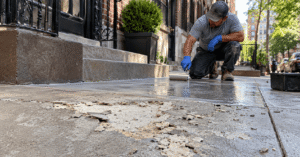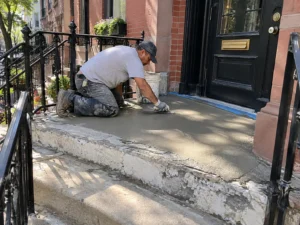
Sidewalk repair in NYC becomes important as soon as concrete in front of a property starts to crack, shift, or break apart. In New York City, sidewalk damage is not just a cosmetic issue. It directly affects safety, responsibility, and, in many cases, violation risk. Understanding sidewalk repair in NYC early helps property owners figure out what needs to be fixed, how serious the issue is, and what type of repair makes the most sense.
For many property owners, the confusion is not just about the damage itself. It is also about understanding what actually needs fixing, how serious the issue is, and what kind of repair makes sense.
Quick Answer
Sidewalk repair in NYC usually involves removing damaged concrete sections, often called flags, fixing the base underneath if needed, and installing new concrete that meets city requirements. Small cracks may still be repairable in some cases, but uneven, lifted, or broken sections usually need full replacement to resolve safety and compliance issues.
What Sidewalk Damage Usually Looks Like
Sidewalk problems do not always show up as large, obvious breaks. Most of the time, they begin in smaller ways.
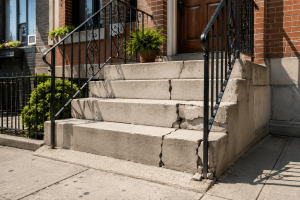
You might notice a crack running across one slab, or a section sitting slightly higher than the one next to it. In some areas, the surface may feel rough or worn down, especially near the edges. Other times, the issue is more subtle, a slight dip where water collects after rain, or a corner that has started to chip away.
Over time, these small changes usually get worse. A crack widens, one slab shifts against another, or a section sinks just enough to create an uneven step. That is usually the point where it becomes more than just a maintenance issue.
Why Sidewalks in NYC Break Down Over Time
There is usually more than one reason behind sidewalk damage. In NYC, local conditions make concrete wear out faster than most owners expect.
Tree roots are one of the most common causes. As they grow, they push upward from underneath and lift sections of the sidewalk, which creates uneven surfaces. In other places, the opposite problem happens: settlement. The ground beneath the concrete shifts or compacts, so parts of the sidewalk sink.
Water also plays a major role. If it gets under the slab and does not drain properly, it can weaken the base. In winter, that same water freezes and expands, which puts pressure on the concrete from below. Over time, this freeze-thaw cycle leads to cracking and movement.
Then add heavy foot traffic, aging materials, and older installations that crews may not have built properly, and it becomes clear why sidewalk damage is so common across the city.
When a Crack Becomes a Real Problem
Not every crack means the sidewalk needs immediate replacement, but some conditions are more serious than they first appear.
A narrow surface crack that has not shifted may not be urgent. However, once there is a height difference between slabs, even a small one, it becomes a trip hazard. The same goes for loose or rocking sections, broken edges, or areas where the surface has started to crumble.
In NYC, these conditions do not just affect safety. They can also lead to violations if inspectors consider the sidewalk hazardous to pedestrians.
How Sidewalk Repair Actually Works
A proper sidewalk repair does not involve covering cracks or smoothing things over. In most cases, it requires removing the damaged section entirely.
The crew cuts out the affected slab, or flag, and removes it. After that, they inspect the base underneath. If the base is weak, uneven, or damaged by water or roots, they need to correct it before installing anything new.
Then they pour and finish new concrete so it sits level with the surrounding sidewalk and meets city standards. The goal is not just to fix the visible damage, but to make sure the section holds up over time.
Can It Be Repaired, or Does It Need Replacement?
This is where many property owners hesitate, and understandably so.
If the damage is minor and the slab is still stable, some types of repair may work. However, in many NYC cases, especially where there is unevenness, lifting, or a safety concern, replacement is the more reliable option.
Trying to patch or level a slab that has already shifted usually does not last. The movement underneath is still there, so the problem tends to return.
A proper inspection looks at the condition of the slab, the base, and the surrounding sections before anyone decides on the best approach.
Common Mistakes Property Owners Make
One of the biggest mistakes is waiting too long. What starts as a small issue can turn into a much larger repair if you leave it alone, especially through several seasons of weather changes.
Another common mistake is fixing only the surface by filling cracks or smoothing edges without dealing with what caused the damage in the first place. That kind of repair may improve the appearance temporarily, but it usually does not last.
Some owners also assume that if the damage looks minor, inspectors will not flag it. But inspectors usually focus on height differences, movement, and overall safety, not just the size of the crack.
What Property Owners Often Miss
Many owners focus only on the visible crack or broken section, but sidewalk issues are rarely isolated.
When one slab has shifted, there is a good chance nearby sections have started to move as well. Water drainage, root growth, and soil conditions do not affect only one small area. Looking at the sidewalk as a whole usually gives a clearer picture of what is really happening.
Why NYC Sidewalk Repairs Are Different
Sidewalk repair in NYC comes with its own set of challenges. Space is limited, foot traffic is constant, and many sidewalks are already decades old.
On top of that, repairs must meet specific city requirements, especially when a violation already exists. What might count as a simple fix elsewhere often requires a more structured approach here.
That is why owners need to understand both the physical condition and the local requirements before starting any work.
When to Take Action
If you have noticed cracks getting wider, slabs shifting, or areas becoming uneven, it is usually a good time to get the sidewalk checked. Waiting usually makes the issue more visible and more complicated to fix.
Addressing the problem early can help keep the repair straightforward and reduce the chance that it turns into a safety concern or violation.
If the sidewalk in front of your property is cracked, uneven, or starting to shift, NY Concrete can inspect it and explain what is actually happening. Whether the problem involves a section that can still be addressed early or something that needs a more complete repair, the focus is on fixing it properly so it stays safe and holds up under NYC conditions.