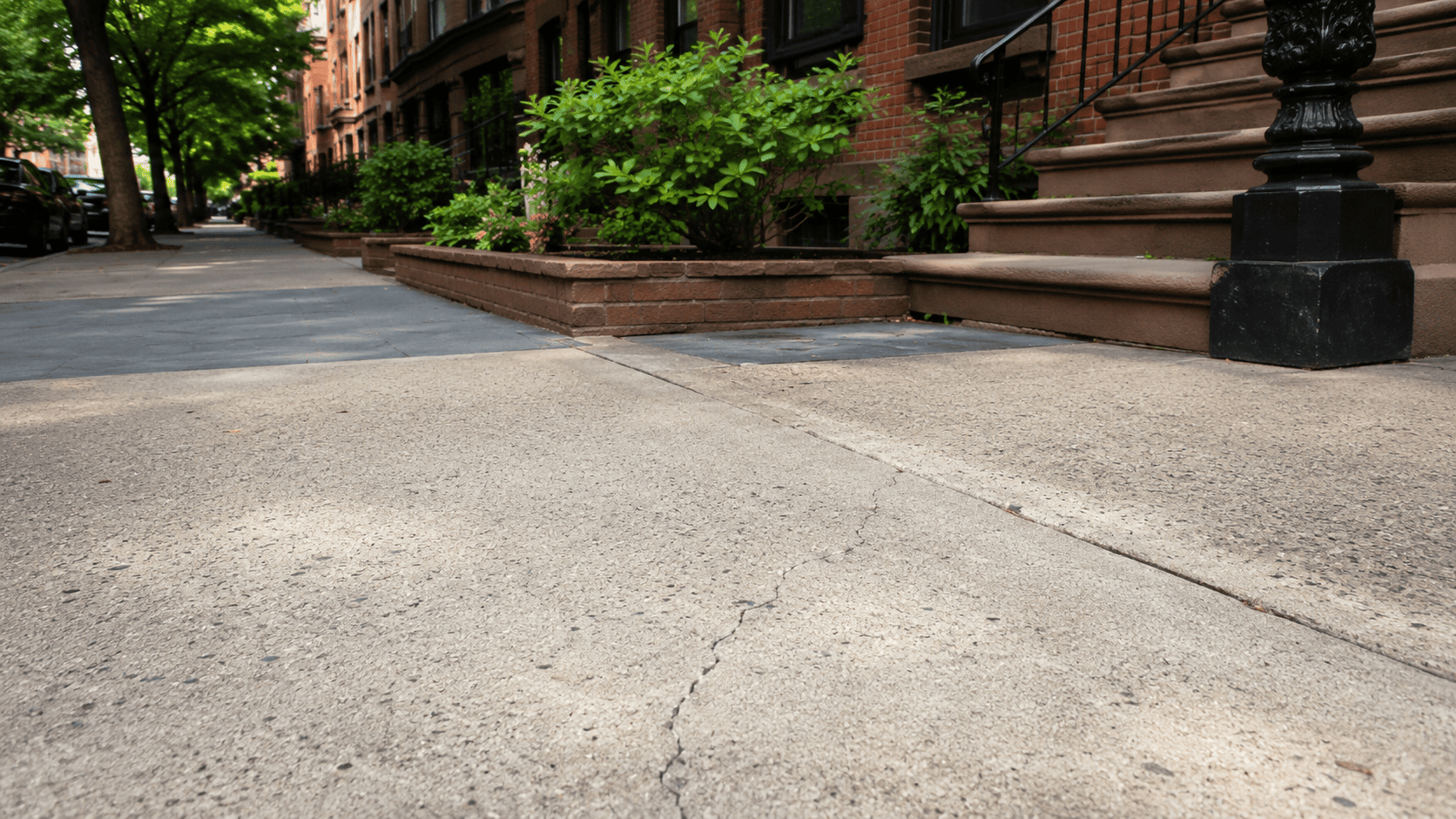
Small concrete cracks NYC property owners notice on driveways, sidewalks, patios, or walkways can seem easy to ignore at first. They may not cause anyone to trip, and the surface may still look usable. However, small cracks can sometimes point to water, base movement, or early concrete failure.
Sometimes that is true.
The problem is that small cracks are often the first visible sign that something underneath the concrete has started to change. Water may already be getting below the surface, the base may be shifting, or repeated freeze-thaw cycles may slowly be forcing the crack wider every season.
The earlier you understand what caused the crack, the easier it is to keep it from becoming a much larger repair.
Quick Answer
Small concrete cracks should be inspected when they begin widening, spreading, collecting water, or appearing alongside uneven or sinking concrete. While some surface cracks are harmless, others indicate movement or moisture problems that can lead to more expensive repairs if left untreated.
Not Every Crack Is a Serious Problem
One of the biggest misconceptions is that every crack means the concrete is failing.
Concrete naturally expands and contracts as temperatures change, so minor hairline cracks can appear over time without affecting the strength of the slab.
What matters is whether the crack stays the same or continues changing.
If it becomes wider, grows longer, or starts connecting with other cracks, there is usually a reason behind it. The concrete is often responding to movement underneath rather than simply aging.
That is why the size of the crack is only part of the story.
When a Small Crack Starts Becoming a Bigger Problem
Concrete rarely gives just one warning sign. Small concrete cracks NYC contractors inspect often become more serious when water collects nearby or the slab begins shifting.
You may first notice a thin crack running across your driveway or sidewalk. A few months later, that same area starts holding water after it rains. Then one edge of the slab begins sitting slightly higher than the other.
These changes are usually connected.
As water enters through the crack, it can weaken the material supporting the concrete. During winter, that trapped moisture freezes and expands, putting even more pressure on the slab.
What looked like a harmless crack can gradually become settlement, uneven concrete, or surface deterioration.
Water Is Often the Real Cause
Many concrete repairs are actually water problems in disguise.
Once moisture finds its way into a crack, it does not simply stay on the surface. It begins working beneath the concrete, softening the supporting base and creating space for the slab to shift.
This is especially common in NYC, where repeated freeze-thaw cycles place constant stress on concrete throughout the year.
The crack itself may be small, but the damage happening underneath can continue long after the surface first splits.
That is why simply filling the crack without understanding why it formed often leads to the same problem returning.
Watch for Changes Around the Crack
A crack that remains exactly the same year after year is very different from one that keeps changing.
Pay attention to what is happening around the damaged area.
If pieces of concrete begin breaking away, the surface starts crumbling, water consistently collects nearby, or the slab begins sinking, those are signs that the problem is becoming more than cosmetic.
Even subtle movement can suggest that the concrete is no longer being properly supported underneath.
Looking beyond the crack itself often tells you much more about the condition of the concrete.
What Property Owners Often Miss
Most people judge a crack by its width.
Contractors usually pay closer attention to its pattern and location.
A narrow crack running across a stable slab may require very little attention. Meanwhile, a similar-looking crack near the edge of a driveway, next to a garage, or across an uneven sidewalk flag may point to settlement or structural movement.
It is also common for homeowners to repair the crack they can see while overlooking nearby drainage issues that caused it in the first place.
Unless the source of the movement is addressed, the repair often has a limited lifespan.
Repair or Replacement: How Is the Decision Made?
Small cracks do not automatically mean the concrete needs to be replaced.
If the slab remains level, stable, and well-supported, repairing the damaged area is often enough to prevent the problem from spreading.
Replacement is generally considered when cracks are accompanied by widespread settlement, significant movement, multiple failing sections, or deterioration that extends beyond the surface.
The decision is based on the condition of the concrete as a whole rather than the crack alone.
A proper inspection helps determine whether the damage is isolated or part of a much larger issue.
Common Mistakes to Avoid
One of the most common mistakes is assuming that because the crack is small, it can safely wait another year.
Another is applying a surface patch without investigating why the crack appeared.
Many recurring repairs happen because water, drainage problems, or settlement continue affecting the slab underneath.
It is also easy to overlook nearby warning signs such as rough surfaces, loose edges, or small areas of sinking concrete. Together, these often tell a much clearer story than the crack by itself.
Why Small Cracks Worsen Faster in NYC
Concrete in NYC deals with constant pressure from changing temperatures, moisture, heavy traffic, and aging infrastructure. Small concrete cracks NYC surfaces develop can spread faster because freeze-thaw cycles, moisture, traffic, and aging concrete keep adding pressure.
Every winter, water enters small openings in the concrete, freezes, expands, and slowly makes those openings larger. Over time, repeated freeze-thaw cycles turn minor imperfections into visible structural damage.
That is why cracks that seem insignificant today often become much more noticeable after another season of rain, snow, and freezing weather.
Early repairs help stop that cycle before it affects larger sections of the concrete.
When to Schedule an Inspection
If a crack has started growing, water collects around it, nearby concrete is shifting, or the surface is beginning to crumble, it is a good time to have the area inspected.
Finding the cause early often allows the repair to remain simple and focused before the damage spreads to surrounding concrete. NY Concrete can inspect small concrete cracks NYC property owners notice and recommend the right repair before the damage spreads.
If you’ve noticed small cracks in your driveway, sidewalk, patio, or other concrete surfaces, NY Concrete can inspect the area and determine whether the damage is simply cosmetic or a sign of a larger problem. Whether the solution is a targeted repair or a more extensive restoration, the goal is to stop the damage early and provide a repair that stands up to everyday NYC conditions.