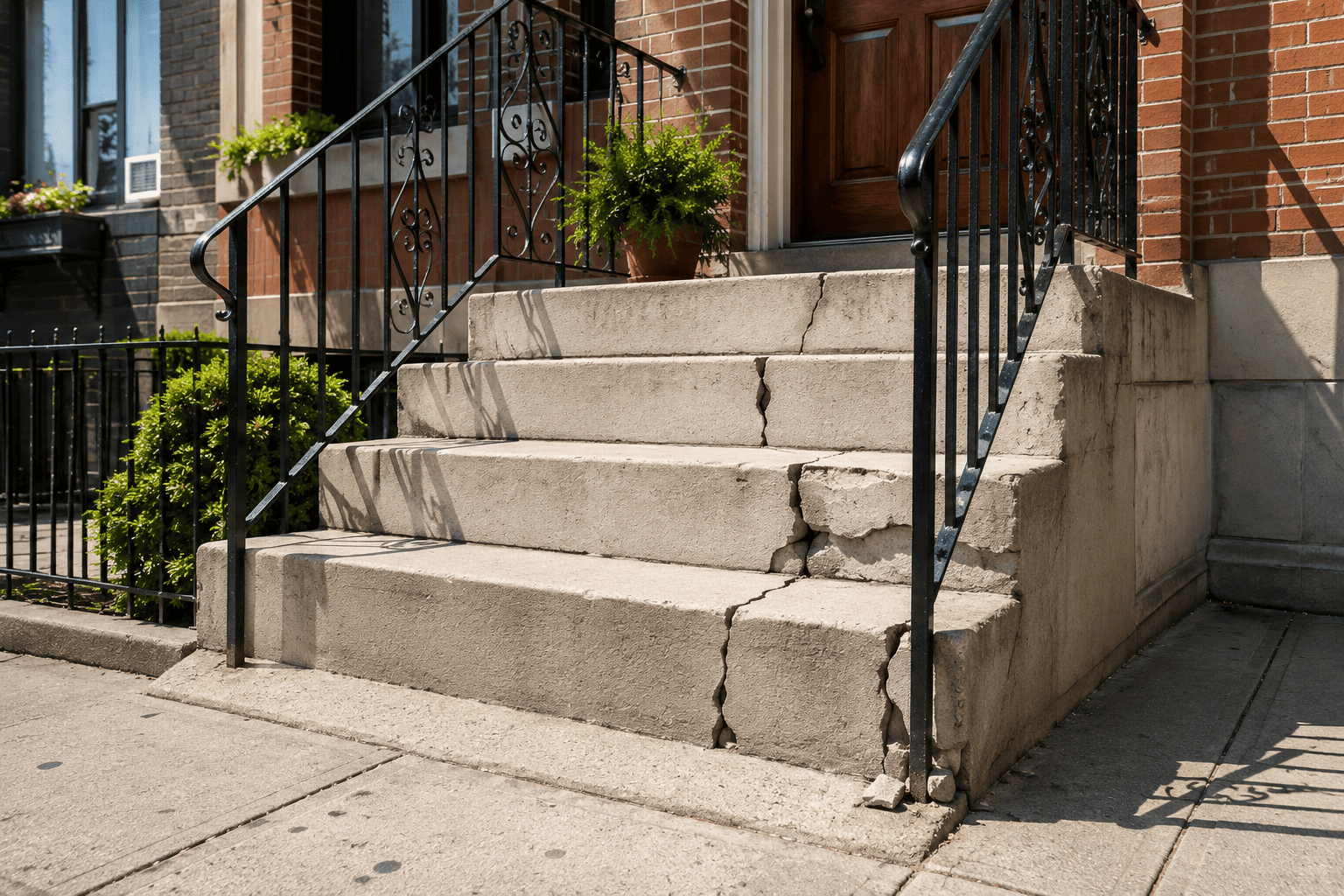
Stoop crack repair in NYC can stop small cracks from turning into loose steps, unstable railings, and larger structural problems. A crack in your stoop might seem like nothing more than an eyesore. You notice it every time you walk in or out of your home. However, because the steps still feel usable, it is easy to believe the problem can wait.
That is how many serious stoop problems begin.
A crack is often the first visible sign that the structure has started changing underneath. Water may be entering the concrete or masonry. The foundation may be settling, or years of freeze-thaw weather may have weakened the materials holding everything together.
If you ignore the damage, those small cracks can turn into loose steps and unstable railings. Eventually, the stoop may no longer feel safe to use.
The sooner you identify the cause, the easier it becomes to prevent the damage from spreading.
Quick Answer
You should arrange a professional inspection if stoop cracks begin widening or spreading across several steps. You should also act if the cracks appear beside loose railings, sinking areas, movement, or crumbling concrete.
Small surface cracks may only need repairs. However, deeper cracks often point to structural problems. Addressing them early can help prevent the stoop from becoming unsafe.
Not Every Crack Means Your Stoop Is Failing
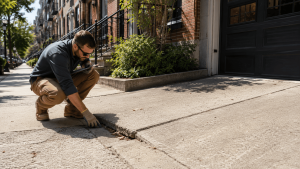
Seeing a crack does not automatically mean you need a brand-new stoop. The right approach to stoop crack repair in NYC depends on the crack depth, structural movement, moisture damage, and condition of the supporting base.
Concrete and masonry naturally expand and contract as temperatures change. Therefore, small surface cracks can develop over time without affecting the overall structure.
The concern begins when the crack refuses to stay the same.
If it becomes wider, stretches across more steps, or keeps returning after previous repairs, something may be happening beneath the surface. The stoop may be shifting. Moisture may be weakening the materials, or years of wear may finally be affecting the structure.
The crack is often a warning sign rather than the actual problem.
Loose Steps Should Never Be Ignored
One of the clearest signs that a cracked stoop needs attention is movement.
If a step feels loose, rocks under your foot, or sounds hollow, the problem may go deeper than the visible crack.
Water may have weakened the material underneath. Mortar joints may have deteriorated, or the base supporting the steps may have started settling.
At first, the movement might seem minor.
However, everyday use keeps placing weight on that weakened section. Over time, the damage can spread through the stoop.
Watch for Damage Around the Crack
The crack itself rarely tells the whole story.
Look around the rest of the stoop.
You may notice mortar falling from the joints or bricks becoming loose. Cheek walls may begin to separate, or gaps may form where the stoop meets the house.
Water stains and crumbling edges can also suggest long-term moisture problems.
These signs are often connected.
Looking at the entire stoop instead of one cracked step gives you a clearer picture of what is happening.
Water Is Often the Real Cause
Many stoop repairs begin with water, even when the damage looks like a simple crack.
Rainwater enters through small openings in concrete, mortar joints, or around the edges of the steps. Once inside, it slowly weakens the materials holding the stoop together.
During winter, the trapped moisture freezes and expands.
Each freeze-thaw cycle places more pressure on the crack. As a result, the crack grows while the surrounding concrete or brick becomes looser.
That is why patching the crack without solving the moisture problem often leads to another repair later.
What Property Owners Often Miss
Many homeowners focus entirely on the cracked step because it is the easiest thing to see.
An experienced contractor looks well beyond that.
They check whether the railing anchors remain secure. They also inspect the cheek walls, drainage, and the base beneath the stoop.
The visible crack is often only one symptom of a larger issue.
Finding the real cause is what makes a repair last.
Repair or Rebuild: How Is the Decision Made?
Not every cracked stoop needs a full rebuild.
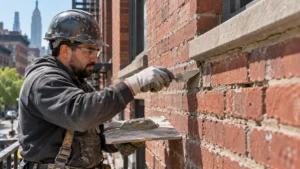
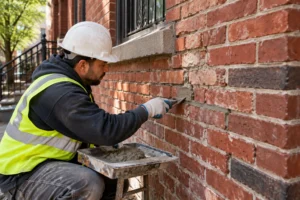
If the structure remains stable and the damage affects only one area, a focused repair may be enough. This could include repairing cracked concrete, replacing damaged bricks, or restoring deteriorated mortar.
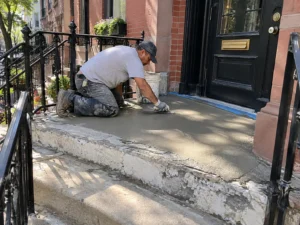
A rebuild usually becomes necessary when several steps become loose. It may also be needed when the cheek walls separate, the stoop settles, or the structure pulls away from the building.
The condition of the entire stoop should guide the decision, not the appearance of one crack.
Some stoops with noticeable cracks can still be repaired successfully. Meanwhile, others with less visible damage may have serious movement underneath.
Common Mistakes to Avoid
One common mistake is filling a crack without finding out why it appeared.
If settlement or water intrusion continues, the repair often fails sooner than expected.
Another mistake is assuming a loose railing only needs tightening. In many cases, the anchors become unstable because the surrounding concrete or masonry has started deteriorating.
Waiting until the steps feel unsafe also reduces your repair options. Early repairs are usually simpler, less disruptive, and more affordable than rebuilding major sections.
Why Stoop Damage Gets Worse Faster in NYC
NYC stoops face constant exposure to rain, snow, freezing temperatures, and heavy daily use.
Many homes throughout the city also have older masonry and concrete. These materials may have already endured decades of freeze-thaw cycles.
Once moisture enters through small cracks, deterioration can speed up quickly.
That is why small problems that seem harmless in spring may look much worse after another New York winter.
Repairing the damage early helps protect both the safety and lifespan of your stoop.
When to Schedule an Inspection
Arrange a professional inspection if your stoop has widening cracks, loose steps, unstable railings, separating cheek walls, or signs of water damage. Scheduling stoop crack repair in NYC early may allow a contractor to correct the damaged area before movement spreads to nearby steps or railings.
Identifying the problem early often allows a contractor to make targeted repairs before larger structural issues develop.
If your stoop has cracked steps, loose bricks, unstable railings, or other signs of deterioration, NY Concrete can inspect the structure. Our team can identify the cause and recommend the right repair for your property.
Whether the solution involves a focused repair or a more extensive restoration, the goal remains the same: restore a safe, durable stoop that can handle everyday NYC conditions for years to come.