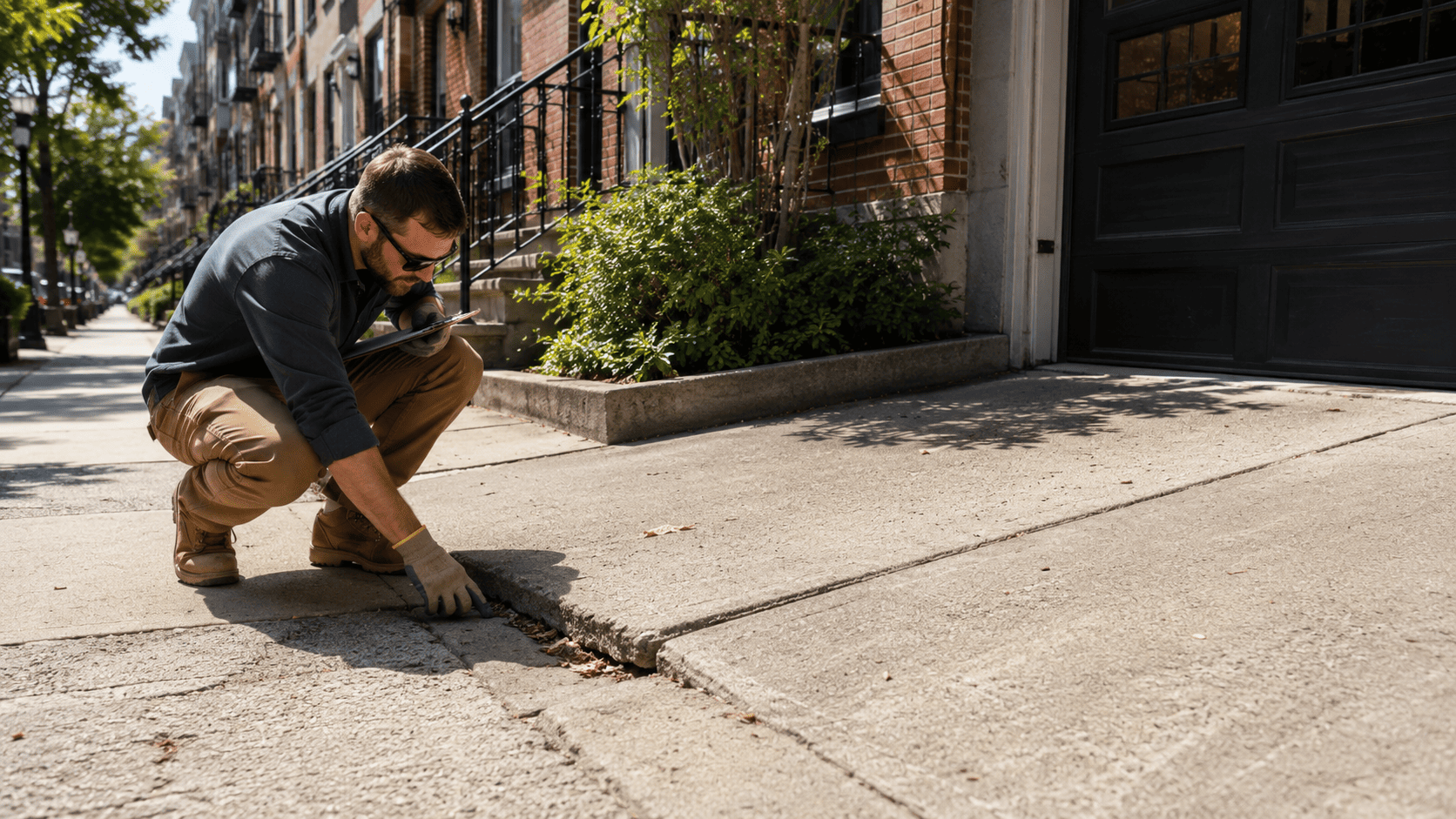
Sinking driveway repair NYC becomes important when a driveway starts settling, collecting water, or feeling uneven under vehicle weight. A driveway rarely sinks overnight. Most of the time, the change happens slowly until you notice pooling water, widening cracks, or a section that dips when you pull in.
Most of the time, the change is so gradual that homeowners barely notice it. One day you realize rainwater always collects in the same place, your car feels like it dips slightly as you pull in, or a crack that used to be small has become much wider than you remember.
These are not simply signs of an aging driveway. They often mean the concrete is no longer being properly supported underneath.
The longer a sinking driveway is left alone, the more likely it is to develop larger cracks, uneven slabs, drainage problems, and repairs that are far more extensive than they needed to be.
Quick Answer
A sinking driveway should be inspected when sections of concrete begin settling, cracks continue growing, water pools on the surface, or the driveway no longer feels level. While minor settlement can sometimes be repaired, ongoing movement usually points to problems beneath the slab that should be addressed before the damage spreads.
Why Driveways Start Sinking
A sinking driveway is almost always caused by something happening below the concrete rather than on top of it. Sinking driveway repair NYC should focus on the cause below the concrete, not only the visible cracks or low spots on the surface.
Over time, the soil supporting the driveway can settle naturally or become weakened by water. As that support disappears, the concrete slowly begins to drop.
In some cases, years of vehicle traffic gradually compress the base underneath. In others, poor drainage allows rainwater to wash away the material supporting the slab.
Whatever the cause, the concrete simply follows the movement below it.
That is why fixing only the visible surface rarely solves the problem for long.
The Warning Signs Are Often Easy to Miss
Most sinking driveways do not begin with a dramatic collapse.
Instead, you may notice small changes that become more obvious over time.
Your driveway may feel uneven as you drive across it. A section near the garage may appear slightly lower than the rest. You might notice cracks becoming wider each year or find yourself avoiding the same low spot after every rainfall because it never seems to dry.
These changes often develop so slowly that homeowners adapt to them without realizing the driveway is continuing to move.
Water Is Usually Part of the Problem
One of the biggest clues that a driveway is sinking is standing water.
Concrete should guide rainwater away from your home, not allow it to collect on the surface.
When water repeatedly pools in the same location, it often means the driveway has already settled enough to change its slope.
That standing water creates another problem.
Moisture continues working its way through small cracks and joints, weakening the supporting base even further. During winter, the trapped water freezes and expands, putting additional stress on the concrete.
What begins as a drainage issue often becomes a structural one.
What Property Owners Often Miss
Many homeowners focus on the crack they can see instead of the movement they cannot.
A crack is often the result of the driveway sinking, not the cause of it.
An experienced contractor pays close attention to the surrounding area. They look for signs of settlement near the garage, check whether the curb edge is beginning to drop, examine how water flows across the surface, and look for nearby slabs that may also be starting to shift.
Looking at the entire driveway usually provides a much clearer understanding of why the damage occurred.
What the Sinking Pattern Can Tell You
The location of the settlement often offers valuable clues.
If the driveway is sinking near the garage, repeated vehicle weight and weakened base material may be contributing to the problem.
When settlement occurs near the curb, years of water runoff or changing soil conditions may be responsible.
If only one corner has dropped, poor drainage or localized soil movement could be affecting that specific area.
These patterns help determine whether the damage is isolated or part of a larger issue affecting the entire driveway.
Repair or Replacement: How Is the Decision Made?
Not every sinking driveway has to be completely replaced.
If the settlement is limited to one section and the surrounding concrete remains stable, repairing the affected area may be enough to restore the driveway.
Replacement usually becomes the better option when several slabs have shifted, large portions of the driveway have settled, or the supporting base has deteriorated across a wider area.
The decision depends on what is happening underneath the concrete just as much as what is visible on the surface.
A proper inspection helps determine which solution will provide the most reliable long-term result.
Common Mistakes to Avoid
One of the biggest mistakes is treating settlement as a cosmetic issue.
A sinking driveway is usually a sign that the support beneath the concrete has changed. Simply patching cracks or resurfacing the driveway without addressing that movement often leads to the same problems returning.
Another mistake is ignoring standing water because it seems harmless. In reality, poor drainage is one of the most common reasons driveway settlement continues getting worse.
Taking care of the underlying cause is usually far more effective than repairing the surface alone.
Why Sinking Driveways Are Common in NYC
Driveways throughout NYC deal with conditions that constantly put pressure on concrete.
Changing weather, repeated freeze-thaw cycles, heavy vehicles, aging properties, and limited drainage all contribute to settlement over time.
Many residential driveways in Brooklyn, Queens, and other parts of the city have also been in place for decades, meaning the supporting base has experienced years of moisture, temperature changes, and daily use.
These local conditions make early inspections especially important when settlement first appears.
When to Schedule an Inspection
If your driveway has started sinking, developed widening cracks, collected standing water, or no longer feels level when you drive across it, it is a good idea to have it professionally inspected.
Finding the cause early often allows repairs to stay focused on the affected area before larger sections of the driveway become damaged. NY Concrete provides sinking driveway repair NYC services for settlement, uneven slabs, widening cracks, and recurring drainage problems.
If your driveway is showing signs of settlement, uneven concrete, widening cracks, or recurring drainage problems, NY Concrete can inspect the area and determine what is causing the movement. Whether the solution is a targeted repair or a more extensive restoration, the goal is to provide a driveway that stays level, durable, and ready to handle everyday NYC conditions for years to come.