Masonry damage property value NYC is an important issue for any owner trying to protect a building’s long-term worth. In New York City, exterior masonry does more than shape curb appeal. It protects the structure, affects buyer confidence, and can influence appraisals, negotiations, and repair costs. Understanding masonry damage property value NYC risks early can help owners avoid larger losses later.
If you own a building in New York City, your property is more than just a home or a business, it’s a high-stakes investment. In a city where real estate is valued by the square foot, the condition of your exterior masonry is one of the most critical factors in determining that value. Whether it’s a classic limestone facade in Manhattan or a brick multi-family in Queens, your masonry works 24/7 to protect your equity.
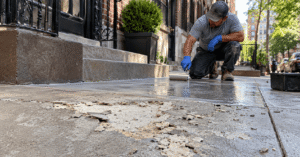
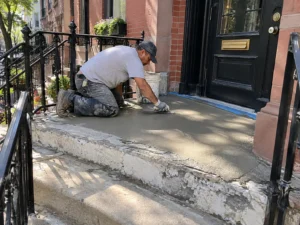
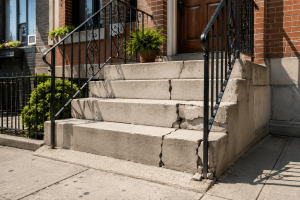
Eventually, the elements take their toll. You might see a white salty film on the bricks, a small crack in the lintel, or a piece of the stoop that has flaked off. When that happens, it isn’t just an aesthetic issue; it’s a financial one. Understanding how masonry health impacts your bottom line is essential for avoiding “equity erosion” and costly NYC Department of Buildings (DOB) complications.
The Financial Multiplier of Deferred Maintenance
Think of masonry maintenance as an insurance policy for your building’s structure. In the unique NYC climate, small issues don’t stay small for long. Every season you wait to fix a minor masonry flaw, the eventual repair bill grows exponentially.
The Impact:
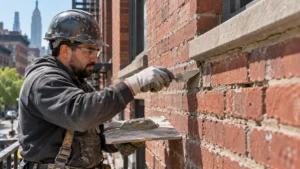
A small hairline crack in a mortar joint allows driving rain to enter the wall. During a typical New York winter, that moisture freezes and expands, a process known as “freeze-thaw” action. What began as a simple $500 touch-up can quickly escalate into a $50,000 structural rebuild if the water reaches the internal steel supports or causes the brick to pull away from the frame.
Why It Drains Value:
- Compounding Costs: Proactive repairs cost a fraction of emergency structural work.
- Collateral Damage: Water entry through masonry often leads to interior issues like warped hardwood floors, ruined plaster, and mold, all of which further slash your property’s appraisal.
- Negotiation Power: Savvy NYC buyers will use visible masonry damage as a “leverage point” to knock tens of thousands of dollars off your asking price.
The “Curb Appeal” Premium and Buyer Psychology
In the competitive NYC market, first impressions are everything. Real estate experts often speak about the “Halo Effect”, where a buyer’s perception of the exterior dictates how they feel about the interior. In many cases, masonry damage property value NYC problems become more expensive because buyers, inspectors, and lenders all treat visible facade issues as warning signs.
The Visual Red Flags:
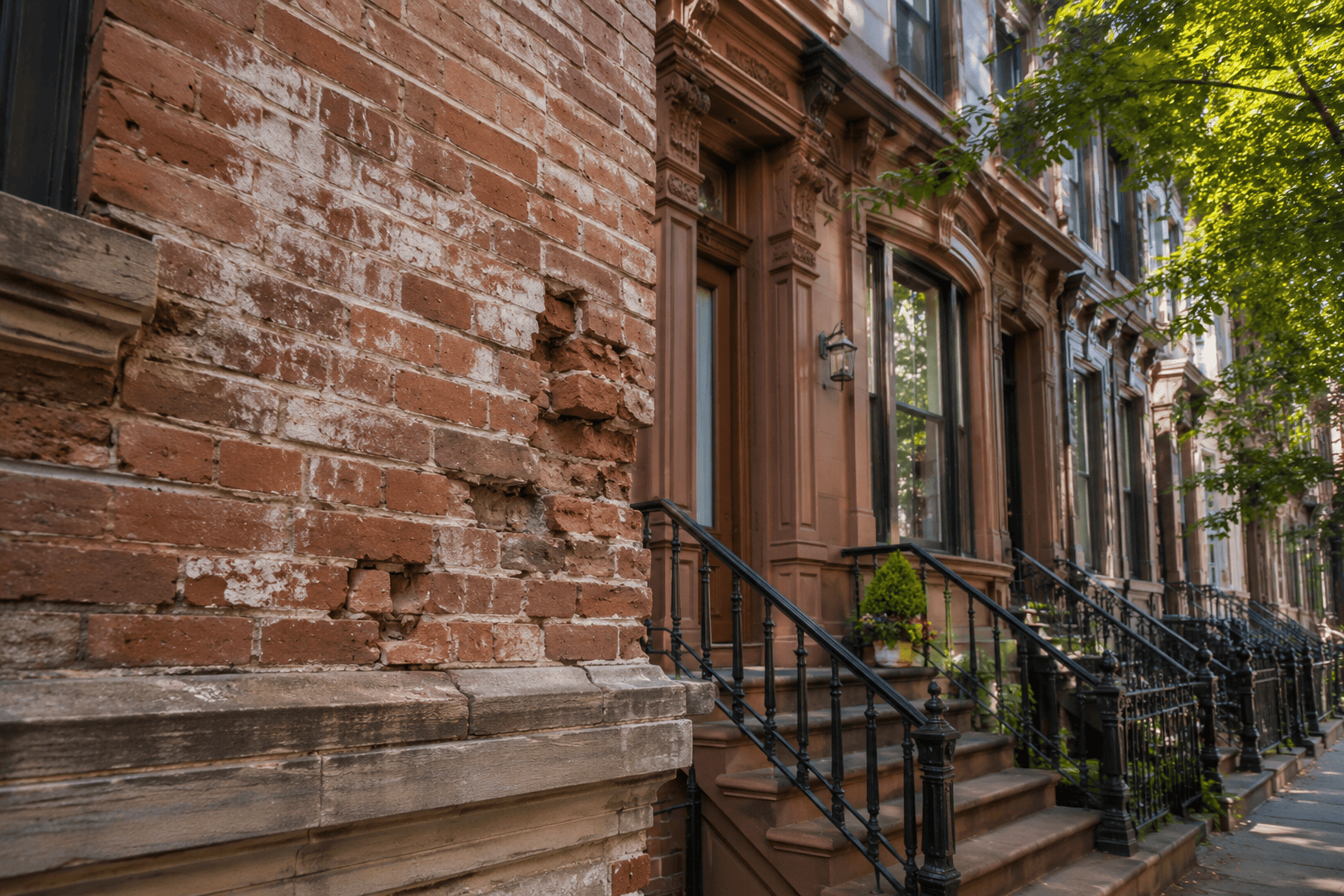
- Spalling: When the face of your brick or stone peels off, it signals to a buyer that the building’s “skin” is failing.
- Efflorescence: That white, powdery staining isn’t just salt; it’s a red flag for inspectors that water is moving through your walls.
- Scaffold Sheds: Nothing kills property value faster than a sidewalk shed. These “black boxes” darken the street, hurt ground-floor retail, and signal to the world that the building has outstanding safety liabilities.
The Value Boost:
Properties with a clean, well-pointed facade and sharp architectural details command a 5% to 15% premium. Buyers are willing to pay more for “turn-key” masonry because it represents one less massive expense they have to worry about after closing.
The Legal Reality: FISP and Local Law 11
For many NYC owners, masonry health isn’t just a choice, it’s a legal mandate. The Facade Inspection & Safety Program (FISP) requires buildings over six stories to undergo rigorous inspections every five years.
The Risk of Neglect:
If an inspector labels your building as “Unsafe” due to loose bricks or crumbling cornices, the financial fallout is immediate. You are legally required to install safety netting or scaffolding, which comes with high monthly rental fees. Until the masonry is repaired and the status is updated to “Safe,” the building’s marketability is severely hampered, and refinancing becomes nearly impossible.
Pro Tip: Even for smaller residential buildings not subject to FISP, a “Safe” and well-maintained facade is a badge of honor that makes the appraisal process much smoother when it’s time to sell or take out a home equity line of credit.
Historical Preservation as a Strategy
If you own a landmarked property or a historic townhouse, your masonry is your value. The unique carvings and period-correct brickwork are what make your property irreplaceable in the sea of modern glass-and-steel developments.
Preserving the Assets:
- Authenticity: Using the wrong mortar or “patching” historic stone with cheap cement can permanently ruin the architectural integrity of a building, causing the stone to crack further and tanking the resale value.
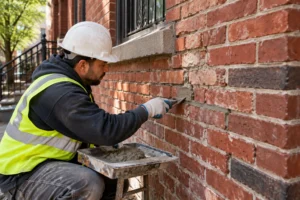
- Long-Term Durability: Professional restoration using breathable, lime-based mortars ensures the building can survive another century. This historical “character” is exactly what high-end NYC buyers are looking for.
The Verdict
Masonry damage is like a slow leak in your bank account. If your facade is solid and well-maintained, your property value stays protected. However, if you ignore the signs of decay, you are essentially letting your equity flake away onto the sidewalk. The longer owners ignore facade issues, the more masonry damage property value NYC concerns can affect resale, refinancing, and repair budgets.
Investing in timely pointing and stone restoration isn’t just an expense, it’s the most effective way to secure your financial future in the world’s most valuable real estate market.
Are you seeing “red flags” on your facade? Don’t let a small crack turn into a big loss.