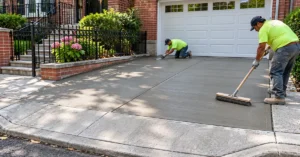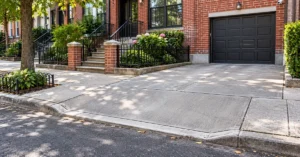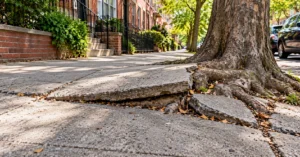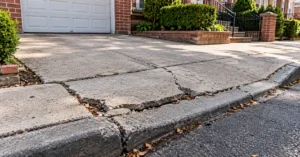
Common NYC sidewalk violations include trip hazards, broken or missing concrete flags, improper sidewalk slopes, and unapproved patchwork. The New York City Department of Transportation (NYC DOT) can issue a Notice of Sidewalk Violation when inspectors identify qualifying defects that require correction.
However, not every sidewalk crack automatically qualifies as a violation. NYC has specific standards for identifying defective sidewalk conditions.
Property owners generally must maintain the public sidewalks adjoining their buildings. If DOT issues a violation, the owner usually has 75 days after receiving the notice to arrange the required correction.
Importantly, a DOT sidewalk violation itself does not carry a fine. Nevertheless, the City may perform repairs and bill the property owner if the defects remain unresolved.
This guide explains four common sidewalk defect categories, how to recognize them, and what property owners should do when repairs become necessary.
What Counts as a Sidewalk Violation in NYC?
NYC Administrative Code § 19-152 identifies sidewalk conditions that can qualify as substantial defects.
These include missing or severely damaged flags, loose or undermined concrete, trip hazards, improper slopes, hardware defects, structural-integrity problems, noncompliant construction, and certain forms of patchwork.
A sidewalk flag is an individual concrete section separated from adjacent sections by joints.
NYC DOT uses these categories to identify sidewalk conditions that require correction.
Here are four common examples that property owners should understand.
| Sidewalk defect | What to look for | Potential corrective work |
|---|---|---|
| Trip hazard | Raised edges or significant height differences between flags | Correct the defective flags and elevations |
| Broken, missing, or unstable flags | Severely cracked, loose, collapsed, or missing sections | Replace defective concrete flags and correct underlying problems |
| Improper sidewalk slope | Water retention or noncompliant sidewalk pitch | Correct elevations and restore appropriate drainage |
| Unapproved patchwork | Improper surface patches or unsuitable replacement materials | Remove noncompliant work and reconstruct affected flags as required |
These are examples of official DOT defect categories, not a ranking based on how frequently inspectors issue each violation.
1. Uneven Sidewalk Flags and Trip Hazards
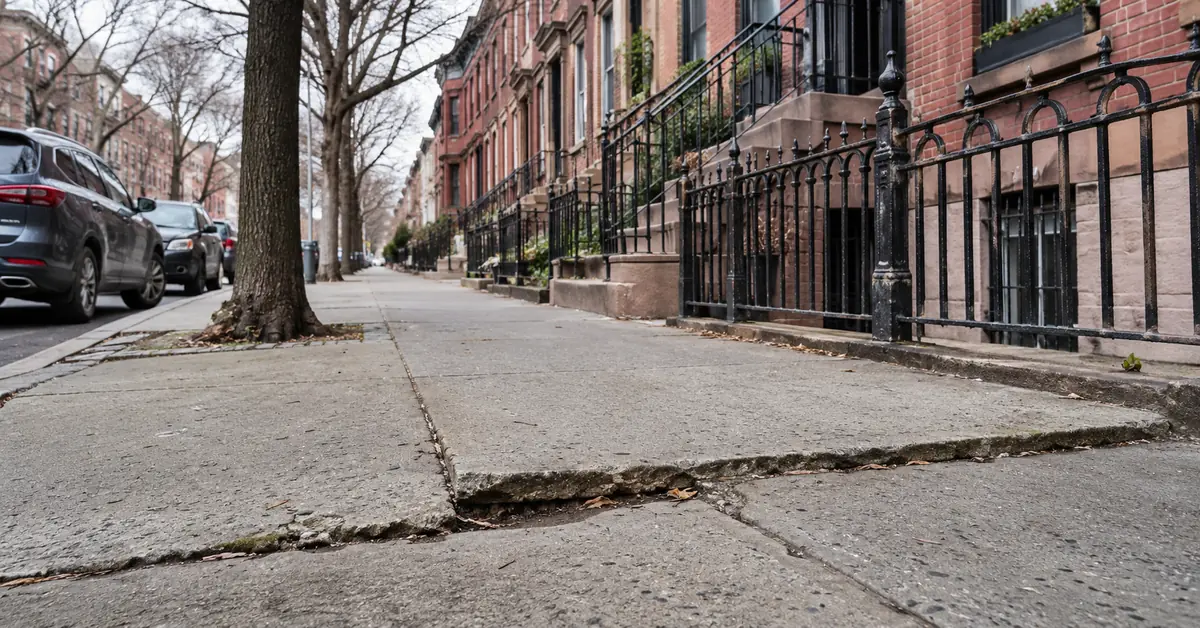
Uneven concrete is one of the most recognizable sidewalk safety problems.
Over time, settlement, tree-root pressure, soil movement, and other conditions can change the elevation of individual sidewalk flags.
For example, one concrete section may sit higher than the adjacent section. This creates an exposed edge where pedestrians can catch their shoes.
The problem becomes especially concerning along busy walkways, near entrances, and in areas with limited visibility.
When Does an Uneven Sidewalk Become a DOT Defect?
Under NYC’s sidewalk rules, a trip hazard includes a vertical height difference of at least ½ inch between adjacent sidewalk flags.
The definition also includes certain surface defects measuring at least one inch across in all horizontal directions and at least ½ inch deep.
However, property owners should not assume that smaller defects are harmless. Different conditions may still require maintenance or professional attention.
How Do Contractors Fix Uneven Sidewalk Flags?
The proper repair depends on the cause of the unevenness and the applicable DOT requirements.
For example, a defective concrete flag may require full replacement.
The contractor may need to remove the damaged concrete, prepare the underlying base, and reconstruct the section at the appropriate elevation.
Additionally, the crew should investigate recurring settlement or other support problems.
A temporary surface patch may not provide an acceptable correction for a DOT-designated defective flag.
What property owners should do: Inspect raised edges and unstable sections early. If DOT has issued a violation, follow the specific defects identified in the Preliminary Inspection Report.
2. Broken, Missing, or Unstable Sidewalk Flags
Broken concrete creates another important sidewalk safety concern.
While minor surface wear does not automatically mean a violation, extensive cracking can weaken an individual flag.
For example, a badly cracked section may contain loose pieces that pedestrians can dislodge.
Similarly, missing concrete can leave an opening or uneven walking surface.
NYC’s rules also identify undermined sidewalk flags with visible voids and loose flags that rock or seesaw.
These conditions deserve attention because the underlying support may no longer be adequate.
What Types of Damage Can Lead to a Violation?
Qualifying conditions can include:
-
One or more missing sidewalk flags
-
Cracked flags with pieces that can loosen or separate
-
Loose sections that rock when someone steps on them
-
Undermined flags with visible voids beneath them
-
Other defects involving the structural integrity of adjoining flags
However, the correct repair depends on the actual condition and the defects identified by DOT.
How Are Broken Sidewalk Flags Repaired?
When NYC DOT identifies a flag for replacement, the contractor must follow the applicable sidewalk construction specifications.
Depending on site conditions, the work may involve removing defective concrete, correcting unsuitable support, preparing the foundation, and placing new concrete.
The contractor must also account for required joints, elevations, surface finishing, and curing.
If the underlying base has deteriorated, simply replacing the visible concrete without correcting the support may leave the problem unresolved.
What property owners should do: Avoid relying on repeated cosmetic patches when the sidewalk has a significant defect. Instead, arrange an appropriate assessment and confirm the work required by DOT.
For related services, visit NY Concrete’s Sidewalk Repair NYC page.
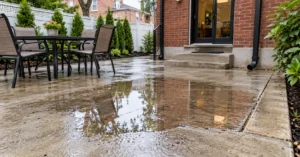
3. Improper Sidewalk Slope and Drainage
A sidewalk should provide an appropriate walking surface while directing rainwater toward the intended drainage location.
However, settlement, incorrect grading, and previous construction can create unsuitable elevations.
As a result, water may collect in low areas or flow in an unintended direction.
Recurring moisture can contribute to concrete deterioration. During winter, trapped water may also freeze and create slippery conditions.
What Does NYC DOT Consider an Improper Slope?
NYC sidewalk regulations identify several improper-slope conditions.
These include flags that retain water instead of draining toward the curb, sections that require replacement to provide adequate drainage, and cross slopes that exceed the applicable standards.
Therefore, drainage problems can involve more than a visible puddle.
The contractor must evaluate the sidewalk’s actual elevations and the relevant requirements.
How Do Contractors Correct Sidewalk Drainage?
The repair may involve removing and replacing affected flags to establish suitable elevations.
Additionally, the contractor should investigate settlement, nearby structures, and other conditions that influence drainage.
For example, a low sidewalk section near a building entrance may need a different approach from an uneven flag beside a tree pit.
However, redirecting water without considering neighboring properties, pedestrian access, or public infrastructure can create additional problems.
What property owners should do: Watch for recurring puddles and changes in sidewalk elevations. If DOT identifies an improper slope, use its report and specifications to determine the necessary correction.
4. Unapproved Sidewalk Patches and Improper Materials
Some sidewalk repairs look acceptable initially but fail to meet NYC DOT requirements.
For example, a property owner may fill a damaged concrete flag with asphalt or apply a shallow patch without addressing the full defect.
However, NYC’s sidewalk rules identify certain types of patchwork as substantial defects.
These include specified partial-depth repairs to damaged flags and the use of asphalt or other unapproved non-concrete materials.
The rules contain limited exceptions for certain work associated with public fixtures or installations.
Therefore, not every visible patch automatically creates the same violation, but owners should not assume that an inexpensive surface repair will satisfy DOT requirements.
Why Can Patchwork Become a Problem?
An unsuitable patch may create an uneven walking surface, separate from the surrounding concrete, or leave an underlying defect unresolved.
Additionally, noncompliant materials may fail to satisfy the City’s sidewalk construction specifications.
Consequently, a repair that looks smooth at first may still require further work.
How Do You Correct Improper Patchwork?
The appropriate correction depends on the original sidewalk condition and the applicable DOT requirements.
For a flagged defective section, the contractor may need to remove the unsuitable repair and replace the affected concrete flag.
The new work must follow the relevant construction specifications.
What property owners should do: Before approving patchwork, ask whether the proposed repair meets NYC DOT requirements and will resolve any existing sidewalk violation.
What About Sidewalk Damage Caused by Tree Roots?
Tree roots deserve special attention because NYC has different responsibility rules for qualifying properties.
Growing roots can lift concrete flags and create significant elevation differences.
However, tree-root damage is not a separate violation category that automatically makes every property owner responsible for the same repairs.
According to NYC DOT, the City no longer issues sidewalk violations or imposes liens on one-, two-, and three-family properties for sidewalk damage caused solely by City-owned trees.
The City also has special repair provisions for qualifying properties.
In contrast, owners of properties with four or more units, commercial buildings, and vacant lots generally remain responsible for sidewalk defects associated with tree roots.
Additionally, property owners and contractors should not cut or shave City-owned tree roots without the required authorization.
Therefore, confirm whether the damage involves a City tree before arranging construction.
For current guidance, consult NYC DOT’s Sidewalk Program.
Are Sidewalk Obstructions Also NYC Violations?
Yes, obstructing a public sidewalk can violate other NYC regulations.
For example, improperly placed construction materials, commercial displays, and other obstructions can restrict pedestrian access.
However, these matters do not belong to the same defect classification as broken concrete flags, trip hazards, or improper sidewalk slopes under § 19-152.
Different agencies and enforcement processes may apply.
Therefore, property owners should distinguish physical sidewalk defects investigated through the DOT Sidewalk Repair Program from other public-sidewalk violations.
Keeping sidewalks accessible and free from unauthorized obstructions remains important even when the concrete itself is in good condition.
What Happens If You Receive an NYC DOT Sidewalk Violation?
Receiving a sidewalk violation notice means NYC DOT has identified defects that require correction.
However, the notice does not automatically impose a fine.
Instead, the City provides a process for owners to arrange repairs and demonstrate that the sidewalk meets applicable requirements.
Step 1: Review the Preliminary Inspection Report
The Notice of Sidewalk Violation includes a Preliminary Inspection Report, commonly called the PIR.
This report identifies the sidewalk flags and conditions that DOT found during its inspection.
Review the report carefully before hiring a contractor.
For example, confirm that the property details and marked sidewalk areas match the actual conditions.
If the report appears incorrect, NYC provides a process for requesting reinspection.
Step 2: Understand the 75-Day Period
NYC DOT generally gives property owners 75 days after receiving the notice to address the identified defects.
If the owner does not arrange the required correction, the City may perform the work or hire a contractor.
The Department of Finance may then bill the responsible property owner.
A DOT sidewalk violation itself has no fine, but City-arranged repairs can create significant expenses.
Obtaining a sidewalk construction permit does not automatically extend the applicable period.
Therefore, owners should begin evaluating repairs promptly.
Step 3: Hire a Qualified Sidewalk Repair Contractor
Choose a contractor familiar with NYC DOT sidewalk specifications.
The contractor should review the actual defects, determine the appropriate replacement area, and explain the proposed work.
Additionally, confirm applicable licensing, insurance, permit responsibilities, and the written construction scope.
NYC311 states that contractors performing sidewalk repairs costing more than $200 must hold a DCWP Home Improvement Contractor license.
You can verify a contractor’s credentials through NYC’s official licensing resources.
Step 4: Obtain the Necessary Permits and Complete Repairs
NYC DOT generally requires a sidewalk construction permit when work exceeds 25 square feet.
Repairs involving 25 square feet or less may qualify for an exemption when the work does not involve removing a sidewalk violation.
However, repairs intended to correct a violation generally require the applicable permit even when the area is small.
After obtaining the necessary approvals, the contractor completes the work according to the appropriate specifications.
The actual repair may involve replacing damaged flags, correcting elevations, preparing the base, and restoring the finished surface.
Step 5: Request a Sidewalk Violation Dismissal Inspection
Completing the concrete work does not automatically remove a violation from City records.
After the contractor finishes the permitted repairs, the property owner must request a Sidewalk Violation Dismissal Inspection.
NYC DOT then checks the completed work.
If the inspector confirms that the sidewalk meets the applicable requirements, the City can proceed with clearing the violation.
Keep the violation number, permit number, and relevant repair documents.
For more information, visit NYC311’s Sidewalk Violation and Repair Guide.
How Can Property Owners Prevent Sidewalk Violations?
Regular inspection can help identify deterioration before it becomes more serious.
However, property owners should focus on genuine defects rather than replacing every sidewalk section that shows minor wear.
Start by checking for raised edges, loose flags, broken concrete, recurring puddles, and previous repairs that may have deteriorated.
Additionally, review sidewalk areas around tree pits and utility structures.
If you notice significant damage, arrange an assessment before the affected area becomes more difficult to repair.
A practical maintenance routine includes:
-
Checking for uneven elevations between adjacent flags.
-
Looking for loose, cracked, or missing concrete.
-
Monitoring recurring drainage problems.
-
Reviewing old repairs for separation or deterioration.
-
Identifying possible tree-root involvement.
-
Keeping sidewalks accessible and clear of unauthorized obstructions.
-
Confirming DOT requirements before beginning regulated repairs.
For more prevention guidance, read How to Avoid DOT Sidewalk Violations in New York City.
Frequently Asked Questions About NYC Sidewalk Violations
What are the most common sidewalk violations in NYC?
Common physical sidewalk defects include trip hazards, missing or severely broken flags, improper slopes, and unapproved patchwork. NYC DOT also identifies other defects, including loose flags, hardware problems, and noncompliant construction.
Does every sidewalk crack count as a DOT violation?
No. NYC has specific definitions for substantial sidewalk defects. A small crack does not automatically meet those standards. However, cracks that create loose pieces or other qualifying conditions may require correction.
What height difference counts as a sidewalk trip hazard in NYC?
NYC’s rules identify a vertical difference of ½ inch or more between adjacent sidewalk flags as a trip hazard. Other specified surface defects can also meet the City’s criteria.
Does an NYC sidewalk violation carry a fine?
No. NYC DOT states that its Notice of Sidewalk Violation itself carries no fine. However, if the City arranges repairs after the owner fails to address the defects, it may bill the property owner.
How long do I have to repair an NYC sidewalk violation?
NYC DOT generally provides a 75-day period after the owner receives the violation notice. The deadline begins according to the City’s notification rules.
Can I patch a defective sidewalk flag instead of replacing it?
Do not assume a patch will satisfy DOT requirements. NYC rules identify certain partial-depth patches and unapproved materials as substantial defects. Flags marked for replacement must receive the required corrective work.
Does NYC pay for tree-root sidewalk damage?
Qualifying one-, two-, and three-family properties receive special treatment when damage results solely from City-owned trees. Other property types generally have different responsibilities.
How do I remove a sidewalk violation after repairs?
Complete the required work under the appropriate permit, then request a Sidewalk Violation Dismissal Inspection. NYC DOT must confirm satisfactory repairs before the violation can be cleared.
Need Help Fixing an NYC Sidewalk Violation?
A cracked, uneven, or deteriorating sidewalk can require more than a temporary surface repair.
The right solution depends on the actual defect, the surrounding conditions, and the applicable NYC DOT requirements.
NY Concrete provides sidewalk repair and replacement services across Brooklyn, Queens, Manhattan, and Staten Island.
Whether your property has broken concrete flags, uneven sections, drainage-related defects, or an outstanding DOT notice, our team can review the damaged area and discuss an appropriate repair scope.
Explore our services:
Request a free on-site sidewalk repair estimate.
Contact NY Concrete or call 718-980-8580.
When requesting an estimate, include your property’s borough, the approximate damaged area, and any available DOT violation paperwork.
This article provides general information about NYC sidewalk defects and violation procedures as of November 2026. Confirm current requirements with NYC DOT before undertaking regulated repairs.