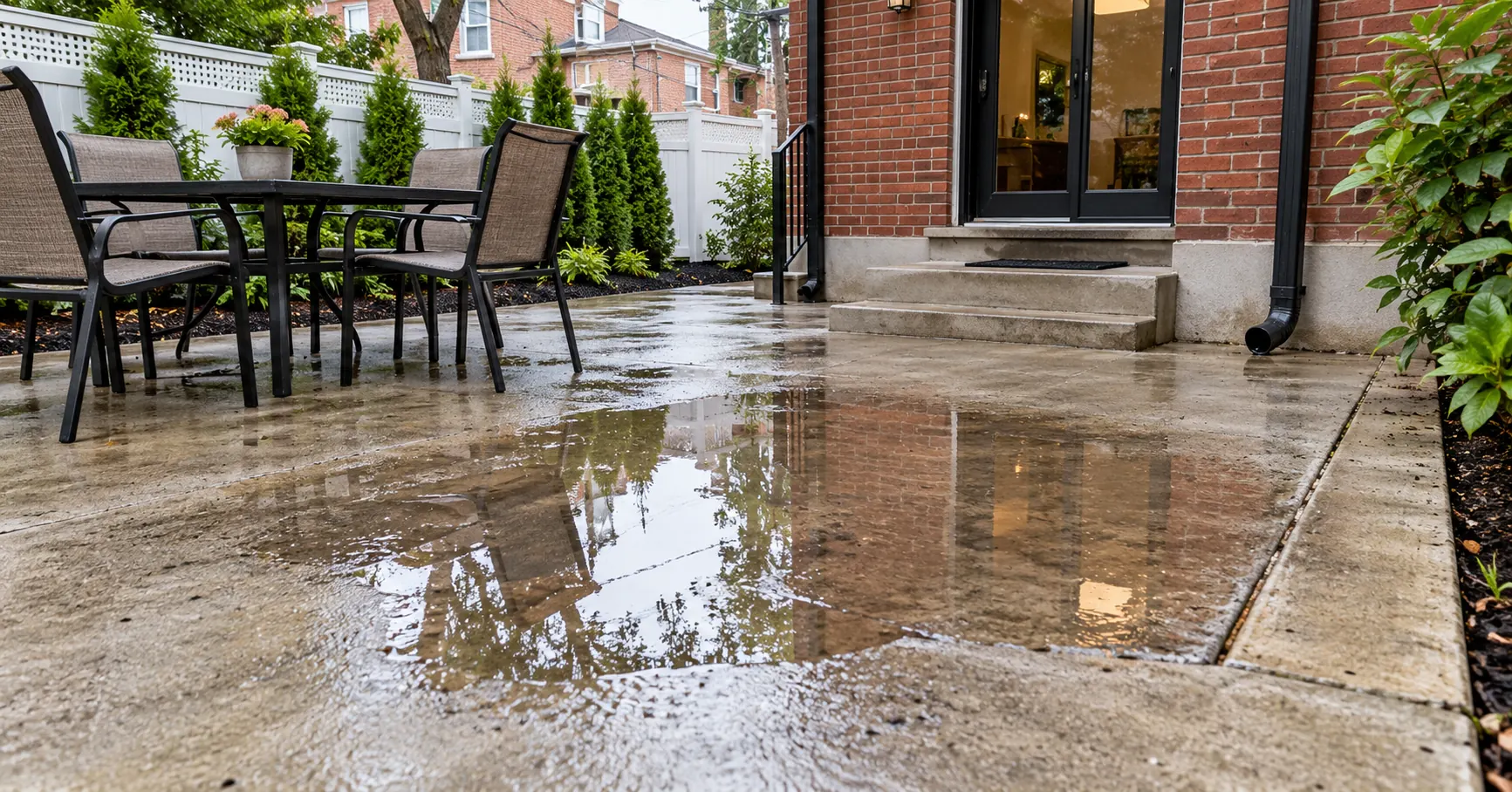
A concrete patio should provide a comfortable outdoor space, not a place where rainwater collects for hours. Yet many property owners notice puddles forming after every storm. Some see water trapped near the back door, while others find damp areas along the foundation.
Standing water can make the patio slippery and difficult to use. More importantly, it may indicate a drainage problem that needs attention.
In many cases, water pooling on a concrete patio happens because of poor grading, uneven concrete, soil settlement, or drainage problems around the property.
The good news is that not every drainage problem requires replacing the patio. The right solution depends on why water collects and whether the existing concrete remains stable.
Understanding the cause is the first step toward a lasting repair.
Why Does Water Pool on a Concrete Patio?
Water pools on a concrete patio when the surface cannot direct rainwater toward a suitable drainage area. Common causes include an incorrect slope, sunken concrete, blocked drains, poor downspout placement, and changes in surrounding ground levels.
If the concrete remains stable, drainage adjustments may solve the problem. However, patios with severe settlement, widespread cracking, or unsuitable grading may need more extensive repair or replacement.
The location of the puddles often provides clues about the underlying issue.
Poor Patio Slope Is a Common Cause
Outdoor concrete patios may appear perfectly flat, but they need an appropriate slope to move water away from nearby structures.
When the surface has insufficient slope, water can remain in shallow depressions. If the patio slopes toward the building, runoff may collect near doors, basement entrances, or foundation walls.
The U.S. Department of Energy’s Building America Solution Center recommends a minimum 2% slope away from foundations for nearby patios and other impervious surfaces. This equals approximately one-quarter inch per foot.
For example, a patio extending eight feet from the house would need approximately two inches of elevation change to achieve a 2% slope.
However, this is general building-science guidance. Actual drainage requirements depend on the property, available elevations, local rules, and where water can legally discharge.
A contractor should measure the patio’s existing slope before recommending a repair. Simply adding concrete to a low area may not solve the problem if runoff has nowhere to go.
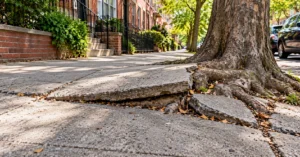
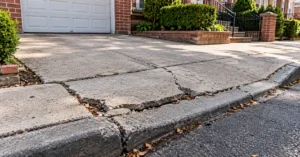
Sinking Concrete Can Create New Low Spots
A patio may drain properly for years before puddles begin appearing.
This can happen when the soil or base beneath the concrete settles.
Inadequate compaction, erosion, changes in moisture, or poorly supported fill can allow sections of concrete to sink. As the slab moves, the original slope changes.
A sunken area may begin collecting rainwater even when the rest of the patio remains in good condition.
Other warning signs include cracks near the depression, uneven joints, and gaps where the patio meets nearby steps or walls.
The repair depends on the condition of the slab and the cause of settlement.
Some stable concrete sections may qualify for professional lifting or leveling. However, severely cracked slabs or unstable supporting ground may require replacement and base reconstruction.
A contractor should investigate the settlement before choosing a repair method.
Otherwise, the same low spot may return.
Gutters and Downspouts May Be Adding Too Much Water
Sometimes, the patio itself is not the main problem.
A roof downspout may release a large amount of rainwater directly onto the concrete. During heavy storms, runoff can overwhelm the available drainage route.
This often causes puddles near the patio edge or against the building.
Check where the water comes from during rainfall. If a downspout releases water onto the affected area, its discharge location may need correction.
Depending on the property, suitable solutions may include redirecting runoff to an approved drainage area or improving the existing drainage system.
Avoid sending water onto neighboring properties or public sidewalks.
In NYC, changes to drainage connections or runoff management may require additional review. A qualified professional should evaluate the proposed solution before construction begins.
Blocked Drains and Landscaping Can Make the Problem Worse
A patio may have the correct slope and still collect water.
Leaves, sediment, or other debris can block a channel drain. Poorly maintained drainage outlets may also restrict water movement.
Cleaning visible debris is a reasonable first step. However, recurring problems may indicate a blocked outlet, unsuitable drain location, or insufficient drainage capacity.
The surrounding yard matters too.
Raised planting beds can direct runoff toward concrete. Soil buildup along the patio edge may prevent water from leaving the surface.
Retaining walls and neighboring structures can also limit drainage options.
These conditions are especially relevant in compact residential backyards where the patio occupies most of the available outdoor space.
An effective repair should consider the patio and surrounding landscape together.
How to Identify the Source of Standing Water
Before planning repairs, observe what happens during and after rainfall.
Start by checking where the puddles form.
Water collecting in the middle of the patio may indicate a low spot or settlement. Water near the back door may suggest an incorrect slope or runoff from another surface.
Puddles directly below a downspout often point to roof drainage.
Next, look for visible cracks, uneven joints, sinking sections, or areas where the concrete has separated from nearby structures.
You can also compare how the patio behaves during light and heavy rainfall.
A shallow puddle after an intense storm does not automatically mean the patio has failed. However, repeated pooling in the same place deserves closer attention.
For a more reliable assessment, a contractor can measure surface elevations and identify available drainage routes.
Avoid guessing at the slope based only on how level the patio looks.
Can Water Pooling Damage a Concrete Patio?
Standing water does not automatically cause major concrete damage. However, repeated moisture exposure can contribute to deterioration under certain conditions.
Water may enter existing cracks and joints. During freezing weather, trapped moisture can expand and place additional pressure on damaged areas.
Over time, this process may contribute to cracking, surface scaling, or other deterioration.
Poor drainage can also affect the ground supporting the patio.
If runoff repeatedly washes away material beneath an edge or enters poorly compacted fill, the concrete may lose support.
Water collecting close to a basement entrance or foundation deserves particular attention. However, a puddle alone does not prove that foundation damage has occurred.
The important question is whether the water creates ongoing exposure, affects nearby structures, or indicates a problem beneath the slab.
How Professionals Fix Water Pooling on Concrete Patios
There is no single repair method that works for every patio.
The right approach depends on the patio’s condition, the available drainage routes, and the cause of the standing water.
Correcting Downspout and Drainage Problems
If runoff from the roof causes the issue, correcting the downspout discharge may reduce or eliminate pooling.
Blocked drains may require cleaning or repair.
However, new drainage systems need an appropriate outlet. Installing a channel drain without a suitable discharge route will not solve the underlying problem.
Leveling Sunken Concrete
Certain settled slabs may qualify for professional lifting or leveling.
These methods can sometimes restore a suitable elevation without replacing the entire slab.
However, lifting does not automatically correct every drainage problem. The supporting conditions, slab integrity, and final slope must also be suitable.
Regrading or Replacing the Patio
When the patio has an incorrect overall slope, substantial settlement, or extensive deterioration, replacement may provide a more appropriate solution.
A contractor can remove the affected concrete, assess the supporting ground, prepare the base, and establish suitable elevations before placing new concrete.
The new layout should direct water away from vulnerable areas and toward an appropriate drainage destination.
Proper planning matters more than simply creating a fresh-looking surface.
Concrete Patio Repair vs. Replacement: Which Is Better?
A patio with standing water does not always need demolition.
If the concrete remains stable and a blocked drain causes the problem, a focused drainage repair may be sufficient.
If one section has settled, localized correction may be possible.
However, widespread movement, severe cracking, unstable support, or an incorrect slope throughout the patio may make replacement more practical.
A useful way to compare the options is to consider the following:
| Patio condition | Repair approach to evaluate |
|---|---|
| Blocked surface drain | Cleaning or drain repair |
| Downspout discharging onto patio | Correct runoff routing |
| Localized settlement with sound concrete | Professional leveling assessment |
| Widespread settlement or unstable base | Reconstruction or replacement |
| Incorrect overall slope | Regrading and possible replacement |
| Extensive cracking and deterioration | Partial or full replacement assessment |
These are general repair options, not final diagnoses. A site inspection should determine the appropriate method.
The best choice addresses the cause of the drainage problem, not just the visible puddle.
How Much Does Concrete Patio Drainage Repair Cost in NYC?
Concrete patio drainage repair costs depend on the extent and type of work.
Clearing a blocked drain is a different project from removing and rebuilding a sunken patio.
Several factors influence the final estimate, including the patio’s size, concrete condition, site access, drainage requirements, and supporting ground.
Demolition, debris removal, excavation, base preparation, concrete placement, and finishing can also affect the cost.
For NYC properties, backyard access may create additional challenges. Some projects require moving materials through narrow side passages or other restricted access points.
Drainage improvements can also increase the scope when they involve additional excavation or approved connections.
A reliable estimate should explain what the contractor intends to repair and how the proposed work will address the standing water.
Rather than comparing only the total price, compare the scope of work and expected result.
Why Patio Drainage Can Be Challenging in NYC
New York City contains many different residential property layouts.
Some Brooklyn and Queens properties have enclosed backyards bordered by fences, masonry walls, and neighboring buildings. These conditions can limit available drainage routes.
Staten Island properties may have larger outdoor areas where yard grading plays an important role.
Some Manhattan properties face tight access and additional constraints around existing structures.
These examples illustrate why patio drainage requires site-specific planning rather than a universal solution.
Rainfall, winter freezing, existing construction, and surrounding ground levels can all influence repair decisions.
NYC also regulates certain stormwater systems and development activities. The Department of Environmental Protection’s stormwater guidance helps explain requirements for projects subject to those rules.
Not every residential patio repair triggers a stormwater permit. However, projects involving new drainage connections or significant site changes should receive appropriate review.
Common Mistakes That Lead to Repeated Drainage Problems
One common mistake is filling a low spot without measuring the surrounding slope.
The repair may remove one puddle while creating another nearby.
Another mistake is sealing cracks and assuming the drainage problem has disappeared.
Sealing may reduce some moisture entry, but it cannot correct settlement or move standing water away from the patio.
Adding a drain without considering its outlet can also create problems.
Some property owners focus entirely on the concrete and overlook downspouts, landscaping, or retaining walls that influence runoff.
A lasting solution starts with understanding how water moves across the entire property.
Frequently Asked Questions About Concrete Patio Drainage
Is it normal for water to sit on a concrete patio?
A small amount of water may remain briefly after heavy rainfall. However, repeated pooling in the same location can indicate insufficient slope, settlement, or drainage problems.
What slope should a concrete patio have?
The U.S. Department of Energy recommends a 2% slope away from foundations for nearby impervious surfaces, approximately one-quarter inch per foot. Actual designs must account for site conditions and applicable requirements.
Can a concrete patio be repaired without replacing it?
Yes, in some situations. Stable slabs with localized settlement or drainage issues may qualify for targeted repairs. Extensive damage may require replacement.
Will concrete sealing stop water from pooling?
No. Sealing does not correct improper grading or remove standing water. The drainage problem must be addressed separately.
Can standing water near a patio foundation cause problems?
Repeated water accumulation near a building can increase moisture exposure. The actual risk depends on drainage, waterproofing, soil conditions, and the structure.
Does a concrete patio need a French drain?
Not necessarily. Some patios drain adequately through proper grading. Others may require a suitable drainage system. A French drain is not appropriate for every surface-water problem.
How do I know if my concrete patio is sinking?
Look for uneven joints, new low spots, cracks near settled areas, or gaps where the patio meets steps or walls. A contractor can measure the elevations to confirm settlement.
Is patio drainage repair worth it?
Repair may improve usability, reduce repeated water accumulation, and help prevent further deterioration. Its value depends on the cause, repair cost, and patio condition.
When Should You Call a Concrete Contractor?
Consider a professional inspection when puddles repeatedly form after ordinary rainfall, concrete sections begin sinking, or water collects near a building entrance.
A contractor should evaluate the patio’s slope, surface condition, supporting base, and surrounding drainage.
This assessment can help identify whether the property needs a simple drainage correction, localized concrete work, or more extensive replacement.
Addressing the cause early may prevent the problem from becoming more difficult to repair.
Need Concrete Patio Drainage Repair in NYC?
Water pooling on a concrete patio can make your outdoor space less usable and may indicate an underlying drainage or settlement issue.
NY Concrete provides concrete repair, installation, and replacement services across Brooklyn, Queens, Manhattan, and Staten Island.
Whether your patio has settled, developed low spots, or needs a new surface with improved drainage, our team can assess the visible conditions and discuss suitable concrete repair options.
Contact NY Concrete today to request a free estimate for your patio project.