Planning a new driveway in New York City? Before you hire a contractor or start pouring concrete, you need to understand the rules that govern driveway construction.
NYC has specific requirements for curb cuts, parking spaces, driveway entrances, sidewalk crossings, and construction permits. Even a small change to an existing driveway can raise legal questions if it affects the public sidewalk or curb.
For example, widening a driveway on private property is not necessarily the same as widening the curb cut that connects it to the street. The second project may require additional approvals.
Property owners also need to consider zoning restrictions, vehicle clearance, pedestrian access, and parking regulations.
Understanding NYC driveway rules before construction can help you avoid violations, costly changes, and delays.
This guide explains the requirements homeowners and property managers should check before installing, repairing, or modifying a concrete driveway.
Quick Answer: What Are the Driveway Rules in NYC?
New York City regulates driveway construction through zoning, building, sidewalk, curb-cut, and parking rules.
A new or modified curb cut generally requires NYC Department of Buildings (DOB) approval and applicable Department of Transportation (DOT) permits. The legal size and location of a driveway entrance depend on the property’s zoning and existing conditions.
NYC also prohibits parking in front of most driveways, with a limited exception for qualifying owners and renters.
Before construction, confirm the property’s approved vehicle access, required permits, and applicable parking-space dimensions.
What Is the Difference Between a Driveway, Apron, and Curb Cut?
These terms are related, but they do not always mean the same thing.
A driveway is the private access area used to reach a garage, parking space, or other approved vehicle destination.
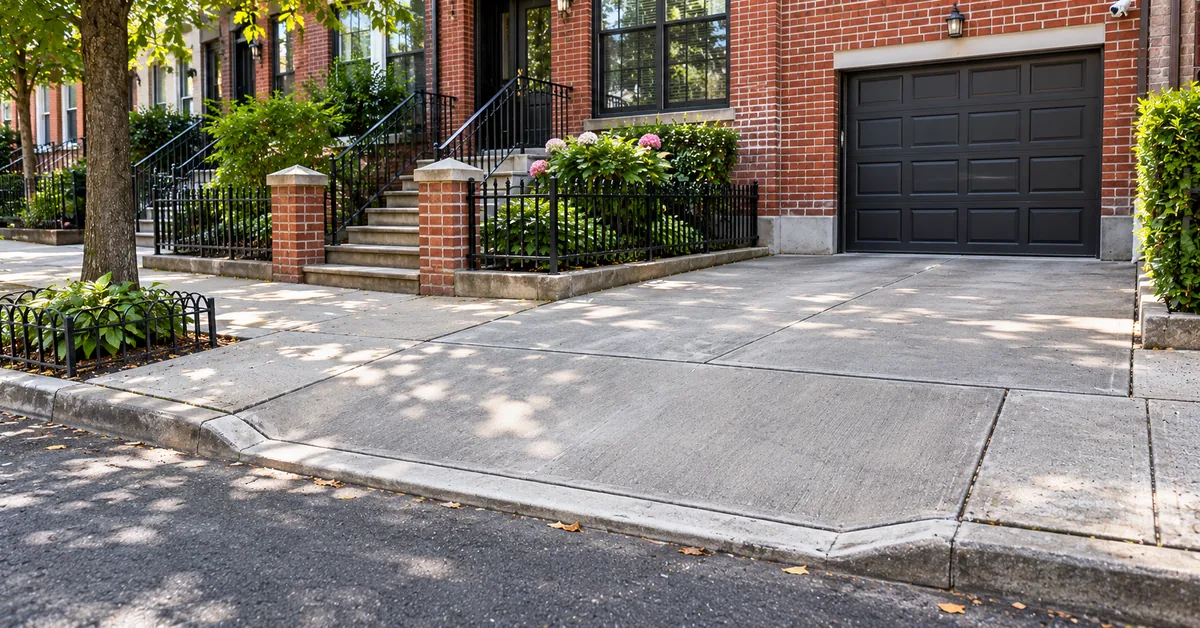
A driveway apron is the transition area where vehicles move between the private driveway and the street. It may include the sidewalk crossing.
A curb cut is the approved lowered opening in the curb and sidewalk that allows vehicles to enter the property.
The distinction matters because the City regulates construction in the public right-of-way.
A homeowner may own the concrete driveway inside the property line. However, the adjoining sidewalk and curb fall under different public-space requirements.
Replacing cracked concrete on private property may involve fewer approvals than changing the curb-cut opening.
Before planning repairs, identify exactly where the work will take place.
Do You Need a Permit to Build a Driveway in NYC?
A new driveway project may require permits, particularly when construction affects the curb, sidewalk, or approved vehicle entrance.
NYC DOB regulates curb-cut projects to ensure they comply with zoning and safety requirements.
The City requires a New York State licensed Professional Engineer (PE) or Registered Architect (RA) to prepare and submit curb-cut plans for approval.
A qualified contractor must then obtain the applicable construction permits.
NYC DOT also regulates work affecting public sidewalks and curbs.
This means a project may involve more than one agency.
For example, an owner planning to convert a front-yard area into a parking space must first determine whether zoning permits that arrangement.
Even if the property has enough physical space for a vehicle, that does not automatically make the parking area legal.
For official requirements, review the NYC DOB curb-cut permit guide.
How to Get a Curb Cut Approved in NYC
The approval process starts before concrete demolition or construction.
Step 1: Check the Existing Curb Cut
Determine whether the property already has an approved driveway entrance.
Review available building and permit records. Compare the existing entrance with the proposed changes.
An old driveway is not necessarily proof of a legally approved curb cut.
Step 2: Verify Zoning and Parking Requirements
Check whether the property allows the proposed parking arrangement.
The design must consider the parking-space location, curb-cut width, lot frontage, and applicable zoning rules.
Some properties may not qualify for an additional curb cut.
Step 3: Hire a Registered Design Professional
A licensed architect or professional engineer prepares the required plans and evaluates the proposed entrance.
The design must account for applicable zoning, street features, pedestrian access, and construction requirements.
Step 4: Submit the Application
NYC requires curb-cut filings through DOB NOW: Build.
The application and plans must receive the required approvals before construction proceeds.
Step 5: Obtain Construction Permits
After approval, the contractor must obtain the applicable permits.
Work involving sidewalks and curbs may require NYC DOT authorization.
Step 6: Complete the Work and Close Out the Project
Construction must follow the approved design.
The project may also require inspections, documentation, and final sign-offs.
A contractor should explain these responsibilities before the owner approves the estimate.
How Wide Can a Driveway or Curb Cut Be in NYC?
There is no single driveway width that every NYC property can use.
The permitted dimensions depend on zoning, lot frontage, building type, parking arrangement, and other applicable restrictions.
NYC’s Building Code includes a general rule that no single curb cut may exceed 30 feet, including splays.
However, that is not a universal residential curb-cut allowance.
Some residential zoning provisions impose narrower limits. For certain qualifying residential lots with less than 50 feet of street frontage, zoning may limit a curb cut to 10 feet, including splays.
Other properties face different restrictions.
NYC DOB also lists a general minimum parking-space size of 8 feet 6 inches by 18 feet, although applicable zoning rules and exceptions must be checked.
| Requirement | What property owners should know |
|---|---|
| Parking-space size | Generally 8.5 × 18 feet, subject to applicable rules |
| Curb-cut width | Varies by zoning; 30 feet is not a universal allowance |
| Driveway location | Must comply with zoning and approved access |
| Sidewalk access | Must preserve applicable pedestrian requirements |
| Nearby street features | Trees, hydrants, poles, and signs can restrict the entrance |
NYC DOB’s published curb-cut guidance identifies general minimum separations of seven feet from several street features, including trees, fire hydrants, light poles, and street signs.
Final approval depends on the actual location and applicable requirements.
Do not choose a driveway width solely based on what neighboring properties have installed.
Can You Widen an Existing Driveway?
Possibly, but the type of work matters.
If you plan to widen concrete within your private property, the project may be different from expanding the curb cut.
Widening the vehicle entrance at the street may require new plans, DOB approval, and DOT permits.
The City must consider the available street frontage, nearby infrastructure, and pedestrian safety.
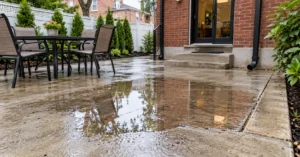
A wider driveway can also affect drainage.
For example, expanding concrete toward a property boundary may change where rainwater flows.
Before widening, ask whether the proposed work changes the approved vehicle access or only the private concrete surface.
That distinction can affect both permitting and project cost.
Can You Build a Driveway in Your Front Yard?
Not every front yard can legally become a parking space.
NYC zoning controls where off-street parking may be located.
Restrictions can depend on the zoning district, property configuration, building type, and available access.
Some residential districts limit or prohibit certain front-yard parking arrangements.
Even if a vehicle fits between the building and sidewalk, the space may not meet zoning requirements.
A property owner should verify the approved parking arrangement before removing landscaping or installing concrete.
This is especially important for homes without an existing legal curb cut.
Having enough physical space for a car does not establish a legal right to park there.
What Happens If You Install an Illegal Curb Cut?
Unauthorized curb-cut construction can lead to serious consequences.
NYC DOB warns that contractors who illegally install curb cuts, along with the homeowners who hire them, may face enforcement action.
Possible consequences include OATH violations, court appearances, fines, civil penalties, and requirements to correct unauthorized work.
There is no single fixed fine that covers every illegal curb-cut case.
The amount and required corrective action depend on the violations and circumstances.
A property owner may also need to restore the curb or sidewalk to an approved condition.
This makes permit verification an important step before construction.
Never rely on a contractor’s verbal assurance that an unapproved curb modification will be acceptable.
Ask for the relevant approvals and permits.
Can You Park in Front of Your Own Driveway in NYC?
NYC generally prohibits parking in front of a public or private driveway.
However, there is a limited exception.
An owner or renter of a lot accessed by a private driveway may park a passenger vehicle registered to them at that address in front of the driveway if the property contains no more than two dwelling units.
The vehicle must also comply with all other parking restrictions.
The exception does not allow parking that violates rules concerning hydrants, crosswalks, posted signs, or other restrictions.
It also does not automatically cover visitors or vehicles registered elsewhere.
Under NYC Department of Finance parking violation code 98, the published fine for illegally parking in front of a driveway is $95.
For current information, check the NYC parking violation codes and fines.
What Should You Do If Someone Blocks Your Driveway?
A blocked driveway can prevent you from entering or leaving your property.
If a vehicle is illegally blocking access, NYC311 provides a process for reporting the problem.
Record the vehicle’s license plate, make, model, and location.
You can report the condition through the City’s official service channels.
Parking enforcement and towing depend on the applicable circumstances and procedures.
Avoid taking matters into your own hands by moving or damaging the vehicle.
You should also avoid painting the curb or adding unauthorized pavement markings.
Those actions can create separate violations.
Is It Legal to Paint the Curb in Front of Your Driveway?
No. Property owners generally cannot paint public curbs to create unofficial parking restrictions.
Even when a driveway is legal, the curb remains City property.
NYC DOT prohibits unauthorized curb painting and other forms of public-space defacement.
If the City issues a Notice of Defacement, the owner generally has 30 days to correct the condition.
Under the City’s published procedures, failure to correct the defacement can result in a $250 civil penalty.
A legal driveway does not authorize the owner to paint the curb yellow, red, or another color to discourage parking.
Instead, use official parking-enforcement channels when vehicles block the entrance.
Who Is Responsible for Driveway, Sidewalk, and Curb Repairs?
Responsibility depends on where the damage occurs.
Private driveway concrete generally falls under the property owner’s maintenance responsibilities.
NYC generally requires adjoining property owners to maintain sidewalks next to their properties, subject to specific legal exceptions.
Curbs are City-owned roadway elements.
However, City ownership does not automatically mean the City will perform or pay for every privately requested curb modification.
For example, a property owner requesting a new curb cut may have to arrange and fund the approved construction.
This distinction becomes important when a driveway apron is damaged.
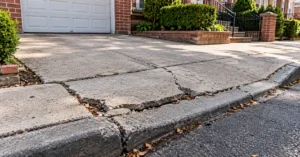
A broken apron may involve private concrete, public sidewalk flags, and the curb transition.
Before approving repairs, identify which elements need replacement.
For related problems, see NY Concrete’s driveway repair services.
Do Existing Driveway Repairs Require Permits?
Not every driveway repair requires the same approvals as a new curb cut.
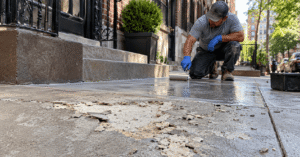
Repairing damaged concrete entirely within private property can differ from reconstructing the sidewalk or modifying the entrance at the street.
The project scope determines which requirements apply.
NYC’s published curb-cut project guidance also recognizes a narrow DOT permit exception for certain sidewalk repairs under 25 square feet when the purpose is not to remove a violation.
That exception does not authorize constructing or altering a curb cut without approval.
It also does not mean all small driveway projects are exempt from permits.
A contractor should check the location and scope before work begins.
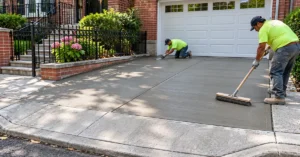
For larger concrete projects, proper planning should cover base preparation, drainage, vehicle loading, finishing, and curing.
Can Driveway Damage Lead to a Sidewalk Violation?
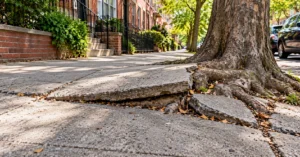
Yes. Sidewalk defects sometimes develop where vehicles cross the pedestrian walkway.
Repeated loads, settlement, cracked concrete, and uneven slabs can create unsafe conditions.
NYC DOT may issue a Notice of Sidewalk Violation when inspectors identify qualifying defects.
The violation notice itself does not carry a fine.
However, property owners generally have 75 days from receiving the notice to complete required repairs. If they fail to act, the City may arrange repairs and bill the property owner.
A permit does not automatically extend that period.
After privately completed repairs, the owner generally needs to request a dismissal inspection to clear the violation.
If the driveway entrance includes cited sidewalk defects, review the Preliminary Inspection Report before determining the work required.
For a more detailed explanation, see Sidewalk Violation Removal NYC.
How Much Does Concrete Driveway Installation Cost in NYC?
The cost of installing or replacing a concrete driveway depends on several factors.
The driveway’s size matters, but it is only one part of the estimate.
Contractors must also consider existing concrete removal, excavation, access, base preparation, grading, drainage, concrete specifications, and finishing.
Permits and design requirements can add costs when the project includes a new or modified curb cut.
For example, replacing an existing concrete driveway while keeping its approved entrance may involve a different scope from creating a completely new vehicle-access area.
A narrow construction site can also affect labor and equipment requirements.
Before accepting an estimate, ask what the quoted price covers.
A clear proposal should identify demolition, site preparation, concrete installation, drainage considerations, cleanup, and permit responsibilities where applicable.
For owners planning new construction, NY Concrete’s concrete driveway installation and replacement services explain the available project options.
What Should You Check Before Hiring a Driveway Contractor?
Before hiring a contractor, make sure you understand both the construction and approval requirements.
Use this checklist:
- Confirm whether your property has an existing approved curb cut.
- Check whether the proposed parking arrangement is permitted.
- Determine whether the work affects the public sidewalk or curb.
- Ask who will obtain necessary permits and approvals.
- Confirm the contractor’s applicable licensing and insurance.
- Request a written scope of work.
- Ask how the contractor will prepare the base and manage drainage.
- Confirm the proposed concrete specifications and finish.
- Understand the construction schedule and curing restrictions.
- Keep copies of permits, approvals, and final project documentation.
An experienced contractor should explain the construction scope clearly.
For zoning questions or curb-cut design approval, consult the appropriate registered design professional.
Common Mistakes NYC Property Owners Should Avoid
One common mistake is assuming an existing driveway can be widened without approval.
Another is creating a new parking space before checking zoning restrictions.
Some owners focus on the curb cut but overlook the sidewalk crossing, drainage, or nearby street trees.
Others replace driveway concrete without addressing the settlement or poor support that caused the original damage.
Parking mistakes can also create unnecessary expense.
For example, painting a curb to discourage parking or assuming any vehicle can park in front of a private driveway may lead to enforcement problems.
The simplest way to avoid these issues is to confirm the rules before construction or parking arrangements change.
NYC Driveway Rules: Frequently Asked Questions
Do I need a permit to install a new driveway in NYC?
It depends on the scope. A new or modified curb cut requires DOB approval and applicable permits. Work affecting public sidewalks or curbs may also require DOT authorization.
Can I widen my driveway without a permit?
Possibly for certain work entirely within private property, but widening a curb cut is different. Changes to an approved vehicle entrance generally require review and approval.
What is the maximum curb-cut width in NYC?
NYC’s Building Code includes a general 30-foot maximum for an individual curb cut, including splays. However, zoning can impose much narrower limits, including 10-foot limits for certain residential properties.
Can I park in front of my own driveway?
A limited exception applies to qualifying owners and renters of properties with no more than two dwelling units, using a passenger vehicle registered at the address. Other parking restrictions still apply.
What is the fine for blocking a driveway in NYC?
NYC Department of Finance lists a $95 fine under parking violation code 98.
Can I paint the curb outside my house?
No. Unauthorized curb painting can trigger a Notice of Defacement. Failure to correct it can result in a $250 civil penalty under the City’s published process.
Can I build a parking space in my front yard?
Only if the property meets applicable zoning and access requirements. Available physical space alone does not make front-yard parking legal.
Does an old curb cut automatically count as legal?
No. The property’s approval and permit history should be checked if the legal status is uncertain.
Who pays for a broken curb in front of a driveway?
Curbs are City-owned, but responsibility for a particular repair or privately requested modification depends on the circumstances. Confirm the arrangement before authorizing work.
Do I need to replace my entire driveway if the entrance is damaged?
Not always. If the main driveway remains stable, the damaged entrance may be repaired separately. The contractor must evaluate the concrete condition, drainage, and any public-space requirements.
Before You Start a Driveway Project in NYC
A concrete driveway should provide convenient, reliable vehicle access. It should also comply with the rules that apply to the property.
Before construction begins, confirm whether the existing curb cut is approved, whether the proposed parking arrangement is permitted, and which agencies regulate the work.
A legal entrance, proper base preparation, suitable drainage, and a clear construction plan can help prevent problems later.
For property owners planning concrete driveway installation, repair, or replacement, NY Concrete serves Brooklyn, Queens, Manhattan, and Staten Island.
Our team can evaluate the existing concrete, drainage, site access, and proposed work to help you understand the construction options.
Need driveway repair or a new concrete driveway? Request a free estimate from NY Concrete before starting your project.
Disclaimer: This article provides general information, not legal, zoning, architectural, or engineering advice. NYC requirements depend on the property and project scope. Confirm current rules with NYC DOB, NYC DOT, and a qualified professional before construction.