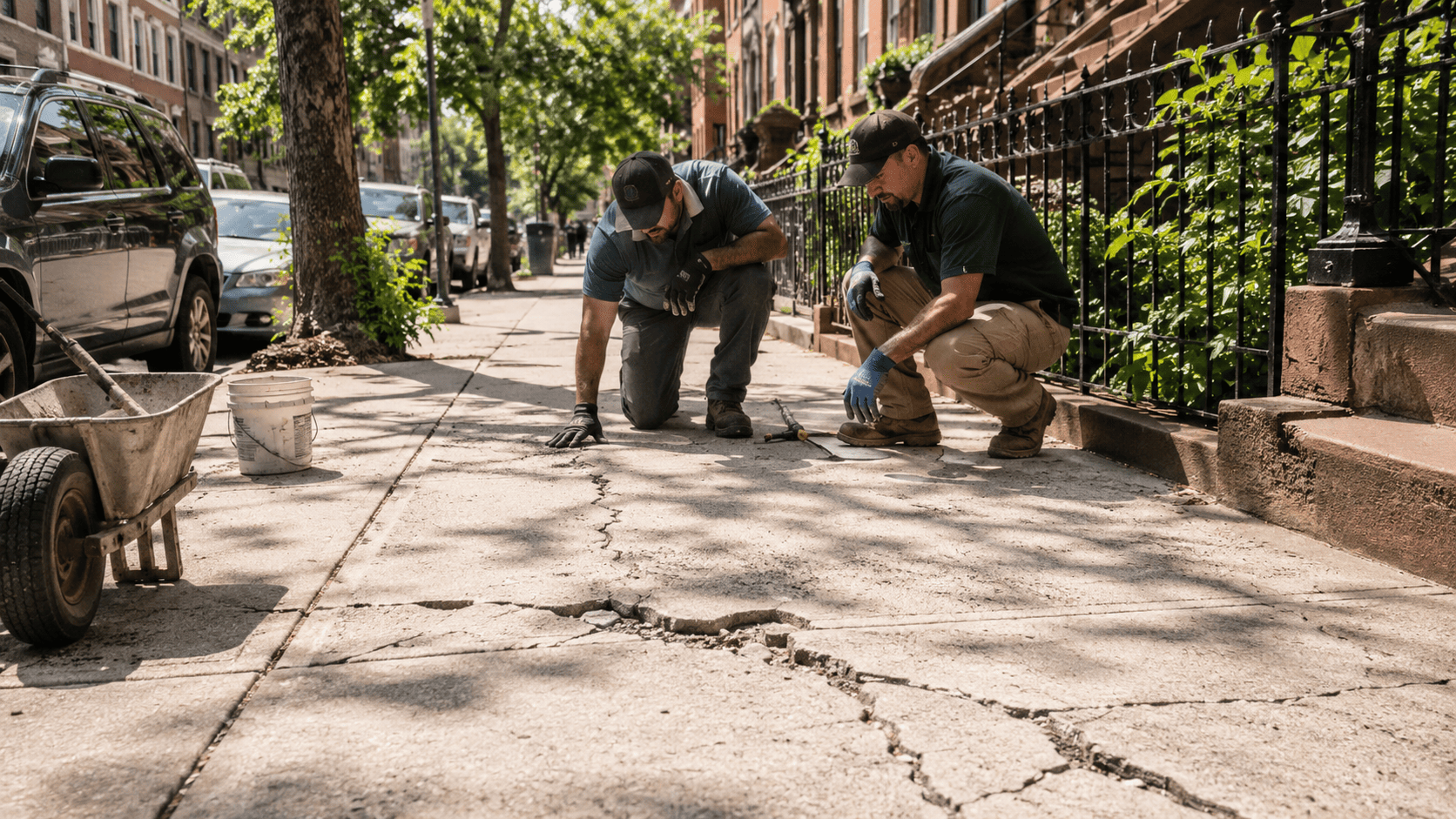
Sidewalk crack repair NYC becomes important when small cracks start widening, collecting water, or creating uneven concrete around your property. It is easy to walk past a crack in the sidewalk and assume it can wait. However, small sidewalk cracks often turn into bigger repair problems.
That is exactly why small sidewalk cracks often turn into much bigger repairs.
A crack by itself is not always the problem. More often, it is the first visible sign that the concrete has started moving, water is getting underneath the slab, or the supporting base is beginning to weaken. By the time the crack becomes large enough to demand attention, the damage underneath may already be much more extensive.
Knowing when to call a contractor can help you repair the problem before it becomes a trip hazard, a costly replacement, or even a DOT sidewalk violation.
Quick Answer
You should call a contractor when a sidewalk crack begins widening, spreads across multiple sidewalk flags, collects water, creates uneven surfaces, or appears alongside sinking or lifted concrete. While some hairline cracks are cosmetic, growing cracks often point to underlying problems that require professional attention.
Not Every Sidewalk Crack Is the Same
One of the biggest mistakes property owners make is treating every crack the same way.
Concrete naturally expands and contracts throughout the year, so small hairline cracks can develop as part of the normal aging process. Some remain unchanged for years and never affect the strength of the sidewalk.
Others tell a completely different story.
If the crack becomes wider over time, branches into new cracks, or continues across several sidewalk flags, the concrete is often responding to movement underneath rather than simple wear and tear.
That is when the sidewalk deserves a closer look.
When a Crack Starts Becoming a Safety Risk
The crack itself is not always what causes someone to trip. Sidewalk crack repair NYC should not be delayed when a crack starts creating uneven edges or a possible trip hazard.
The bigger concern is what happens next.
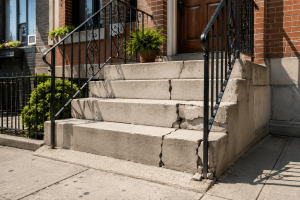
As the concrete continues shifting, one sidewalk flag may begin sitting higher than the next. The edges become uneven, creating a lip that catches shoes, strollers, wheelchairs, and snow shovels.
Sometimes the height difference develops so gradually that property owners do not notice it until someone points it out.
By then, what started as a simple crack has become a genuine safety concern.
Water Can Turn a Small Crack Into a Bigger Repair
One of the fastest ways for sidewalk damage to spread is through moisture.
Rainwater seeps into even the smallest openings in the concrete. Once it reaches the base underneath, it can soften the supporting material and slowly reduce the slab’s stability.
During winter, the problem becomes even worse.
The trapped water freezes, expands, and places additional pressure on the crack. Each freeze-thaw cycle makes the opening a little larger, allowing even more water to enter the next time it rains.
That is why sidewalk cracks in NYC often seem to grow much faster after winter has passed.
What Property Owners Often Miss
Many people focus only on the crack they can see.
An experienced contractor is usually looking at everything around it.
Is the sidewalk beginning to slope? Is water collecting nearby after rain? Has another sidewalk flag started lifting? Are there signs of tree root pressure or settlement?
These details often explain why the crack formed in the first place.
Repairing the visible crack without correcting the underlying cause may improve the appearance for a while, but it usually does not prevent the problem from returning.
Repair or Replacement: How Is the Decision Made?
A cracked sidewalk does not automatically need to be replaced.
If the concrete remains level, stable, and well-supported, repairing the damaged area may be enough to restore the sidewalk.
Replacement is generally recommended when the crack is part of a larger problem, such as significant settlement, lifting, widespread deterioration, or multiple sidewalk flags that have become unstable.
The decision is not based on the size of the crack alone.
It depends on whether the sidewalk is still structurally sound beneath the surface.
That is why two sidewalks with similar-looking cracks may require completely different repairs.
Common Mistakes to Avoid
One common mistake is waiting until the crack becomes impossible to ignore.
Concrete damage almost always becomes more expensive as it spreads.
Another mistake is using a quick surface patch without understanding why the crack developed. If water continues entering underneath or the sidewalk keeps moving, the repair often fails within a relatively short time.
Some property owners also overlook nearby warning signs like crumbling edges, uneven sidewalk flags, or standing water because they are focused on the crack itself.
Looking at the sidewalk as a whole usually leads to a much better repair.
Why Sidewalk Cracks Spread Faster in NYC
Sidewalks in New York deal with conditions that constantly put concrete under stress.
Heavy foot traffic, mature street trees, underground utilities, repeated freeze-thaw cycles, and aging infrastructure all contribute to cracking and movement. Even a well-built sidewalk can gradually deteriorate under these conditions if small problems are left untreated.
That is why early repairs often make such a difference.
Addressing a crack before it develops into lifting, settlement, or a sidewalk violation is usually the simplest and most cost-effective approach.
When to Schedule an Inspection
If you have noticed a sidewalk crack getting wider, water pooling nearby, uneven sidewalk flags, or concrete that no longer feels level, it is a good idea to have the area inspected.
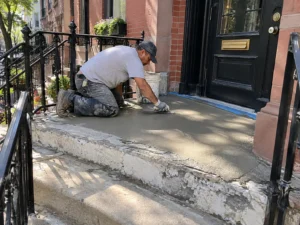
Finding the cause early often allows the repair to stay focused on the affected section instead of expanding into a much larger project. NY Concrete provides sidewalk crack repair NYC services for cracked, uneven, and damaged sidewalk sections before the problem spreads.
If your sidewalk has developed cracks, uneven concrete, or other signs of deterioration, NY Concrete can inspect the area and determine what is causing the problem. Whether the damage requires a targeted repair or replacing affected sidewalk flags, the goal is to restore a safe, durable sidewalk that performs well under everyday NYC conditions.