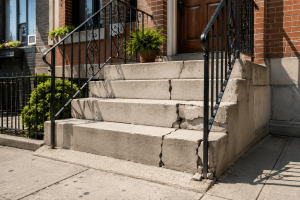
Why pavers sink and how to fix them is something many property owners only start asking once the surface begins to dip, shift, or collect water. In most cases, the problem starts underneath the pavers long before the damage becomes obvious on top. If you want to understand why pavers sink and how to fix them, you need to look at the base, drainage, and what is happening below the surface, not just the pavers themselves.
A lot of property owners assume the pavers themselves are the issue. In reality, the problem is usually what is happening below them.
Quick Answer
Pavers typically sink because the base underneath them has shifted, weakened, or washed out over time. Proper repair involves lifting the affected area, correcting the underlying base and drainage issues, and then reinstalling the pavers so the surface stays level and stable long-term.
What Sinking Pavers Usually Look Like
Sinking pavers rarely happen all at once. The surface changes gradually.
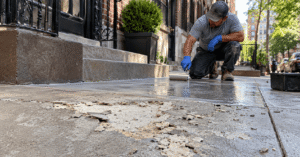
One section may begin sitting lower than the surrounding area, creating a shallow dip that collects rainwater. In some places, the pavers feel loose or uneven when stepped on. You may notice corners dropping slightly, gaps widening between joints, or edges beginning to separate from nearby sections.
Sometimes the sinking is subtle enough that people ignore it for months. Then winter arrives, water freezes inside the low spots, and suddenly the movement becomes much more noticeable.
On driveways and heavier-use areas, sinking often appears where vehicles repeatedly place pressure on the same section. On patios and walkways, the problem is usually more connected to drainage or shifting base material underneath.
What Causes Pavers to Sink
Most sinking paver problems trace back to the foundation beneath the surface. Understanding why pavers sink and how to fix them properly helps prevent the same low spots and movement from coming back after a surface reset.
One of the most common causes is poor base preparation during the original installation. If the base was not compacted properly, the material underneath can slowly settle over time, especially after repeated exposure to moisture and weight.
Water is another major reason pavers begin to sink. When drainage is poor, rainwater moves underneath the surface and gradually washes away or weakens the supporting base. Once that support disappears, the pavers above it begin dropping unevenly.
In NYC conditions, freeze-thaw cycles make the issue worse. Water enters small gaps beneath the surface, freezes during winter, expands, and slowly shifts the surrounding material out of place.
Tree roots can also create instability. In some areas, roots lift sections upward while nearby areas begin sinking around them. The result is an uneven surface that continues moving over time.
Why Sinking Pavers Usually Get Worse
One reason this problem spreads so easily is because movement underneath the surface rarely stays isolated.
Once one section begins sinking, water naturally starts collecting there. That extra moisture weakens the surrounding base even more, causing nearby pavers to loosen or settle as well. Over time, what started as a small dip can expand into a much larger uneven area.
A lot of people try to ignore the problem because the surface still “looks okay” from a distance. But instability underneath tends to continue spreading, especially after heavy rain or another winter season.
How to Fix Sinking Pavers Properly
The right repair is not about simply pushing the pavers back into place. If the underlying problem is not corrected, the sinking usually returns.
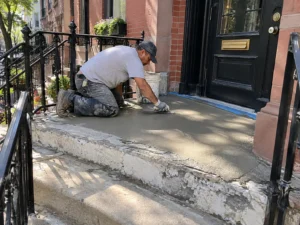
The proper process starts by removing the affected pavers completely so the base underneath can be inspected. Any loose, washed-out, or unstable material needs to be removed and rebuilt properly. If drainage issues contributed to the sinking, those need to be corrected before the surface is reset.
Once the base is stable again, the pavers are carefully reinstalled and leveled so they sit evenly with the surrounding area. The joints are then refilled and compacted to help lock everything back into place.
When done correctly, the repair should feel solid underfoot and allow water to drain away instead of collecting on the surface.
Repair or Full Replacement: How the Decision Is Made
Not every sinking paver issue requires replacing the entire installation.
If the problem is limited to a small area and the surrounding surface is still stable, lifting and resetting that section is often enough. But when sinking appears across multiple sections, or when drainage problems affect the entire surface, a larger rebuild may make more sense long-term.
The key is figuring out whether the movement is isolated or part of a broader base failure underneath.
That is why looking only at the visible dip rarely tells the full story.
Common Mistakes That Make Sinking Pavers Worse
One of the most common mistakes is adding sand or filler material directly into the low spot without lifting the pavers first. While this may temporarily improve the appearance, it does not repair the weakened base underneath.
Another issue is fixing the surface without addressing drainage. If water continues moving beneath the pavers, even a well-leveled repair may start sinking again.
Some property owners also wait too long because the unevenness seems minor. But once water begins collecting below the surface, the instability tends to spread much faster.
Why This Happens So Often in NYC Properties
Outdoor surfaces in NYC deal with a lot more stress than people realize. Freeze-thaw cycles, limited drainage space, older installations, tree roots, and heavy foot or vehicle traffic all put pressure on paver systems over time.
In many neighborhoods, especially around older homes and narrow lots, water does not drain as easily as it should. Once moisture repeatedly gets beneath the surface, the base begins weakening little by little each season.
That is why repairs here need to focus on long-term stability, not just surface appearance. Once you know why pavers sink and how to fix them, it becomes much easier to choose the right repair before the uneven area spreads further.
When to Take Action
If your pavers have started sinking, shifting, or collecting water in low spots, it is usually better to repair the issue early before the movement spreads further across the surface.
Small sections are much easier to stabilize before the underlying base weakens more extensively.
If your pavers are sinking, separating, or starting to feel uneven underfoot, NY Concrete can inspect the surface and determine what is causing the movement underneath. Whether the issue requires a localized repair or a larger base correction, the goal is to fix it properly so the surface stays level, stable, and safe over time.