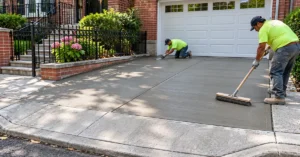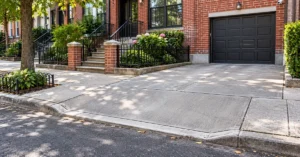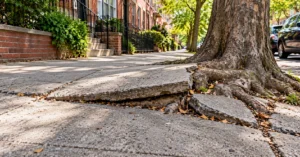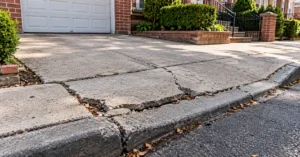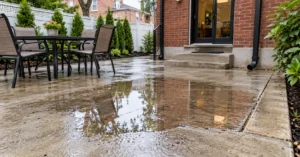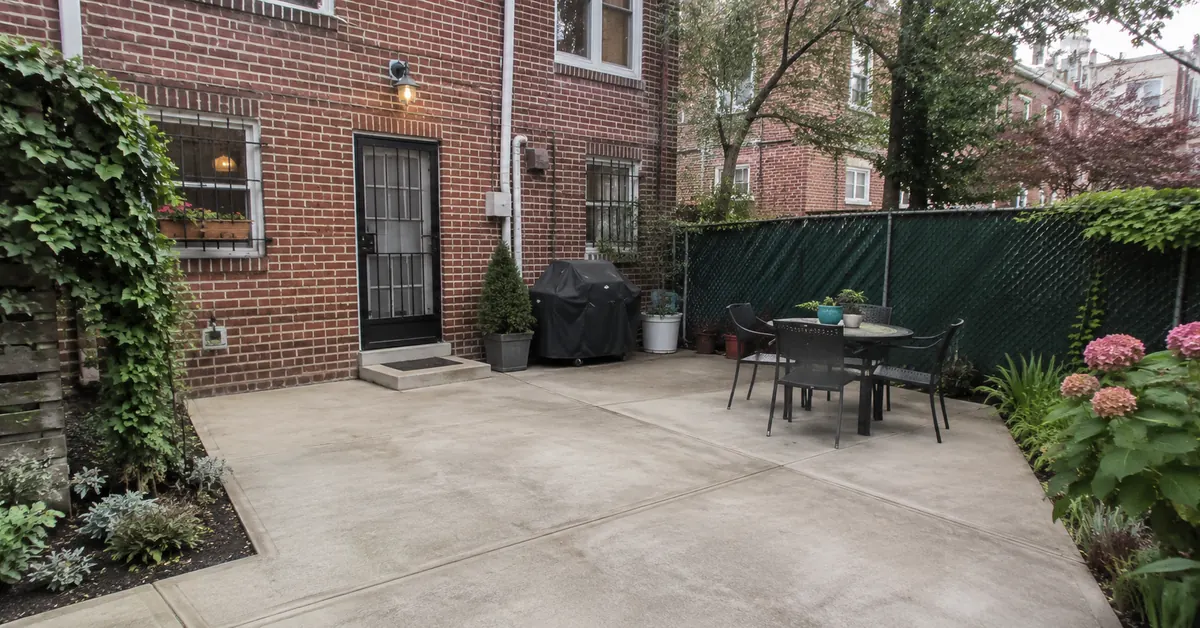
A concrete deck can create a durable, attractive, and practical outdoor living space for your home. Its main benefits include long-term performance, relatively simple maintenance, flexible design options, and a stable surface for outdoor furniture and everyday activities.
However, the term concrete deck can describe different structures. Some homeowners use it to describe a ground-level concrete patio or backyard entertaining area. Others mean an elevated deck supported by a structural system.
This guide focuses primarily on ground-level concrete outdoor decks and patio-style surfaces. Elevated and rooftop decks involve additional structural and construction requirements.
If you’re planning an outdoor upgrade in Brooklyn, Queens, Manhattan, or Staten Island, the following benefits can help you decide whether concrete suits your property.
1. Concrete Provides a Durable Outdoor Surface
Durability is one of the biggest advantages of a concrete deck.
When contractors install concrete over suitable support and follow appropriate construction practices, the finished surface can withstand regular foot traffic, patio furniture, and outdoor activities.
Unlike wood, concrete does not rot or suffer damage from wood-boring insects.
Additionally, a properly constructed concrete surface does not depend on individual boards or decking planks that may loosen over time.
However, concrete can still develop cracks, surface scaling, or settlement.
Its long-term performance depends on several factors:
-
Suitable concrete mix for outdoor exposure
-
Stable and properly prepared underlying support
-
Correct grading and drainage
-
Appropriate joint placement
-
Proper finishing and curing
-
Ongoing maintenance
For NYC homeowners, these factors matter because outdoor concrete experiences rain, snow, freezing temperatures, and seasonal changes.
The benefit is a durable surface with manageable maintenance needs—not a guarantee that concrete will never crack.
2. Concrete Decks Require Relatively Simple Maintenance
Homeowners often choose concrete because routine maintenance can be straightforward.
For example, many ground-level concrete surfaces need regular sweeping, occasional washing, and periodic inspection.
Unlike traditional wood decking, concrete does not require regular board staining or wood-preservative treatments.
Nevertheless, concrete is not maintenance-free.
Over time, you may need to clean stains, address deteriorated joints, monitor cracks, or renew a protective sealer when the selected finish requires it.
How Do You Maintain a Concrete Deck?
A practical maintenance routine includes:
-
Remove debris regularly. Sweep leaves, dirt, and other material from the surface.
-
Clean with suitable products. Use cleaning methods that do not damage the concrete or decorative finish.
-
Inspect cracks and joints. Look for openings that may allow moisture to enter.
-
Check for standing water. Investigate puddles that repeatedly collect in the same area.
-
Maintain protective finishes. Follow the product manufacturer’s recommendations when the concrete has a sealer or decorative coating.
Additionally, avoid aggressive pressure washing on deteriorating concrete.
If an existing surface starts flaking or peeling, identify the cause before applying another coating.
For more information, read Why Concrete Surfaces Flake and How to Prevent It.
3. Concrete Offers Flexible Design and Finishing Options
A concrete deck does not have to look like a plain gray slab.
Depending on the project, homeowners can select finishes that complement the surrounding building, garden, or outdoor seating area.
For example, a simple broom finish may suit a practical backyard space, while decorative concrete can create a more distinctive appearance.
Popular Concrete Deck Finishes
| Finish | Appearance and considerations |
|---|---|
| Broom-finished concrete | Simple textured surface suitable for many outdoor applications |
| Stamped concrete | Decorative patterns that can resemble stone, brick, or other materials |
| Colored concrete | Pigments or approved coloring systems create different appearances |
| Exposed aggregate | Reveals selected aggregate for a distinctive textured finish |
| Decorative scoring | Creates intentional lines or geometric patterns in the surface |
However, different finishes require different installation and maintenance methods.
For example, some decorative sealers can affect surface traction when wet.
Therefore, homeowners should consider slip resistance, weather exposure, maintenance, and appearance when choosing a finish.
A decorative design should improve the outdoor space without compromising practical everyday use.
4. A Concrete Deck Can Make Your Backyard More Functional
A well-planned concrete outdoor surface can turn an underused backyard into a comfortable area for everyday activities.
For example, homeowners may use the space for outdoor dining, seating, or family gatherings.
Additionally, concrete can provide a stable base for suitable outdoor tables, chairs, and planters.
This is particularly useful in NYC, where available backyard space varies considerably between properties.
How Can You Design a Small NYC Backyard?
You do not need a large yard to create a functional outdoor area.
Instead, focus on how you plan to use the space.
Consider these questions before choosing the layout:
-
Do you need room for a dining table or a smaller seating arrangement?
-
How will people move between the house, garden, and entrance?
-
Where does rainwater currently flow?
-
Will the new concrete connect to existing steps or walkways?
-
Do you need room for planting beds or other landscaping?
-
Will furniture placement interfere with access or drainage?
For example, a compact backyard in Brooklyn may benefit from a simple rectangular concrete surface with clear walking space around the seating area.
Meanwhile, a larger Staten Island yard may allow separate dining and garden areas.
However, the best layout depends on your property’s actual dimensions and conditions.
5. Concrete Can Create a Stable Surface for Everyday Use
A properly designed ground-level concrete deck can provide a firm, continuous surface for outdoor activities.
This can make it practical for furniture placement and everyday movement.
Furthermore, contractors can plan the surface elevations to connect appropriately with adjacent walkways, entrances, or other outdoor areas.
Does Concrete Automatically Create a Safer Deck?
Not necessarily.
Safety depends on the finish, drainage, construction quality, and surrounding conditions.
For example, a smooth concrete surface may become slippery when wet if the finish does not provide suitable traction.
Similarly, incorrect grading can cause water to collect near an entrance.
Therefore, contractors should consider:
-
Surface texture
-
Appropriate drainage slope
-
Transitions between adjacent surfaces
-
Changes in elevation
-
Required access and clearance
-
Relevant steps, edges, or railings
A carefully planned concrete surface can improve functionality, but the design must address the property’s specific conditions.
6. Concrete Can Perform Well Through NYC’s Changing Seasons
New York City experiences hot summers, winter freezing, rain, and occasional snow accumulation.
A properly specified exterior concrete surface can perform well under these conditions.
However, the concrete mixture and installation method matter.
Freeze-Thaw Resistance
Outdoor concrete can absorb moisture through its pores, joints, and damaged areas.
When sufficiently saturated concrete freezes, internal pressure may contribute to deterioration.
Therefore, concrete intended for freeze-thaw exposure should have appropriate durability properties.
Air entrainment can improve resistance to repeated freezing and thawing by creating small air spaces within the concrete.
In addition, proper curing and drainage help reduce avoidable deterioration.
What About Summer Heat?
Concrete surfaces can become hot under direct sunlight.
However, their temperatures depend on color, solar reflectance, weather, shading, and other conditions.
Lighter-colored concrete often reflects more solar energy than darker surfaces.
Nevertheless, concrete does not automatically stay cooler than every wood, composite, or stone alternative.
If summer comfort is a priority, consider the surface color, surrounding shade, landscaping, and intended use.
Fire Resistance
Concrete itself is noncombustible, which can be a useful material characteristic.
However, this does not mean that every deck incorporating concrete is automatically fireproof.
An elevated deck may contain other structural materials, waterproofing systems, or finishes that affect the overall assembly.
Therefore, the complete design—not just the surface material—determines the applicable fire-safety requirements.
7. A Concrete Deck May Improve Your Home’s Outdoor Appeal
An attractive and functional outdoor area can make a home more appealing to residents and prospective buyers.
For example, a well-maintained backyard with a suitable seating area may be more useful than an unfinished or deteriorating surface.
However, installing a concrete deck does not guarantee an increase in property value.
The financial benefit depends on the project’s cost, construction quality, available outdoor space, buyer preferences, and local real estate conditions.
Instead of assuming a fixed return on investment, homeowners should focus on improvements they will actually use.
A practical outdoor design may provide everyday value even when its resale impact is uncertain.
Concrete vs. Wood vs. Pavers: Which Outdoor Surface Is Better?
Concrete offers several advantages, but it is not the best choice for every property.
The right material depends on the layout, maintenance preferences, installation requirements, and budget.
| Feature | Concrete surface | Wood decking | Interlocking pavers |
|---|---|---|---|
| Appearance | Plain or decorative finishes | Natural wood appearance | Individual units in many patterns |
| Routine maintenance | Cleaning, inspection, and possible sealing | Cleaning and periodic protective treatment | Cleaning and joint maintenance |
| Repairs | Localized repairs may remain visible | Individual boards may be replaced | Individual pavers can often be lifted and reset |
| Ground-level installation | Suitable where the design and support allow | Requires an appropriate decking system | Requires suitable base and edge preparation |
| Movement and settlement | Cracking may occur if support changes | Performance depends on structural support | Individual units may move if the base fails |
| Customization | Stamping, coloring, scoring, and texture | Board layouts and finishes | Patterns, shapes, colors, and borders |
For example, a ground-level concrete surface may work well when you want a continuous outdoor dining area.
However, interlocking pavers may offer greater flexibility when individual units need to be removed for certain repairs.
Meanwhile, an elevated wood or composite deck requires a structural system suitable for the intended loads and site conditions.
Therefore, compare the complete construction systems rather than choosing based on appearance alone.
For another outdoor paving option, explore NY Concrete’s Paver Installation Services.
Does Installing a Concrete Deck Require a Permit in NYC?
Permit requirements depend on the type of outdoor structure and the proposed work.
This is especially important because a ground-level concrete patio and an elevated structural deck are not necessarily subject to the same requirements.
Ground-Level Concrete Patios
A concrete patio or outdoor slab placed at ground level may involve different requirements from an elevated deck.
Property owners should review the scope, grading, drainage, zoning conditions, and any relevant building regulations before beginning work.
Some limited construction activities may qualify for permit exemptions. However, an exemption from one permit requirement does not remove other applicable obligations.
Therefore, homeowners should confirm the requirements for their particular property rather than assume every backyard slab is automatically exempt.
Elevated Concrete Decks
NYC DOB defines decks and porches as elevated structures supported by a structural frame.
These structures require appropriate design and construction approvals.
NYC DOB states that deck and porch projects generally require construction permits and design documents from a New York State licensed Professional Engineer or Registered Architect.
Additional requirements may involve structural support, foundations, property-line distances, railings, and other code provisions.
Consequently, you should never treat an elevated concrete deck as an ordinary slab poured over soil.
The structure must safely carry its own weight and the intended loads.
For official guidance, review NYC DOB’s Deck and Porch Requirements.
Rooftop Concrete Decks
Rooftop installations require particular care.
Concrete adds substantial permanent weight, so the existing building’s structural capacity must be evaluated before adding a concrete system.
Waterproofing, drainage, roof access, fire-safety conditions, and applicable approvals may also affect the project.
Therefore, homeowners should consult an appropriate design professional before considering a rooftop concrete deck.
What Should You Check Before Installing a Concrete Deck?
A successful outdoor concrete project starts with a clear plan.
Before construction, discuss the following factors with your contractor.
1. Available space: Determine the actual area and how the finished surface will connect to the surrounding property.
2. Existing ground conditions: Check whether the site has unstable soil, old concrete, settlement, or other support problems.
3. Drainage: Establish where rainfall will go after installation. A new impervious concrete surface can change existing runoff patterns.
4. Concrete specifications: Choose an appropriate mix, thickness, reinforcement system where required, and exterior finish.
5. Access and construction logistics: Consider how workers will reach the backyard and transport materials through the property.
6. Permits and approvals: Confirm applicable NYC requirements before beginning construction.
7. Maintenance: Understand which cleaning, sealing, and joint-care practices the finished surface may need.
These details can affect both the appearance and long-term performance of the project.
How Much Does a Concrete Deck Cost in NYC?
Concrete deck installation costs vary according to the project’s type, size, design, and construction requirements.
For a ground-level patio-style surface, important cost factors include:
-
Total installation area
-
Excavation and demolition needs
-
Ground preparation
-
Concrete thickness and specifications
-
Decorative finishes
-
Drainage improvements
-
Property access
-
Required permits or professional services
However, an elevated concrete deck requires a separate structural assessment and may involve additional engineering, foundations, support systems, and safety features.
Therefore, comparing a ground-level slab with an elevated structural deck using one per-square-foot figure can be misleading.
For an accurate estimate, ask the contractor to identify the proposed construction system and work scope.
Frequently Asked Questions About Concrete Decks
What are the main benefits of a concrete deck?
Concrete decks can offer durability, design flexibility, relatively simple routine maintenance, and a stable outdoor surface. However, performance depends on appropriate construction, drainage, finishing, and maintenance.
Is a concrete deck the same as a concrete patio?
Not always. Homeowners sometimes call ground-level outdoor concrete surfaces decks, but an elevated structural deck differs from a patio placed at grade. NYC construction requirements can also differ between these projects.
How long does a concrete deck last?
A properly constructed concrete surface can remain serviceable for many years. However, its actual lifespan depends on construction quality, weather exposure, drainage, use, and maintenance.
Does a concrete deck need sealing?
Some concrete finishes benefit from periodic sealing, especially decorative systems. However, not every concrete surface requires the same treatment. Follow the specifications and maintenance instructions for the selected finish.
Is a concrete deck cheaper than a wooden deck?
Costs depend on the project type and design. A ground-level concrete patio and an elevated wood deck involve different construction systems, so a direct price comparison may be misleading without a defined scope.
Can concrete decks crack?
Yes. Concrete can crack because of shrinkage, temperature changes, settlement, loading, or other conditions. Proper joints, support, curing, and drainage can help manage avoidable problems.
Does a concrete deck get hot in summer?
Concrete can become hot under direct sunlight. Surface temperature depends partly on color, solar reflectance, shade, and weather. Lighter finishes may help reduce heat absorption under suitable conditions.
Do I need a permit for a concrete deck in NYC?
Permit requirements depend on the type of construction. Elevated structural decks generally require DOB permits and professional design, while ground-level outdoor concrete work requires a project-specific review of applicable rules.
Planning a Concrete Outdoor Space in NYC?
A concrete outdoor surface can help create a practical area for relaxing, dining, and enjoying your backyard.
However, the right project begins with evaluating the property’s layout, drainage, existing conditions, and construction requirements.
NY Concrete provides concrete installation, patio construction, slab work, and exterior concrete services across Brooklyn, Queens, Manhattan, and Staten Island.
Whether you’re planning a new ground-level backyard surface or replacing deteriorated outdoor concrete, our team can discuss the proposed work and arrange an on-site estimate.
For elevated or structurally supported decks, the project may require additional engineering, permitting, and specialized construction services.
Explore our services:
Request a free on-site concrete estimate.
Contact NY Concrete or call 718-980-8580.
When contacting us, share your borough, approximate project dimensions, and whether you’re planning a ground-level concrete patio or an elevated structure.