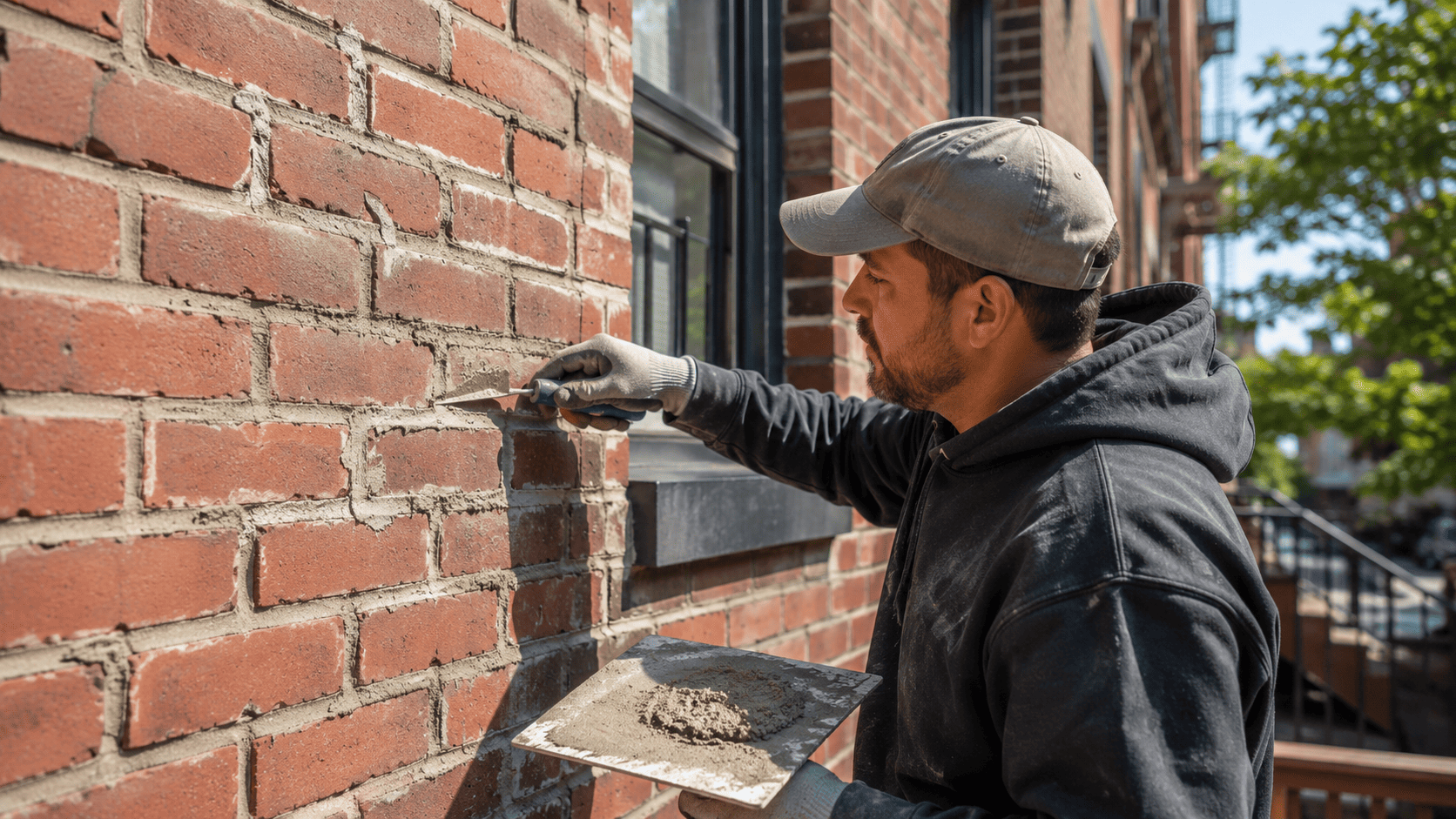
Brick pointing NYC is important when the mortar between bricks starts cracking, crumbling, or falling out. When people think about brick damage, they usually look at the bricks themselves. However, the mortar is often the first part of a wall to wear out.
Because mortar deteriorates gradually, the warning signs are easy to miss. A few missing joints or small cracks may not seem important today, but over time they allow water to work its way into the wall. Once that happens, the damage often spreads beyond the mortar and starts affecting the bricks themselves.
Repairing worn mortar early is one of the simplest ways to protect a masonry wall from much larger repairs later.
Quick Answer
Brick pointing should be considered when mortar joints begin cracking, crumbling, pulling away from the bricks, or falling out completely. These signs often allow water to enter the wall, leading to further deterioration, loose bricks, and more expensive masonry repairs if left untreated.
What Is Brick Pointing?
Brick pointing, often called repointing, is the process of removing deteriorated mortar and replacing it with new mortar that matches the existing masonry.
The goal is not simply to improve how the wall looks.
Healthy mortar keeps the brickwork stable, helps prevent water from entering the wall, and allows the entire structure to handle normal expansion and contraction as temperatures change throughout the year.
When the mortar begins failing, the wall gradually loses that protection.
Mortar That Is Cracking or Falling Out
One of the easiest signs to spot is mortar that no longer fills the joints completely.
You may notice small gaps between the bricks, pieces of mortar collecting on the ground, or joints that appear cracked and uneven. Brick pointing NYC becomes more urgent when gaps appear between bricks or pieces of mortar begin falling from the wall.
At first, the damage may only affect a few areas.
Over time, however, those openings allow rainwater to penetrate deeper into the wall. As moisture freezes during winter, the mortar continues breaking apart, and the surrounding bricks begin carrying more stress than they were designed to handle.
What starts as a few damaged joints can eventually spread across a much larger section of the wall.
Bricks That Begin to Feel Loose
Bricks should remain firmly locked together by the surrounding mortar.
If individual bricks begin shifting slightly, wobbling, or separating from the wall, deteriorated mortar is often the reason.
Many homeowners assume the brick itself has failed.
In reality, the mortar may no longer be providing enough support to keep everything securely in place.
Repairing the mortar before the wall becomes unstable is usually much simpler than waiting until loose bricks require rebuilding.
Gaps That Let Water Inside
Water is one of the biggest enemies of masonry.
Once mortar joints begin opening, moisture finds an easy path into the wall. You may not notice the effects immediately, but over time that trapped water can weaken the masonry from the inside.
In colder months, the problem becomes even worse.
Water freezes, expands, and places pressure on both the mortar and the surrounding bricks. Year after year, this cycle gradually widens the joints and increases the amount of deterioration.
Many masonry repairs begin with water entering through mortar that looks only slightly worn.
White Stains on the Brick Surface
If you notice a white, powdery substance on your brick wall, it is often a sign that moisture is moving through the masonry. Brick pointing NYC helps restore damaged mortar joints before water enters the wall and causes larger masonry problems.
This mineral residue, known as efflorescence, develops when water travels through the wall and evaporates on the surface.
While the white staining itself is usually not harmful, it often tells you that moisture is entering places where it should not.
If deteriorated mortar is allowing water inside, simply cleaning the wall will not solve the underlying issue.
Finding the source of the moisture is far more important than removing the visible stains.
What Property Owners Often Miss
Many people wait until bricks start cracking before they think about masonry repairs.
By that stage, the mortar has often been deteriorating for years.
Mortar is meant to wear out before the bricks do. That is actually part of how a brick wall protects itself.
Replacing worn mortar at the right time is usually much less disruptive and less expensive than replacing damaged brickwork later.
The mortar may seem like a small detail, but it plays one of the biggest roles in keeping the entire wall stable.
Repair or Rebuild: How Is the Decision Made?
Not every brick wall with damaged mortar needs to be rebuilt.
If the bricks remain in good condition and the deterioration is limited to the mortar joints, repointing is often enough to restore the wall.
However, if moisture has already caused bricks to crack, loosen, or deteriorate significantly, additional masonry repairs may also be necessary.
The condition of both the mortar and the brickwork determines the best approach.
A thorough inspection helps identify whether the wall simply needs fresh mortar or whether deeper structural repairs should be addressed at the same time.
Common Mistakes to Avoid
One of the biggest mistakes is covering damaged mortar with sealants or surface coatings without repairing the joints themselves.
These products may temporarily improve the appearance, but they do little to stop water from entering through deteriorated mortar.
Another common mistake is using mortar that does not match the original masonry.
Older brick buildings often require compatible mortar that allows the wall to breathe naturally. Using mortar that is too hard can sometimes create additional stress on the surrounding bricks instead of protecting them.
Proper brick pointing is about preserving the entire wall, not just filling empty joints.
Why Mortar Repairs Are Especially Important in NYC
Brick buildings throughout NYC face constant exposure to rain, snow, freeze-thaw cycles, pollution, and decades of natural aging.
Many homes and commercial buildings were constructed years ago, meaning their mortar has already experienced countless seasons of expansion and contraction.
Once moisture begins entering through worn joints, deterioration can spread surprisingly quickly.
Regular inspections and timely repointing help preserve both the appearance and the structural integrity of masonry walls under these demanding local conditions.
When to Schedule Brick Pointing
If you notice cracked mortar, missing joints, loose bricks, white staining, or small pieces of mortar falling from your wall, it is a good time to have the masonry inspected.
Catching mortar deterioration early usually allows the repairs to remain focused on the joints before the surrounding bricks begin requiring more extensive work.
If your brick wall is showing signs of deteriorating mortar, loose bricks, or moisture damage, NY Concrete can inspect the masonry and determine whether professional brick pointing is the right solution. Restoring the mortar before more serious damage develops helps protect the strength, appearance, and long-term durability of your property in NYC. NY Concrete provides brick pointing NYC services for failing mortar, loose bricks, water damage, and aging masonry walls.