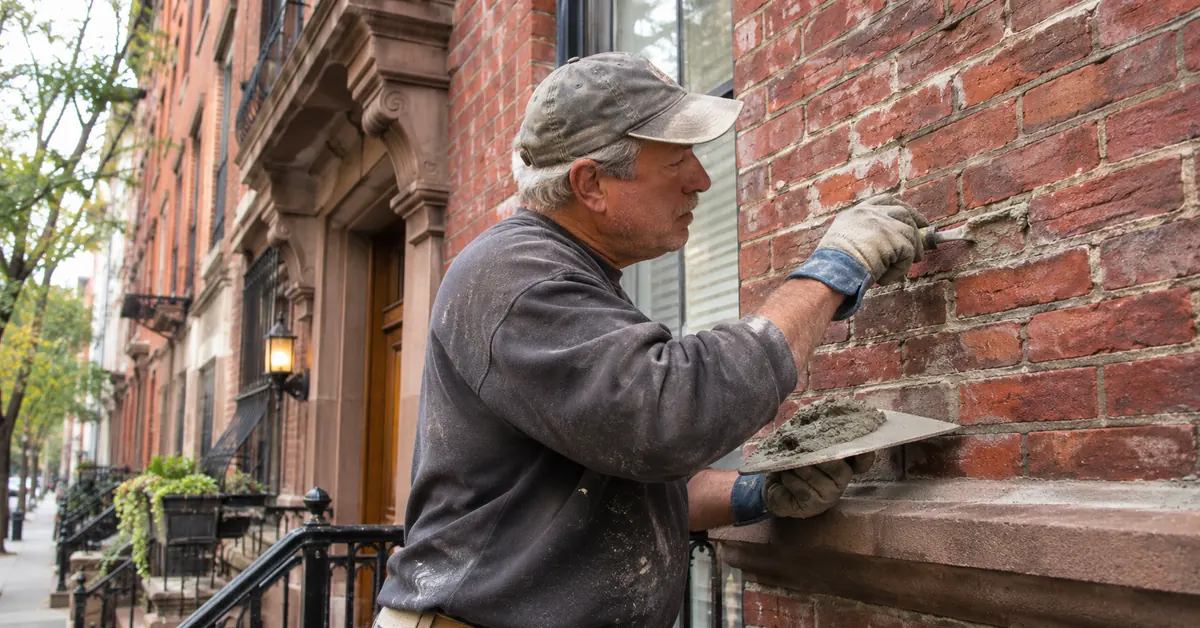
Restoring an old brick building in New York City starts with inspecting the masonry, identifying the cause of deterioration, and selecting repairs that suit the existing bricks and mortar. Depending on the building’s condition, the work may involve cleaning, repointing mortar joints, replacing damaged bricks, or addressing moisture problems.
However, brick restoration involves more than improving a building’s appearance. An improper repair can damage historic masonry, especially when contractors use incompatible mortar or aggressive cleaning methods.
From Brooklyn townhouses to Manhattan apartment buildings, older NYC properties require careful attention to their original construction.
This guide explains the brick restoration process, common masonry problems, repair methods, and NYC permit requirements. It also helps property owners understand what to discuss with a contractor before work begins.
What Is Brick Building Restoration?
Brick restoration is the process of repairing deteriorated masonry while preserving as much sound existing material as practical.
Unlike a complete wall replacement, restoration often focuses on specific areas that need attention.
For example, a contractor may remove deteriorated mortar and repoint the joints without replacing the surrounding bricks. However, severely damaged masonry units may require individual replacement.
The restoration process can involve several types of work:
| Restoration work | Main purpose |
|---|---|
| Brick inspection | Identify deterioration and potential underlying problems |
| Mortar repointing | Restore damaged or missing mortar joints |
| Brick replacement | Replace individual units that cannot remain serviceable |
| Masonry cleaning | Remove appropriate surface deposits without damaging historic materials |
| Moisture investigation | Identify water-entry points that contribute to deterioration |
| Façade repair | Address damaged masonry surfaces and architectural features |
| Final inspection | Review the repairs and identify continuing maintenance needs |
The appropriate scope depends on the building’s condition.
Therefore, contractors should examine the existing masonry before recommending extensive restoration.
Why Do Old NYC Brick Buildings Need Restoration?
Brick buildings can remain durable for generations. Nevertheless, weather exposure, moisture, building movement, and previous repairs may gradually affect their condition.
Deteriorating Mortar Joints
Mortar connects individual bricks and forms an important part of the masonry wall.
Over time, exposure to moisture and weather can cause mortar joints to crack, crumble, or erode.
As deterioration progresses, gaps may develop between the bricks.
Consequently, water can enter vulnerable areas more easily.
When the surrounding masonry remains sound, repointing may restore the deteriorated joints without extensive brick replacement.
Cracked or Spalling Bricks
Some bricks develop cracks, chipped edges, or surface deterioration.
Spalling occurs when pieces of the masonry surface break away.
Repeated moisture exposure, freezing conditions, incompatible repairs, and other factors may contribute to this damage.
However, a cracked brick does not always indicate a structural problem.
The contractor must evaluate the crack pattern, surrounding masonry, and any signs of movement before choosing a repair.
Water Infiltration and Efflorescence
Water can enter masonry through deteriorated joints, defective flashing, damaged parapets, and other openings.
When moisture moves through brickwork, it may carry soluble salts toward the surface.
After the water evaporates, those salts can leave a white deposit known as efflorescence.
Although efflorescence is not automatically a sign of structural failure, it can indicate moisture movement.
Therefore, cleaning the deposits without investigating recurring water exposure may not solve the underlying problem.
Previous Repairs With Incompatible Materials
Older buildings sometimes contain repairs that differ from the original masonry.
For example, a mortar mixture that is too hard or insufficiently permeable for the surrounding historic brick can contribute to deterioration.
Similarly, aggressive cleaning can damage a brick’s outer surface.
A suitable restoration plan should evaluate existing repairs rather than automatically repeat the same methods.
The Brick Restoration Process in NYC: Step by Step
Every masonry project differs. However, a careful restoration generally follows a logical sequence, from inspection and planning to repair and final review.
Step 1: Inspect the Existing Brickwork
First, the contractor examines the façade or masonry wall to determine its condition.
The inspection may include cracked bricks, open joints, moisture stains, damaged lintels, and previous repairs.
Additionally, the contractor should identify areas where the wall appears to bulge, shift, or separate.
These signs can indicate problems that extend beyond ordinary surface deterioration.
If the inspection reveals possible structural instability, a qualified design professional should evaluate the condition before the contractor proceeds with major repairs.
The purpose of this first step is to understand what needs repair and why the damage occurred.
Step 2: Identify the Damage and Develop a Repair Plan
Next, the contractor separates minor maintenance needs from more extensive masonry defects.
For example, deteriorated mortar may require repointing, while severely damaged bricks may need replacement.
The repair plan should identify the affected areas, proposed materials, and necessary preparation.
In addition, it should consider access requirements and any work needed around windows, parapets, or other façade details.
A well-defined scope helps owners compare estimates and understand which repairs the contractor recommends.
Step 3: Check NYC Permits and Landmark Requirements
Before starting work, the property owner and contractor should identify applicable approvals.
Some limited exterior masonry repairs may qualify for NYC Department of Buildings permit exemptions. However, more extensive façade or structural work can require permits and professional plans.
Furthermore, exterior restoration on an individually designated landmark or a property within an NYC historic district generally requires Landmarks Preservation Commission approval.
These requirements can apply even when the work does not need a separate DOB permit.
Therefore, contractors should confirm the building’s designation status and proposed scope before beginning regulated work.
For official guidance, visit:
Step 4: Select Compatible Bricks and Mortar
Material selection plays an important role in restoring older masonry.
Historic bricks vary in strength, porosity, size, and appearance.
Likewise, original mortar mixtures differ depending on the building’s age and construction.
For this reason, contractors should not assume that one modern mortar mixture works for every historic brick wall.
An appropriate replacement mortar must suit the existing masonry’s physical properties. On designated landmarks, NYC LPC rules also address mortar color, texture, tooling, strength, and permeability.
Additionally, replacement bricks should match the original units as closely as the applicable restoration specification requires.
The goal is to achieve a repair that performs appropriately while respecting the building’s character.
Step 5: Prepare the Masonry and Remove Deteriorated Material
Once the contractor establishes the repair scope, the crew prepares the affected masonry.
For repointing, workers remove deteriorated mortar from the joints to the required depth without unnecessarily damaging the brick edges.
However, preparation methods must suit the original materials and joint dimensions.
On historic façades with narrow mortar joints, hand tools may be necessary to protect the surrounding masonry.
Contractors should also protect windows, doors, decorative details, and nearby surfaces during restoration.
If the project involves damaged bricks, the crew carefully removes the affected units while preserving the surrounding sound material.
Step 6: Repoint Mortar Joints and Replace Damaged Bricks
After preparation, the contractor completes the specified masonry repairs.
Brick repointing involves installing suitable new mortar into prepared joints and finishing them according to the approved profile.
Proper joint preparation, mortar placement, and curing all influence the finished work.
In addition, the contractor may replace bricks that have deteriorated beyond practical repair.
Replacement units should fit the existing masonry and meet the relevant material requirements.
However, repointing alone cannot correct every wall problem.
If the building has unstable masonry, damaged structural components, or continuing movement, the restoration may require additional professional investigation and repair.
For more information about mortar-joint restoration, see NY Concrete’s Brick Pointing Services.
Step 7: Address Moisture Sources and Clean the Masonry
After repairing the affected masonry, the contractor should address relevant water-entry problems identified during the inspection.
For example, water may enter through open flashing connections, deteriorated parapet details, or defective joints.
Correcting these conditions can help reduce recurring deterioration.
Cleaning also requires care.
Although dirt and surface deposits may affect appearance, aggressive pressure washing, abrasive blasting, or unsuitable chemicals can damage older bricks and mortar.
Therefore, preservation guidance generally favors the gentlest effective cleaning method appropriate for the material and condition.
Contractors should test the proposed approach and follow any applicable historic-preservation requirements.
Not every façade needs extensive cleaning, and not every old brick wall benefits from a water-repellent coating.
Step 8: Inspect the Finished Repairs
Finally, the contractor reviews the completed restoration against the agreed scope and applicable requirements.
The final review should consider the repaired joints, replacement bricks, surface condition, and surrounding masonry.
Additionally, the owner should receive any relevant project documentation and information about future maintenance.
For work requiring professional inspections or regulatory filings, the responsible parties must complete those obligations separately.
A finished façade can look better after restoration. However, its long-term performance also depends on the original building condition, material compatibility, weather exposure, and ongoing maintenance.
Brick Repointing vs. Brick Replacement: Which Does Your Building Need?
Many owners assume that deteriorated brickwork requires complete replacement.
However, the condition of the individual masonry units and mortar joints should guide the decision.
| Condition | Potential restoration approach |
|---|---|
| Crumbling mortar with sound bricks | Localized or broader repointing |
| A few severely damaged bricks | Individual brick replacement |
| Minor surface staining | Investigate the cause and assess suitable cleaning |
| Open joints and moisture entry | Repoint damaged joints and address other water-entry points |
| Recurring cracks or wall movement | Professional assessment before specifying repairs |
| Bulging or unstable masonry | Prompt structural evaluation and appropriate corrective work |
| Widespread deterioration | Evaluate whether extensive restoration or reconstruction is necessary |
For example, a brick façade may contain mostly sound units but have deteriorated joints across one elevation.
In that situation, repointing may address much of the visible deterioration.
In contrast, a wall with substantial displacement may require a more extensive investigation.
Therefore, the best repair depends on the masonry’s condition rather than its age or appearance alone.
Common Mistakes That Can Damage Historic Brickwork
Old masonry requires careful treatment. Unfortunately, unsuitable restoration methods can create new problems.
Using mortar that is too hard: An incompatible mortar mixture may contribute to damage in softer or more porous historic brick.
Removing sound masonry unnecessarily: Excessive demolition can destroy original material that could otherwise remain in service.
Cleaning with excessive pressure: Aggressive cleaning can remove protective surface material and damage mortar joints.
Ignoring moisture problems: Repointing may not resolve water entry caused by flashing, roofing, or other building defects.
Covering damage without investigating it: New finishes can hide deterioration without correcting its cause.
Skipping applicable approvals: Work on designated landmarks or regulated façades may require permits and professional involvement.
Instead, contractors should select methods that suit the specific building and its existing materials.
NYC Façade Safety and Historic Building Requirements
New York City has additional requirements for certain building exteriors.
Under the Department of Buildings’ Façade Inspection & Safety Program (FISP), owners of buildings higher than six stories generally must arrange exterior-wall inspections and file technical reports at the applicable intervals.
The program helps identify unsafe façade conditions and required repairs.
However, not every old brick building falls under FISP.
Smaller residential buildings may have different inspection and filing obligations, although their owners must still maintain safe building conditions.
Furthermore, a building’s age alone does not mean it has landmark status.
Property owners should confirm both the building’s applicable façade requirements and any historic designation before planning restoration work.
For current information, review the NYC DOB Façade Compliance Program.
If bricks or façade elements appear ready to fall, keep people away from the affected area and seek urgent professional assistance. Safety takes priority over ordinary maintenance planning.
How Much Does Old Brick Building Restoration Cost in NYC?
The cost of brick restoration depends on the actual repair scope.
For example, replacing a few damaged bricks usually involves different work from repointing an entire multi-story façade.
Several factors influence an estimate:
-
Size and accessibility of the damaged area
-
Condition of the existing bricks and mortar
-
Required material matching
-
Amount of repointing or brick replacement
-
Scaffolding or other access equipment
-
Moisture-related repairs
-
Applicable permits and professional involvement
-
Historic preservation requirements
Consequently, a reliable estimate should identify the necessary repairs rather than apply one standard price to every brick building.
A detailed inspection can also help distinguish essential maintenance from optional appearance-related improvements.
How Can NYC Property Owners Maintain Restored Brickwork?
Restoration can improve a building’s condition, but regular maintenance remains important.
After completing masonry repairs, owners should watch for recurring cracks, deteriorated joints, unusual moisture stains, and loose materials.
Additionally, inspect vulnerable areas after severe weather when it is safe to do so.
Pay attention to drainage details, parapets, window connections, and other locations where water may enter.
However, avoid applying sealers or cleaning products without considering the masonry’s condition and material compatibility.
For older buildings, periodic professional assessments may help identify developing problems before they require more extensive work.
Frequently Asked Questions About Brick Restoration in NYC
What is the first step in restoring an old brick building?
The first step is inspecting the masonry and identifying the cause of deterioration. Contractors should check bricks, mortar joints, water-entry points, and signs of movement before recommending repairs.
Can you restore old brick without replacing it?
Yes. When the bricks remain sound, contractors can often repair deteriorated mortar joints and address localized damage without replacing the entire wall. However, severely damaged units may require replacement.
What is the difference between brick pointing and restoration?
Brick pointing focuses on repairing mortar joints. In contrast, brick restoration can include repointing, damaged brick replacement, suitable cleaning, moisture investigation, and other masonry repairs.
Should old brick buildings use modern cement mortar?
Not automatically. The correct mortar depends on the original masonry and restoration requirements. Some older bricks require a more compatible mortar than a standard modern high-strength mixture.
Does brick restoration stop water leaks?
It may address leaks associated with deteriorated joints or damaged masonry. However, water can also enter through flashing, roofs, windows, and other building components. Therefore, contractors should identify the actual source before recommending repairs.
Does brick restoration require an NYC permit?
Permit requirements depend on the work and property. Some limited repairs may qualify for DOB permit exemptions, while other façade or structural projects require permits. Designated landmarks and historic-district properties generally need LPC approval for regulated exterior restoration.
How long does brick restoration take?
The timeline depends on the affected area, building height, access requirements, material availability, weather, and required approvals. Localized repairs may involve less work than extensive façade restoration. A contractor should provide a project-specific schedule after assessment.
When should I call a brick restoration contractor?
Contact a qualified contractor when mortar joints crumble, bricks loosen, cracks develop, or deterioration continues spreading. If the wall bulges, shifts, or presents a falling-debris hazard, seek an appropriate professional safety assessment promptly.
Need Brick Restoration or Masonry Repair in NYC?
Older brick buildings deserve repairs that address deterioration while preserving sound existing masonry.
Whether your property has damaged mortar joints, cracked bricks, or weathered exterior walls, the right repair begins with understanding the building’s condition.
NY Concrete provides brick repair, brick pointing, and masonry restoration services throughout Brooklyn, Queens, Manhattan, and Staten Island.
Our team can discuss the visible damage, review your repair needs, and help determine the next steps for an estimate. Projects involving structural or historic-preservation requirements may also need qualified design professionals and relevant agency approvals.
Explore our services:
Request a free on-site masonry repair estimate.
Call: 718-980-8580
When requesting an estimate, share your property’s borough, the affected masonry area, and any photographs or inspection findings available.