If the pavers around your property have started to shift, sink, or sit unevenly, it’s usually not just a small surface issue. What you’re seeing on top is often a sign that something underneath, like the base or drainage, has started to fail.
At first, it might just feel slightly off when you walk over it. One brick sits a bit higher than the next, or a section dips when you step on it. But over time, those small changes turn into real trip hazards, especially in areas with regular foot traffic or after rain and winter weather.
Quick Answer
Uneven pavers should be repaired by lifting the affected section, correcting the base underneath, and resetting the pavers so they sit level again. Simply pushing them back into place or filling gaps won’t last if the underlying problem isn’t fixed.
What Uneven Pavers Usually Look Like
Most people don’t notice the issue all at once. It tends to show up gradually.
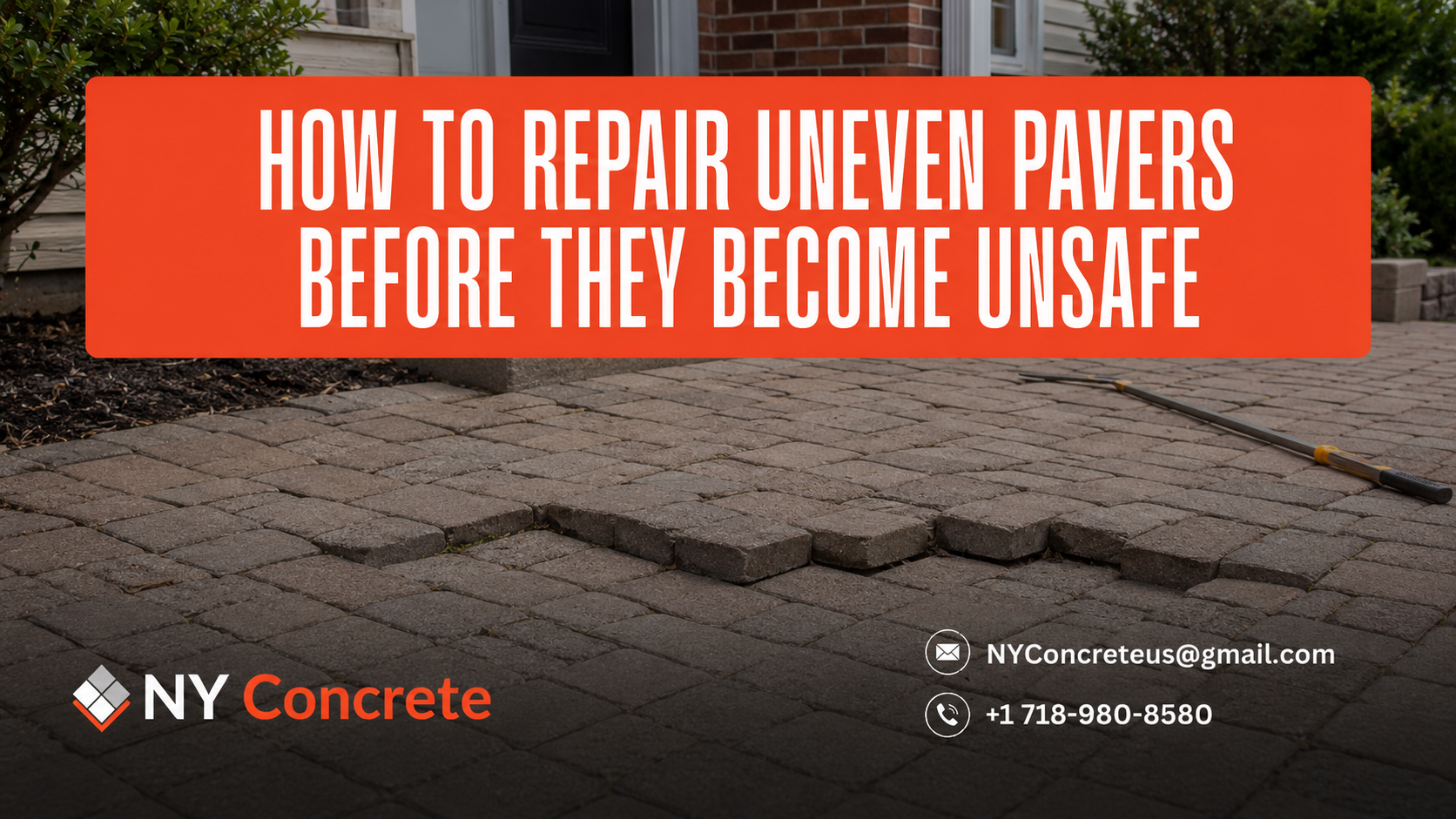
You might see one or two pavers sitting higher than the rest, creating a slight edge that catches your foot. In other areas, the surface may dip, and water starts collecting there after it rains. Sometimes the pavers feel loose, shifting slightly when you step on them, or you’ll notice gaps opening between joints that used to be tight.
In colder months, these uneven spots become more obvious. Ice forms in the low areas, and even a small height difference can turn into a slipping or tripping risk.
What Causes Pavers to Become Uneven
Pavers don’t usually shift on their own. There’s almost always a reason underneath.
One of the most common causes is a weak or compacted base. Over time, the material beneath the pavers can settle, especially if it wasn’t properly installed to begin with. When that base shifts, the pavers move with it.
Water is another big factor. If drainage isn’t working properly, water can get under the surface and slowly wash away or loosen the base material. That’s when you start seeing dips or sections that feel unstable.
Tree roots can also push pavers upward, while regular foot traffic or vehicle weight can gradually press certain areas down. In NYC conditions, freeze-thaw cycles make all of this worse. Water gets in, freezes, expands, and slowly forces the pavers out of place.
Why Uneven Pavers Become a Safety Issue
At first, uneven pavers might just feel like a minor annoyance. But they rarely stay that way.
Even a small height difference can catch a shoe or cause someone to lose balance. In high-traffic areas, walkways, entry paths, patios, this becomes a real liability. Add rain, snow, or ice into the mix, and those uneven spots become even more dangerous.
What makes it tricky is that the change happens gradually, so it’s easy to get used to it. But for guests, delivery workers, or anyone unfamiliar with the surface, the risk is much higher.
How the Repair Process Actually Works
Fixing uneven pavers isn’t about forcing them back into place. That might make things look better for a short time, but it doesn’t solve the underlying issue.
The proper way to handle it is to lift the affected section completely and take a look at what’s happening underneath. If the base has sunk, shifted, or washed out, it needs to be corrected first. That might mean adding and compacting new base material or adjusting the slope so water drains away properly.
Once the base is stable again, the pavers are reset carefully so they sit level with the surrounding area. The joints are then filled and secured so everything stays in place.
When it’s done right, the repaired section blends in and feels solid underfoot, not loose or uneven.
Can It Be Repaired, or Does It Need a Larger Fix?
In many cases, uneven pavers can be repaired without replacing the entire surface. If the problem is limited to a specific area and the rest of the installation is stable, lifting and resetting that section is usually enough.
But if you’re seeing unevenness across multiple areas, or if the same spots keep shifting over time, that’s often a sign of a deeper issue, usually related to drainage or the original base installation.
In those situations, a more extensive fix may be needed to prevent the problem from coming back again and again.
Common Mistakes That Make the Problem Worse
A lot of quick fixes actually make things worse over time.
One of the most common is trying to level pavers without lifting them. Pressing them down or adding sand on top doesn’t address what’s happening underneath, so the unevenness comes back.
Another mistake is ignoring drainage. If water continues to collect under the surface, even a well-done repair won’t hold up for long.
Some people also focus only on the most uneven paver, without checking the surrounding area. But paver movement is rarely isolated, nearby sections are often starting to shift as well.
Why This Happens So Often in NYC Conditions
In NYC, outdoor surfaces go through a lot. Between heavy foot traffic, limited drainage space, and constant exposure to weather, pavers take more stress than they would in a typical suburban setting.
Winter plays a big role. Water seeps into small gaps, freezes, expands, and slowly pushes things out of alignment. Over time, that repeated cycle weakens the base and creates the uneven surface you start to notice.
Because of that, repairs here need to account for those conditions, not just how things look on the surface.
When to Take Action
If you’ve started noticing uneven spots, dips, or loose pavers, it’s better to deal with it early. Small sections are much easier to fix before the issue spreads or becomes a safety concern.
Once water and movement start affecting a larger area, the repair becomes more involved.
If your pavers are starting to shift, sink, or feel uneven underfoot, NY Concrete can take a look and figure out what’s causing the movement. Whether it’s a small section that needs to be reset or a deeper issue with the base or drainage, the goal is to fix it properly so it stays level and safe over time.