NYC sidewalk repair signs often appear long before a slab becomes a serious trip hazard or a DOT violation shows up in the mail. Most sidewalks do not fail overnight. The problem is that early warning signs are easy to overlook because they often seem too small to matter.
Maybe you’ve noticed a crack that’s a little wider than it used to be. One sidewalk flag feels slightly uneven under your feet. Water sits in the same spot every time it rains. None of these issues may seem urgent on their own, but together they often point to a sidewalk that is slowly becoming less stable.
Quick Answer
Your sidewalk should be professionally inspected if you notice widening cracks, uneven sidewalk flags, sinking concrete, crumbling edges, pooling water, or surface deterioration. Addressing these problems early can help prevent larger repairs, reduce safety risks, and lower the chances of receiving a sidewalk violation.
Cracks That Continue to Grow
Not every crack is a reason to worry. Concrete naturally develops small surface cracks as it ages. Widening cracks are one of the most common NYC sidewalk repair signs because they often show movement, water damage, or weak support beneath the slab.
The concern is when those cracks start changing. If a crack becomes wider, stretches across multiple sidewalk flags, or new cracks begin appearing nearby, the issue is often more than normal wear.
In many cases, the concrete is moving because the base underneath is shifting. Water may already be working its way below the slab, slowly weakening its support. Simply filling the crack without finding out why it formed usually means it will come back.
One Sidewalk Flag Sitting Higher Than the Next
This is one of the most common sidewalk problems in NYC and one of the easiest to underestimate.
At first, the difference may only be noticeable when you’re walking across it. One slab sits just a little higher than the next, creating a slight edge that catches your foot.
That small height difference often gets worse over time. Tree roots continue growing, the ground keeps settling, or another winter pushes the slabs even farther out of alignment.
What seems like a minor inconvenience today can eventually become a trip hazard for anyone using the sidewalk.
Water That Always Collects in the Same Spot
A sidewalk should allow water to drain away naturally.
If rainwater consistently sits in one area long after the rest of the sidewalk has dried, it’s usually a sign that something has changed beneath the surface.
Sometimes the concrete has settled. Other times, the original slope no longer directs water away properly.
Standing water does more than create puddles. It gradually weakens the material underneath the sidewalk, allowing movement to continue. During winter, that same water freezes, expands, and often makes the damage even worse.
Crumbling Concrete Around the Edges
It’s easy to dismiss a chipped corner or a rough edge as normal aging.
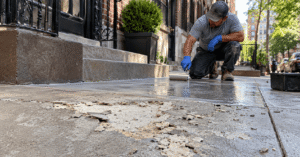
But when pieces of concrete begin breaking away or the surface starts crumbling, moisture has often already found its way inside the slab.
Over time, those damaged areas become larger, exposing even more of the concrete to weather and water. What starts as a small section of surface deterioration can eventually affect the strength of the entire sidewalk flag.
Sidewalk Sections That Feel Loose or Hollow
Sometimes the sidewalk looks perfectly normal but feels different when you walk across it.
A slab may move slightly under pressure or produce a hollow sound when tapped. These are often signs that the concrete has lost support underneath or has begun separating from its base.
This type of movement rarely fixes itself. As more weight and weather affect the area, the instability usually becomes worse.
What Property Owners Often Miss
Many people assume that sidewalk damage has to look severe before it becomes a problem.
In reality, inspectors are often more concerned with safety than appearance.
A relatively small height difference between sidewalk flags may present a greater hazard than a larger crack that remains stable. Likewise, a section that collects water after every storm may be telling you more about the condition of the sidewalk than a surface crack nearby.
Looking at the sidewalk as a whole, not just the most obvious damage, usually provides a much clearer picture of what is happening.
Repair or Replacement: How Is the Decision Made?
Not every damaged sidewalk needs to be replaced.
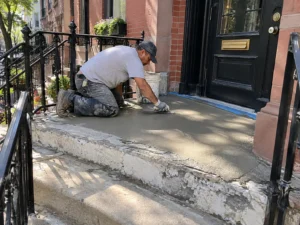
If the issue is limited to one area and the surrounding concrete is still stable, a targeted repair may be enough. However, when multiple sidewalk flags are shifting, the base underneath has become unstable, or widespread deterioration is present, replacing the affected sections often provides a longer-lasting solution.
The decision depends on the condition beneath the surface just as much as what is visible above it.
That is why two sidewalks with similar cracks can require completely different repairs.
Common Mistakes to Avoid
One of the biggest mistakes is assuming the sidewalk is fine simply because people can still walk across it.
Another is repairing only what is visible. A crack, uneven slab, or chipped edge usually has an underlying cause. If that cause is ignored, the same damage often returns.
Waiting until someone trips, the damage spreads, or a violation notice arrives usually makes the repair more complicated and more expensive than it needed to be.
Why NYC Sidewalks Wear Out Faster
Sidewalks in New York deal with conditions that are hard on concrete year after year.
Heavy pedestrian traffic, mature street trees, underground utilities, limited drainage, and constant freeze-thaw cycles all put pressure on the sidewalk. Even well-built concrete gradually weakens under these conditions.
That is why early repairs are so important. Small problems have a way of becoming much bigger after another season of rain, snow, and changing temperatures.
When to Take Action
If you’ve noticed cracks getting larger, sidewalk flags becoming uneven, water pooling after rain, or concrete starting to crumble, it’s worth having the sidewalk inspected before the condition worsens.
Most sidewalk problems are easier, and often less expensive, to repair before they develop into safety hazards or DOT violations. NY Concrete can inspect these NYC sidewalk repair signs and recommend the right repair before the damage becomes larger or more expensive.
If your sidewalk is showing signs of cracking, uneven slabs, surface deterioration, or other changes that don’t seem quite right, NY Concrete can inspect the area and determine what’s causing the problem. Whether the solution is a focused repair or replacing damaged sidewalk flags, the goal is to restore a safe, durable sidewalk that stands up to everyday NYC conditions.