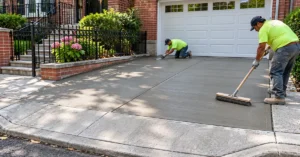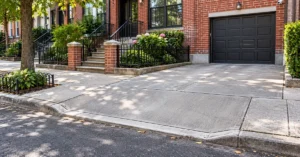
Hiring a sidewalk repair contractor in NYC requires more than comparing prices. Before choosing a company, property owners should verify licensing, review previous work, compare written estimates, confirm permit responsibilities, and understand how the contractor will meet NYC DOT requirements.
A cracked or uneven sidewalk may seem like a straightforward concrete project. However, incomplete repairs, unclear contracts, and missing permits can create unnecessary expenses and delays.
If you’ve received a DOT sidewalk violation, choosing the right contractor becomes especially important because the City follows a specific repair and inspection process.
Whether you own a residential property in Brooklyn, Queens, Manhattan, or Staten Island, these nine mistakes can help you recognize potential problems before signing a sidewalk repair contract.
1. Hiring a Contractor Without Checking Their License and Insurance
One of the biggest mistakes is assuming that every concrete contractor has the credentials needed to perform sidewalk repairs in New York City.
NYC311 states that contractors performing sidewalk repair work costing more than $200 must hold a Home Improvement Contractor license from the NYC Department of Consumer and Worker Protection (DCWP).
Therefore, you should verify the contractor’s license rather than rely only on statements made during an estimate.
Before hiring, ask for the business name, relevant license information, and proof of applicable insurance coverage.
Additionally, confirm that the business name on the estimate matches the business you verified.
How Can You Verify a Sidewalk Contractor’s License?
NYC DCWP provides a Business Background Check service that allows consumers to review license status and complaint information.
You can access the NYC DCWP contractor verification resources or contact 311 for assistance.
Also, ask about general liability insurance and workers’ compensation coverage as applicable to the company and project.
Remember: A valid license helps establish that a contractor meets the applicable licensing requirements. However, it does not guarantee that every repair will meet your expectations.
2. Choosing a Contractor Without Reviewing Similar Sidewalk Projects
A company may have experience with patios, driveways, or other concrete surfaces without having extensive experience with NYC public sidewalks.
Although these projects share construction principles, public sidewalk repairs involve additional specifications, pedestrian access considerations, and potential DOT requirements.
Therefore, ask whether the contractor has completed projects similar to yours.
For example, if you need multiple damaged sidewalk flags replaced, review examples of comparable sidewalk replacement work rather than unrelated backyard projects.
You can also request references and check available customer feedback.
When examining project photographs, look for actual repair work, finished concrete, appropriate joints, and consistent surface elevations.
However, don’t rely on photographs alone. Ask what work the contractor performed and whether the project involved a DOT violation.
What to ask: “Can you explain a similar sidewalk repair you’ve completed and the construction steps involved?”
A clear explanation can help you evaluate the contractor’s familiarity with the work.
3. Accepting a Sidewalk Repair Estimate Without a Detailed Scope
A short estimate that only states “repair sidewalk” may leave important questions unanswered.
For example, one contractor may include demolition, base preparation, concrete placement, permit coordination, and cleanup. Another estimate may exclude several of those items.
Consequently, comparing the two prices without reviewing their scopes can lead to misunderstandings.
A useful written estimate should explain:
-
The approximate repair area and number of affected sidewalk flags
-
Whether the contractor will remove and dispose of existing concrete
-
Required excavation, grading, and base preparation
-
Proposed concrete specifications and construction details
-
Joint installation and surface finishing
-
Permit responsibilities and associated fees
-
Pedestrian protection and cleanup
-
Any exclusions or potential additional work
Not every project requires the same concrete thickness, reinforcement, or repair method.
The contractor should determine the appropriate specifications from NYC DOT requirements and the actual site conditions.
Why Does the Scope Matter for DOT Violations?
If NYC DOT has issued a violation, review the Preliminary Inspection Report (PIR).
The report identifies the sidewalk flags and defects the City found during inspection.
A contractor should consider those findings when developing the repair scope.
Otherwise, the completed work may not address everything required for violation dismissal.
4. Assuming the Contractor Will Handle Permits Automatically
Permits are an important part of many NYC sidewalk repair projects.
However, property owners should never assume the contractor has obtained the necessary approval simply because work has been scheduled.
NYC DOT generally requires a Sidewalk Construction Permit for regulated sidewalk repair and replacement work.
There are limited exceptions. For example, NYC Department of Buildings guidance notes that certain repairs smaller than 25 square feet that are not intended to remove a violation may qualify for a DOT permit exemption.
Therefore, the contractor should confirm the requirements for your particular project.
Before signing the contract, ask who will obtain the permits and how you can verify their status.
The NYC311 Sidewalk Construction Permit guide explains the standard permitting process.
What If You Already Have a DOT Sidewalk Violation?
NYC DOT generally provides a 75-day period after the property owner receives a Notice of Sidewalk Violation to arrange the required correction.
Importantly, obtaining a sidewalk construction permit does not automatically extend the applicable repair period.
Also, the violation notice itself carries no fine. However, if the owner fails to address the defects, the City may arrange the repairs and bill the property owner.
For this reason, ask the contractor about both permit coordination and construction scheduling.
5. Choosing the Cheapest Estimate Without Comparing the Work
Price matters, but the lowest estimate does not automatically offer the best value.
Similarly, an expensive estimate does not guarantee superior workmanship.
The useful comparison is what each contractor proposes to do for the quoted amount.
For example, a lower estimate may cover only visible patching, while another includes full replacement of defective concrete flags and preparation of the underlying support.
These estimates represent different scopes, so comparing their totals alone can be misleading.
Before selecting a contractor, review the materials, demolition requirements, permit charges, cleanup, and other included services.
How Should You Compare Sidewalk Repair Estimates?
| Estimate detail | What to compare |
|---|---|
| Repair area | Are both contractors quoting the same flags and square footage? |
| Removal | Does the price include demolition and debris disposal? |
| Base preparation | Will the contractor address unsuitable support where necessary? |
| Concrete work | Do the proposed materials and methods meet applicable specifications? |
| Permits | Are responsibilities and charges clearly identified? |
| Additional work | What happens if the contractor discovers unexpected conditions? |
| Project completion | Does the quote include finishing, cleanup, and agreed documentation? |
If one proposal costs considerably less, ask why.
A clear explanation is more useful than assuming that either contractor has quoted the correct amount.
For additional budgeting information, read How Much Does Sidewalk Repair Cost in NYC?.
6. Signing an Unclear Contract or Paying Too Much Upfront
Verbal agreements can create confusion, especially when a project involves demolition, concrete replacement, and permits.
Therefore, review the written contract before authorizing work.
NYC DCWP’s consumer guidance explains that covered home improvement contracts should identify the work, materials, important dates, payment arrangements, and relevant guarantees or warranties.
The contractor must also provide the applicable Notice of Cancellation.
Furthermore, DCWP advises consumers not to pay in cash and recommends paying no more than 25% of the contract amount upfront to start the work.
You should also keep copies of payment records and signed documents.
What Should a Sidewalk Repair Contract Include?
A clear agreement should explain the repair scope, total price, payment schedule, anticipated project dates, permit responsibilities, and treatment of additional work.
Additionally, any agreed warranty terms should appear in writing.
If the contractor needs to change the scope after discovering unexpected conditions, request a written change order before authorizing the additional work.
What to ask: “Can you provide the full written scope, payment schedule, and required permit disclosures before I sign?”
This helps both parties understand their responsibilities.
7. Ignoring Tree Roots, Drainage, and Underlying Damage
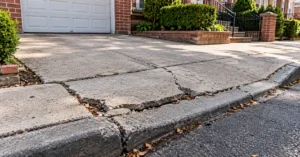
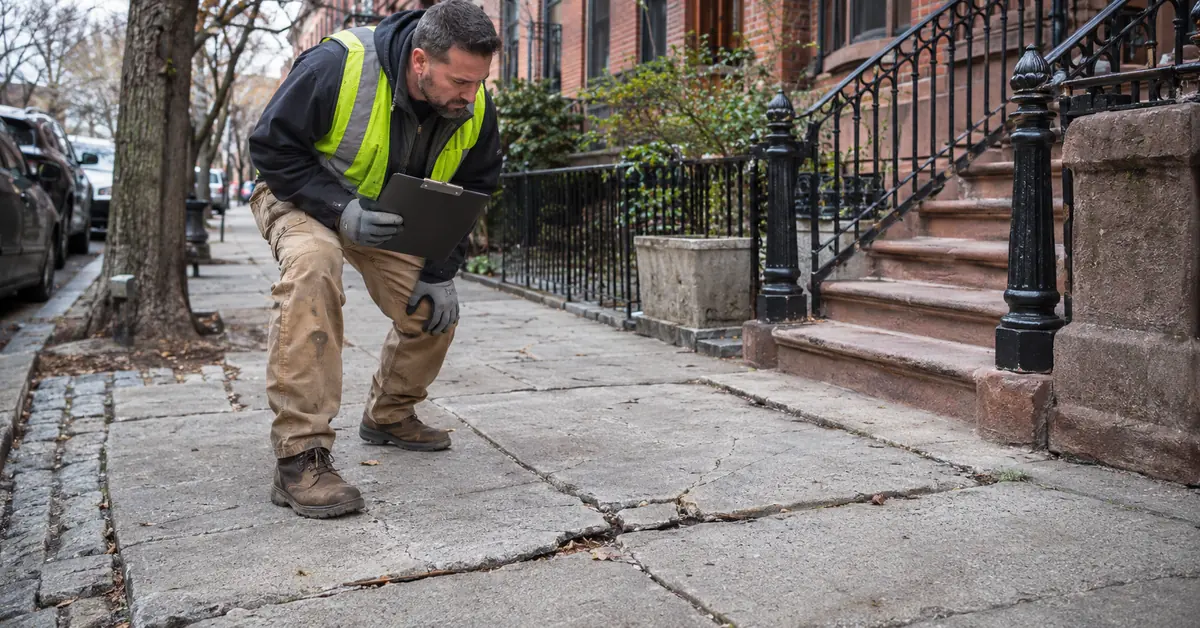
A sidewalk may show visible cracks or raised concrete flags, but the underlying cause can affect the repair.
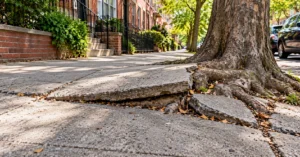
For example, tree roots may lift sidewalk sections. Poor drainage or unstable support may also contribute to movement.
Consequently, replacing concrete without evaluating these conditions may leave an important problem unresolved.
Before hiring a contractor, ask what caused the deterioration and how the proposed repair addresses it.
What If a City-Owned Tree Damaged the Sidewalk?
NYC has special rules for sidewalk damage caused by City-owned trees.
Qualifying one-, two-, and three-family properties may receive City assistance when City-owned trees are solely responsible for the damage.
Furthermore, contractors should not cut or shave City-owned tree roots without the necessary authorization.
Therefore, confirm whether NYC Parks needs to evaluate the condition before construction begins.
Other site conditions can also complicate repairs, including utility structures, cellar doors, and sidewalk vaults.
A qualified contractor should identify these issues during the assessment and explain whether additional professional involvement is necessary.
For official information, review NYC311 Trees and Sidewalks Repair.
8. Overlooking Pedestrian Safety and Concrete Curing
Sidewalk repairs affect more than the property owner.
Pedestrians use these public walking areas daily. As a result, contractors need to consider safe access and appropriate worksite protection.
Before construction begins, ask how the contractor will manage pedestrian access and protect the repair area.
The necessary arrangements depend on the location, scope, and applicable DOT requirements.
Why Does Concrete Curing Matter?
Fresh concrete needs suitable curing conditions to develop its intended strength and durability.
If pedestrians or equipment load the surface too early, the new concrete may suffer damage.
However, the exact reopening time depends on the mixture, weather, construction requirements, and achieved strength.
Therefore, ask the contractor when the sidewalk can safely reopen rather than assume that every replacement needs the same amount of time.
You should also discuss how the crew will protect the concrete during unsuitable weather.
For more information, read How Long Does Sidewalk Repair Take in NYC?.
9. Forgetting the DOT Violation Dismissal Process
One final mistake is assuming that replacing the damaged concrete automatically clears an NYC DOT sidewalk violation.
It doesn’t.
After completing repairs under the appropriate permit, the property owner must request a Sidewalk Violation Dismissal Inspection.
NYC DOT then verifies that the required defects have been corrected.
If the work meets the applicable standards, the City can proceed with clearing the violation record.
However, a contractor cannot guarantee official dismissal simply because the concrete looks smooth or the project has finished.
Before hiring, confirm whether the company will provide the permit number and other information needed for the dismissal request.
You should also keep the violation number, property details, and relevant repair documents.
What to ask: “What documentation will you give me so I can request and complete the DOT dismissal process?”
If you need to address an outstanding notice, explore NY Concrete’s Sidewalk Violation Removal Services.
A Quick Checklist Before Hiring an NYC Sidewalk Contractor
Once you’ve reviewed the common mistakes, use the following questions to compare contractors.
| Question | What a satisfactory response should clarify |
|---|---|
| Can I verify your license? | Applicable license status and registered business details |
| What insurance coverage applies? | Relevant coverage and documentation |
| Have you completed similar sidewalk repairs? | Experience with comparable projects |
| What work does your estimate include? | Defined repair area, materials, demolition, preparation, and cleanup |
| Who obtains the permits? | Responsibility, fees, and verification method |
| How will you address underlying damage? | Assessment of settlement, roots, drainage, or other site conditions |
| What are the payment terms? | Written contract and clear payment schedule |
| How will pedestrians access the area? | Appropriate construction protection and access arrangements |
| What happens after completion? | Curing, documentation, and any required DOT dismissal process |
A contractor who answers these questions clearly can help you understand the proposed work before committing to the project.
Nevertheless, evaluate the written documents and available verification information rather than relying on promises alone.
Frequently Asked Questions
How do I find a reliable sidewalk repair contractor in NYC?
Start by verifying the contractor’s applicable license through NYC DCWP. Then review similar projects, request references, compare detailed written estimates, and confirm permit responsibilities. Additionally, ask how the contractor will address the actual sidewalk defects.
Does a sidewalk repair contractor need a license in New York City?
NYC311 states that contractors performing sidewalk repair work costing more than $200 must hold a DCWP Home Improvement Contractor license. Check the current requirements and verify the business before hiring.
Should a sidewalk contractor obtain the DOT permit?
For regulated sidewalk construction, confirm that the contractor will obtain the required NYC DOT permit before work begins. The applicable process depends on the project. Some limited repairs may qualify for exemptions.
What should I look for in a sidewalk repair estimate?
A useful estimate should identify the affected area, demolition, debris removal, base preparation, concrete specifications, permits, and cleanup. Additionally, it should explain exclusions and how the contractor will handle unexpected conditions.
Can a contractor guarantee removal of my sidewalk violation?
A contractor can complete the repair work required by the agreed scope. However, NYC DOT determines whether the work satisfies the violation requirements during its dismissal process. Therefore, no contractor should promise official dismissal without that inspection.
Is the cheapest sidewalk repair contractor the best choice?
Not necessarily. Compare the actual work included in each estimate. A lower price may reflect a smaller scope, while a higher price may include services that another contractor excludes. The best choice depends on the project’s requirements and the contractor’s qualifications.
Does a DOT sidewalk violation automatically carry a fine?
No. NYC DOT states that its Notice of Sidewalk Violation itself carries no fine. However, if the City arranges repairs because the owner has not addressed the defects, the City may bill the property owner.
Looking for Sidewalk Repair Services in NYC?
Hiring a sidewalk contractor should begin with a clear understanding of your property’s needs.
Whether your sidewalk has cracked concrete, uneven flags, settlement, or an outstanding DOT violation, the contractor should explain the recommended repair scope and applicable construction requirements.
NY Concrete provides sidewalk repair and replacement services for residential and commercial properties across Brooklyn, Queens, Manhattan, and Staten Island.
Our team can discuss the damaged area and provide an estimate based on the proposed work.
Before starting any project, confirm the applicable licensing information, permits, construction scope, and contract terms.
Explore NY Concrete Sidewalk Repair Services
Request a free sidewalk repair estimate.
Contact NY Concrete or call 718-980-8580.
When contacting us, share your property’s borough, the approximate damaged area, and whether you have received a DOT violation notice.
This article provides general contractor-hiring and NYC sidewalk compliance information. Always verify current agency requirements and the contractor’s credentials before entering into an agreement.