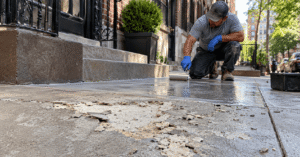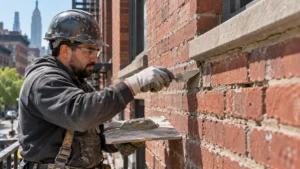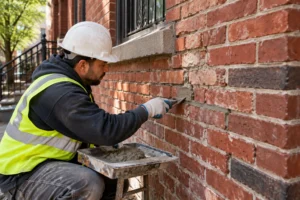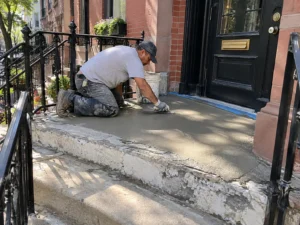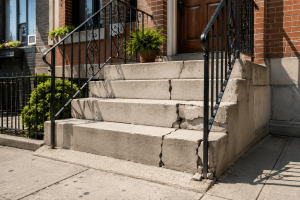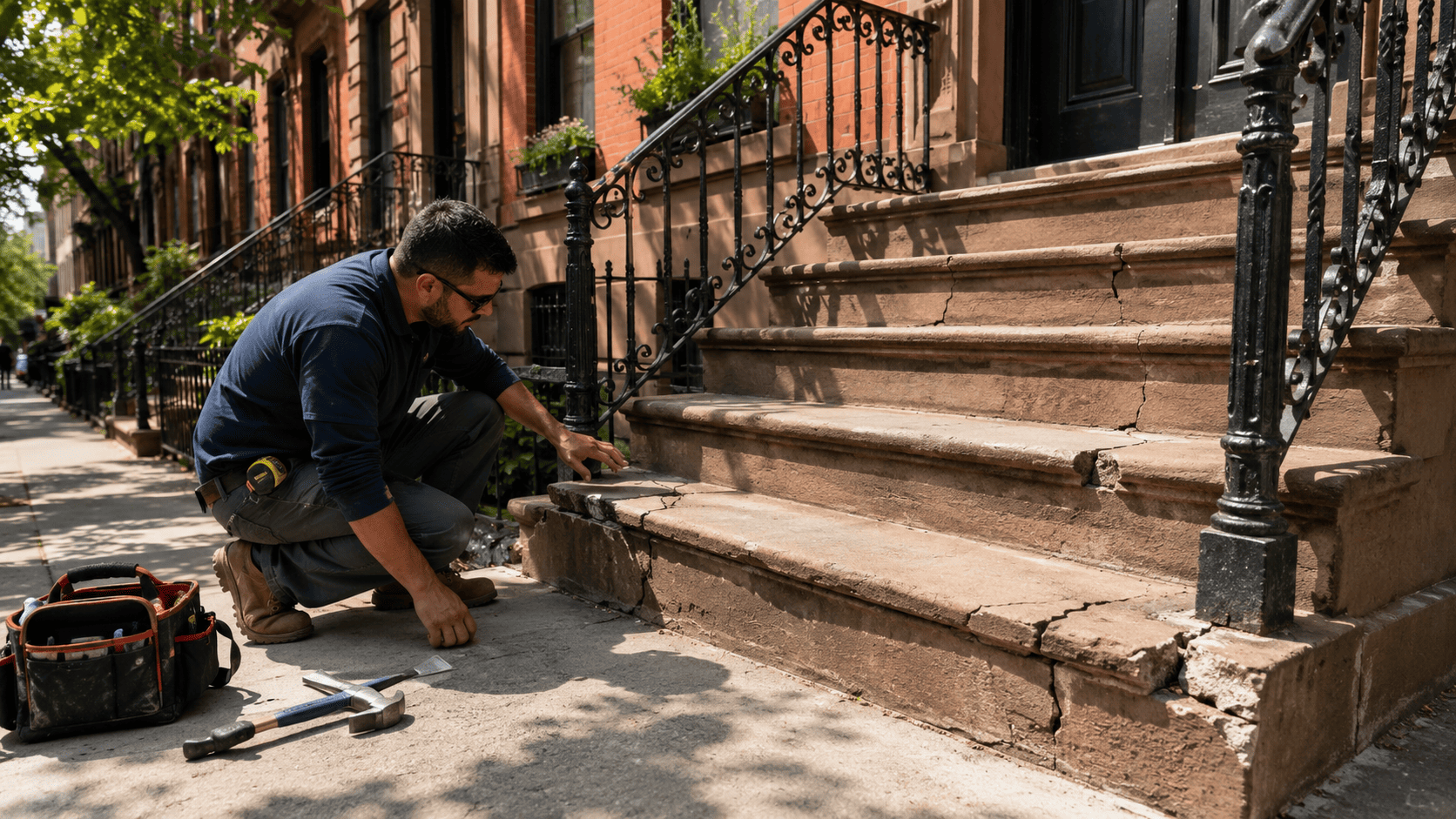
Stoop repair NYC becomes important when cracked steps, loose bricks, shifting concrete, or water damage start showing around your entrance. A crack in your stoop may not seem serious at first. However, small stoop problems can turn into safety issues when movement or moisture continues.
However, stoops rarely crack for no reason. In many cases, visible cracks show that something underneath has started to move. A small hairline crack can slowly turn into loose steps, shifting brickwork, unstable railings, or a stoop that no longer feels solid.
Because your stoop serves as the main entrance to your home, even minor damage deserves attention. Early repair can help prevent a larger safety issue.
Quick Answer
You should inspect a cracked stoop when cracks widen, steps feel loose, the surface sinks, or damage spreads nearby. Small cosmetic cracks may only need repair. However, movement, instability, or water damage often points to a bigger structural problem.
Not Every Crack Means the Same Thing
One common mistake is assuming every stoop crack needs the same repair.
Some cracks develop naturally as concrete ages. They may stay unchanged for years. Other cracks keep growing because the stoop shifts, moisture enters the structure, or the foundation loses support.
The crack location often tells part of the story.
A crack across one step is different from cracks near the house connection or side walls. Those areas often show movement beyond normal wear.
The real question is not only whether the stoop cracked. It is why the crack formed.
Loose Steps Are a Warning Sign
If a step moves under your foot or feels different than before, do not ignore it. Stoop repair NYC should not be delayed when steps feel loose, unstable, or different under your foot.
Loose steps often mean the material underneath has started separating or breaking down. Water may have entered the structure. Freeze-thaw cycles may have weakened it. Settlement may also have reduced support below the steps.
At first, the movement may feel minor.
Over time, each trip up and down the stoop adds stress to the weak area. As a result, the damage usually gets worse.
Watch for Gaps Around the Stoop
Sometimes the warning signs do not appear on the steps themselves.
You may see a gap where the stoop meets the building. You may also notice cracks along the side walls or mortar joints starting to separate.
These changes often suggest that parts of the stoop are moving separately instead of staying stable.
Even small gaps can allow water to enter the stoop. Once moisture gets inside, it can speed up deterioration throughout the year.
In winter, that trapped moisture can freeze and make the damage worse.
Water Is Often the Real Problem
Many stoop repairs start with water, even when the damage looks like a simple crack.
Rainwater can enter through small openings in concrete, mortar joints, or step edges. When temperatures drop, trapped moisture freezes and expands.
Each freeze-thaw cycle adds pressure to the surrounding material.
Over time, cracks widen, concrete breaks apart, bricks loosen, and sections become unstable.
That is why repairing only the visible crack often fails. The repair needs to stop water from entering too.
What Property Owners Often Miss
Many homeowners focus on the cracked step and miss the surrounding clues.
A leaning cheek wall, loose railing, crumbling mortar joints, or water stains may reveal more than the crack itself.
Visible damage in one area often connects to hidden deterioration somewhere else.
Looking at the stoop as one complete structure gives a clearer picture. It also helps identify what actually needs repair.
Repair or Rebuild: How the Decision Is Made
Not every damaged stoop needs a full rebuild.
If the structure remains solid and damage stays limited, targeted repair may be enough. A contractor may repair affected steps, replace damaged bricks, or restore deteriorated concrete.
A rebuild usually makes more sense when several steps loosen, cheek walls separate, settlement becomes serious, or the stoop pulls away from the building.
The decision depends on overall stability, not only crack size.
Some worn stoops can still be repaired. Others may show minor surface damage but have deeper structural problems.
Common Mistakes to Avoid
One common mistake is patching a crack without finding the cause.
If movement or water keeps entering the stoop, the repair may fail quickly.
Another mistake is treating loose railings as only a hardware issue. In many cases, the railing becomes unstable because nearby concrete or masonry has deteriorated.
Waiting until steps feel unsafe also limits repair options.
Early action usually gives you simpler and less expensive solutions.
Why NYC Stoops Need Extra Attention
NYC stoops face harsh weather, heavy daily use, moisture, and aging materials.
Older brownstones and masonry homes need extra attention. Decades of freeze-thaw cycles, settlement, and repeated repairs can weaken the original structure.
A repair that only improves appearance may not last if it ignores the cause.
That is why experienced stoop repair focuses on both visible damage and the structural issues behind it.
When to Schedule an Inspection
If your stoop has widening cracks, loose steps, unstable railings, separating cheek walls, or water damage, schedule an inspection.
Early inspection helps identify the cause before the damage spreads. It can also help keep the stoop safe for everyday use. NY Concrete provides stoop repair NYC services for cracked steps, loose bricks, water damage, and shifting concrete.
If your stoop has cracked steps, loose bricks, shifting concrete, or other signs of deterioration, NY Concrete can inspect the structure and find the cause. Whether the solution is a targeted repair or a larger restoration, the goal is to make your stoop safe, durable, and ready for everyday NYC conditions.