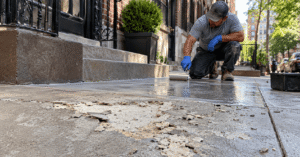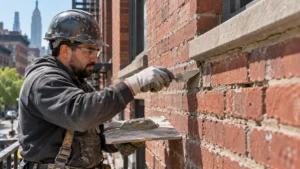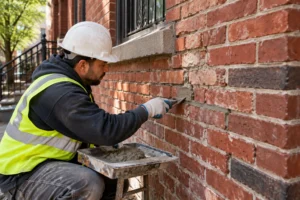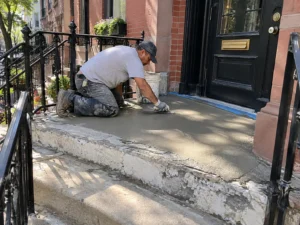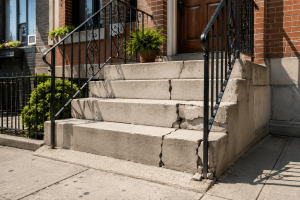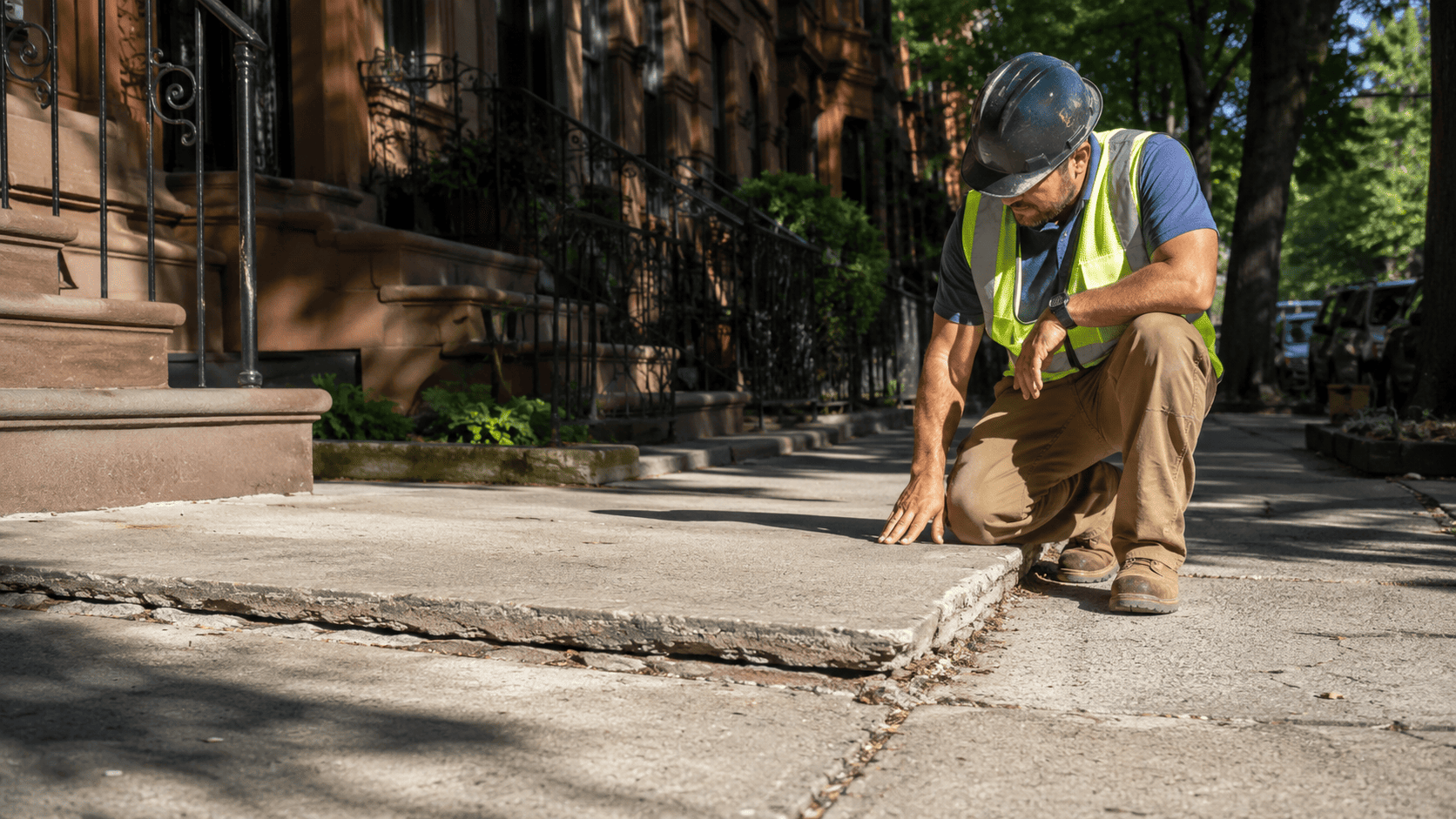
Trip hazard sidewalk repair NYC becomes important when cracks, lifted slabs, settlement, or uneven sidewalk flags create an unsafe walking surface. Most sidewalk trip hazards do not appear overnight. They usually start as a small crack, one sidewalk flag sitting lower than another, or a raised concrete edge that people can easily catch with their foot.
They usually begin as a small crack, one sidewalk flag settling slightly lower than another, or a section of concrete lifting just enough that people start catching the edge of their shoes. Because the change happens gradually, property owners often stop noticing it, even though everyone else still does.
The problem is that once a sidewalk becomes uneven, it rarely fixes itself. Weather, water, and everyday foot traffic continue putting stress on the damaged area, making the difference in height even more noticeable over time.
Repairing a trip hazard early is not just about improving the sidewalk’s appearance. It is about restoring a safe walking surface before the damage becomes more extensive or leads to a DOT sidewalk violation.
Quick Answer
A sidewalk becomes a trip hazard when cracks, lifted slabs, settlement, or uneven sidewalk flags create an unsafe walking surface. If you notice changes in height, widening cracks, or concrete that has started shifting, it is a good idea to have the sidewalk professionally inspected before the damage spreads.
What Creates a Sidewalk Trip Hazard?
A trip hazard is not simply a crack in the concrete. Trip hazard sidewalk repair NYC should focus on the cause of the uneven surface, not only the visible raised edge. Trip hazard sidewalk repair NYC should focus on the cause of the uneven surface, not only the visible raised edge.
It usually develops when one part of the sidewalk no longer sits level with the section beside it. Even a relatively small change in height can make the sidewalk unsafe for pedestrians.
In many cases, the uneven surface develops slowly enough that homeowners become used to seeing it every day. Visitors, delivery workers, children, or older adults are much more likely to notice it the hard way.
The real issue is not how the sidewalk looks. It is whether people can walk across it safely.
Why Sidewalks Become Uneven
Uneven sidewalks almost always point to movement underneath the concrete.
Tree roots are one of the most common causes throughout NYC. As they grow beneath the sidewalk, they gradually lift individual sidewalk flags out of place.
Settlement is another common reason. Over time, the soil supporting the concrete can compact or wash away, causing sections of the sidewalk to sink.
Water also contributes to the problem. Once moisture gets beneath the slab, it can weaken the base and create more movement with every season.
By the time the sidewalk becomes a noticeable trip hazard, the underlying problem has often been developing for quite some time.
Small Problems Rarely Stay Small
A slightly uneven sidewalk may seem harmless today.
Unfortunately, movement usually continues.
A raised sidewalk flag can lift even higher as tree roots continue growing. A sunken slab can settle farther if the supporting soil keeps shifting. During winter, water entering small cracks freezes and expands, placing even more pressure on the surrounding concrete.
What begins as a minor height difference often becomes a much larger repair if left alone.
That is why early repairs are usually both simpler and more cost-effective.
What Property Owners Often Miss
Many people pay attention to the raised edge but overlook everything around it.
An experienced contractor looks at the entire sidewalk rather than one damaged section.
They check whether nearby sidewalk flags are also beginning to move, whether water is collecting after rain, whether tree roots are affecting multiple slabs, and whether the concrete is showing signs of settlement in other areas.
These details help explain why the trip hazard developed in the first place.
Repairing only the visible edge without correcting the underlying issue often means the same problem returns later.
Repair or Replacement: How Is the Decision Made?
Not every trip hazard requires replacing an entire sidewalk.
If the damage is limited to one stable section and the surrounding concrete remains in good condition, repairing or replacing the affected sidewalk flag may be enough.
Replacement is generally recommended when several sidewalk flags have shifted, the supporting base has become unstable, or widespread deterioration is affecting larger portions of the sidewalk.
The decision depends on the overall condition of the sidewalk, not simply the size of the height difference.
A careful inspection helps determine which repair will provide the safest and most durable result.
Common Mistakes to Avoid
One of the biggest mistakes is assuming that because nobody has tripped yet, the sidewalk is still safe.
Trip hazards often develop gradually, but that does not make them less dangerous.
Another mistake is applying a quick surface patch without finding out why the sidewalk became uneven. If settlement, tree roots, or drainage issues continue, the repair may not last.
Some property owners also wait until they receive a sidewalk violation before taking action. In many cases, repairing the problem earlier is much less disruptive than dealing with more extensive damage later.
Why Trip Hazards Are Common in NYC
NYC sidewalks deal with constant wear from heavy pedestrian traffic, changing weather, mature street trees, underground utilities, and decades of natural aging.
Repeated freeze-thaw cycles place additional stress on concrete every winter, while limited drainage in many neighborhoods allows water to collect beneath sidewalk slabs.
These conditions make even well-built sidewalks more likely to develop uneven sections over time.
Regular inspections and timely repairs help keep sidewalks safe while reducing the chance of more extensive damage.
When to Schedule an Inspection
If your sidewalk has developed uneven slabs, widening cracks, lifted concrete, or areas where people could easily catch a foot, it is a good time to arrange a professional inspection.
Identifying the cause early often makes it possible to repair the affected area before the problem spreads to surrounding sidewalk flags. NY Concrete provides trip hazard sidewalk repair NYC services for lifted slabs, cracked concrete, settlement, and uneven sidewalk flags.
If your sidewalk has become uneven or developed a trip hazard, NY Concrete can inspect the damaged area, identify what is causing the movement, and recommend the right repair for your property. Whether the solution involves repairing a single sidewalk flag or replacing damaged sections, the goal is to restore a safe, long-lasting sidewalk built for everyday NYC conditions.