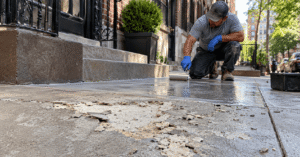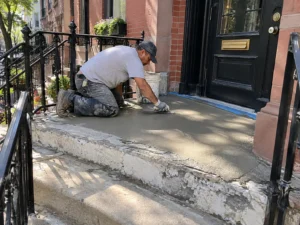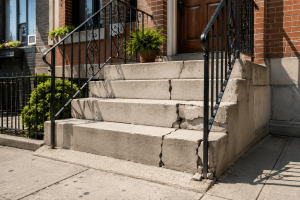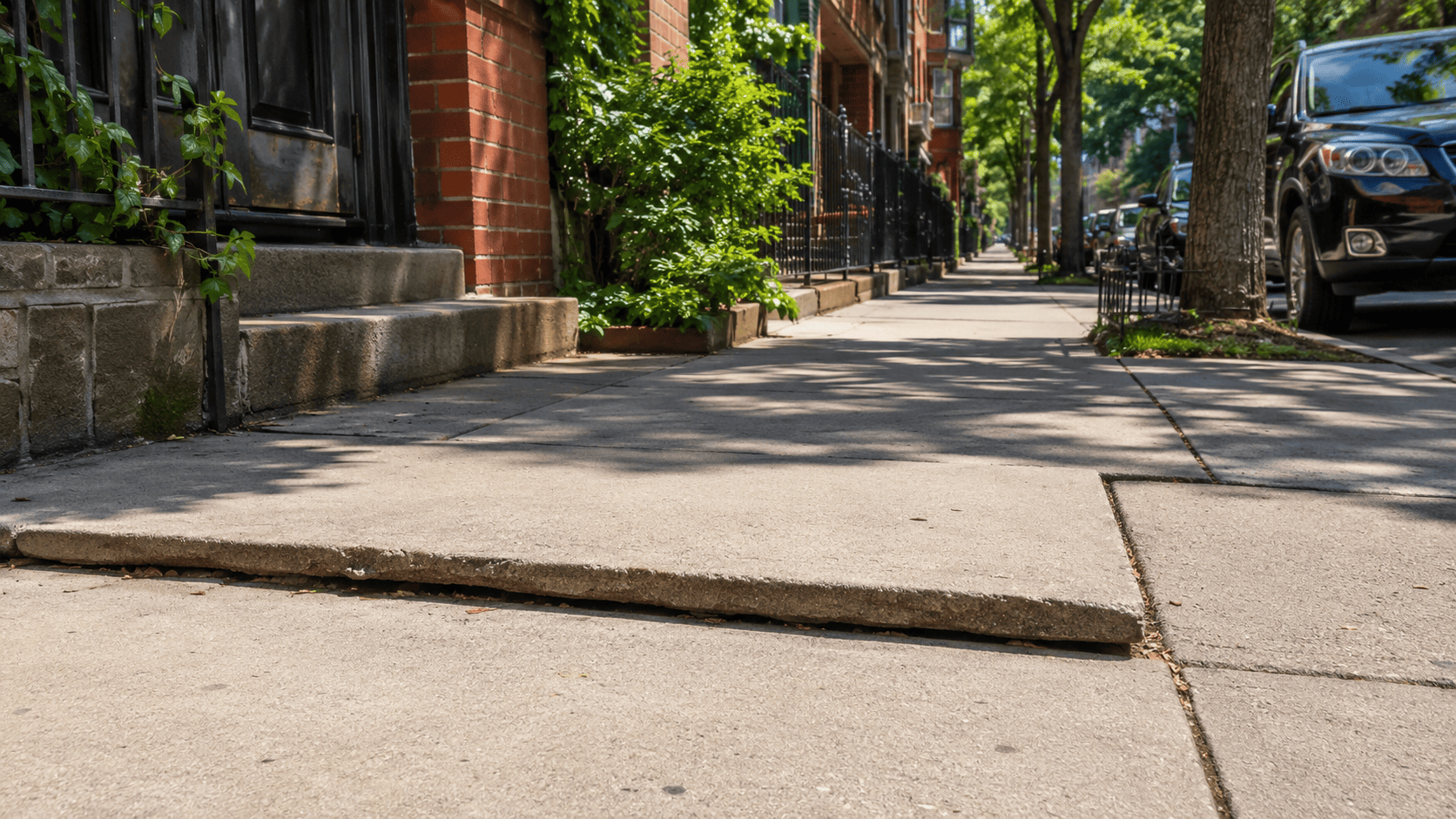
Uneven sidewalk NYC problems can look minor at first, but they often need fast attention. If people can still walk across the area and the damage does not look serious, it is easy to think the repair can wait. However, one raised sidewalk flag or small dip can quickly become a bigger safety issue.
Unfortunately, uneven sidewalks rarely stay the same for long.
What starts as one raised sidewalk flag or a slight dip in the concrete often continues to worsen as the ground shifts, water gets underneath the slab, or tree roots keep growing. The longer the problem is left alone, the greater the chance it will become a trip hazard, require a larger repair, or even lead to a DOT sidewalk violation.
Repairing the sidewalk early is often the simplest way to avoid bigger problems later.
Quick Answer
An uneven sidewalk should be repaired as soon as possible if the concrete has lifted, settled, or shifted enough to create an uneven walking surface. Early repairs help prevent additional movement, reduce safety risks, and often keep a small repair from turning into a much larger project.
Why Sidewalks Become Uneven
An uneven sidewalk is usually the result of movement underneath the concrete rather than damage on the surface. Uneven sidewalk NYC issues usually happen because tree roots, water, soil movement, or weak base support push the concrete out of position.
Tree roots are one of the most common causes throughout NYC. As roots grow beneath the sidewalk, they slowly push individual sidewalk flags upward. In other areas, the opposite happens. Soil underneath the concrete settles over time, allowing sections of the sidewalk to sink lower than the surrounding slabs.
Water also plays a major role.
When rainwater repeatedly gets beneath the sidewalk, it can gradually weaken the base supporting the concrete. Once that support begins to disappear, the slabs start moving out of position.
The uneven surface you see is often just the final result of a problem that has been developing for years.
A Small Height Difference Can Become a Big Problem
Many property owners expect serious sidewalk damage to look dramatic.
In reality, even a relatively small height difference between two sidewalk flags can create a walking hazard.
People pushing strollers, using wheelchairs, carrying groceries, or simply walking without looking down may catch their foot on an uneven edge.
What seems insignificant when you see it every day can be much more noticeable to someone unfamiliar with the sidewalk.
As the movement continues, that small difference usually becomes even larger.
Uneven Concrete Usually Doesn’t Stop Moving
One of the biggest misconceptions is that once the sidewalk settles, it has finished moving.
Most of the time, that is not what happens.
If tree roots continue growing, they keep applying pressure beneath the concrete. If water continues washing away the supporting soil, the slabs often sink even farther. Every freeze-thaw cycle during winter also places additional stress on already weakened sections.
Without repairing the underlying problem, the sidewalk often becomes more uneven with each passing season.
That is why waiting rarely makes the repair easier.
What Property Owners Often Miss
Many people focus on the raised or sunken sidewalk flag without looking at the surrounding area.
An experienced contractor pays attention to everything nearby.
Are adjacent sidewalk flags beginning to shift as well? Is water collecting after it rains? Are cracks forming near the uneven section? Is there evidence of tree root pressure beneath the concrete?
These details help explain why the sidewalk became uneven in the first place.
Repairing one slab without understanding the larger picture may only provide a temporary solution.
Repair or Replacement: How Is the Decision Made?
Not every uneven sidewalk requires replacing large sections of concrete.
If the movement is limited and the surrounding sidewalk remains stable, repairing or replacing the affected sidewalk flag may be enough.
However, when several sidewalk flags have shifted, the supporting base has become unstable, or the unevenness is affecting multiple sections, replacement often provides a more dependable long-term solution.
The decision is based on the condition underneath the sidewalk just as much as the concrete you can see on top.
A proper inspection helps determine which approach makes the most sense.
Common Mistakes to Avoid
One of the biggest mistakes is assuming an uneven sidewalk is only an appearance issue.
In reality, uneven concrete often becomes a safety concern long before it looks severely damaged.
Another common mistake is grinding down or patching the surface without correcting the reason the sidewalk shifted in the first place. If movement underneath continues, the problem usually comes back.
Waiting until the sidewalk becomes difficult to walk across or until a violation notice arrives also limits your repair options.
Addressing uneven concrete early is usually far more straightforward than dealing with widespread damage later.
Why Uneven Sidewalks Are So Common in NYC
Sidewalks throughout NYC are constantly exposed to conditions that encourage movement.
Mature street trees, aging infrastructure, underground utilities, heavy pedestrian traffic, and repeated freeze-thaw cycles all put stress on concrete year after year.
These conditions make sidewalks far more likely to lift, settle, and crack than many property owners expect.
That is why regular inspections and timely repairs are an important part of maintaining safe walkways throughout the city.
When to Schedule an Inspection
If you have noticed one sidewalk flag sitting higher than another, sections of concrete sinking, recurring cracks, or water pooling around uneven areas, it is a good idea to have the sidewalk inspected.
Finding the cause early often makes it possible to complete a focused repair before additional sidewalk flags begin shifting. NY Concrete can inspect uneven sidewalk NYC damage, identify the cause, and recommend the right repair before the problem becomes larger.
If your sidewalk has become uneven, developed raised concrete, or started showing signs of settlement, NY Concrete can inspect the area and determine what is causing the movement. Whether the solution is repairing a single sidewalk flag or replacing damaged sections, the goal is to restore a safe, durable sidewalk that performs well under everyday NYC conditions.